















Managing payroll and tax obligations is an important responsibility for Australian employers. At the centre of this is ensuring employee tax is correctly withheld and reported to the Australian Taxation Office (ATO).
With the ATO continuing to update its digital systems and compliance rules, businesses need to stay accurate and up to date. Good payroll processes help avoid errors and keep things running smoothly.
As regulations continue to evolve, including upcoming changes like Payday Super in 2026, employers need to stay prepared. Mistakes in withholding or reporting can lead to penalties and compliance issues.
Key Takeaways
Understand the foundational concepts and purpose of the ATO
Discover the critical compliance duties every Australian employer must fulfill.
Prepare your business for the upcoming Payday Super reforms and compliance changes.
Penjelasan mendalam mengenai Employer Responsibilities Under PAYG Withholding.

What is PAYG Withholding?

PAYG withholding stands for Pay As You Go withholding. It is the system Australian employers use to withhold tax from employee wages and send it to the Australian Taxation Office (ATO).
Instead of employees paying all tax at the end of the financial year, tax is collected gradually throughout the year. This helps employees manage tax obligations more smoothly.
PAYG withholding can also apply to some contractor payments, unused leave payments, and businesses that do not quote an ABN where required.
How PAYG Withholding Works for Employers
When you run payroll, you calculate employee gross wages and withhold the correct tax amount based on ATO tax tables. The remaining net pay is paid to the employee.
The withheld tax must then be reported and paid to the ATO through your normal reporting process. Most employers do this through payroll software linked to Single Touch Payroll (STP).
At the end of the financial year, employees can review their income statement through myGov and use it when lodging tax returns.

Who Needs to Register for PAYG Withholding?
Not every business automatically starts with PAYG withholding, but most employers will need to register once they begin paying workers. The requirement depends on the type of payments made.
1. Businesses required to register
Any business that employs staff and pays wages, salaries, or similar payments will usually need to register for PAYG withholding.
2. When registration becomes mandatory
You should register before making your first wage or salary payment that requires tax withholding.
3. Sole traders vs companies
PAYG obligations apply based on payments made, not business structure, so sole traders, companies, and partnerships may all be required.
4. Contractors and PAYG rules
Some contractor payments may require withholding, especially if no ABN is provided or specific tax rules apply.
Employer Responsibilities Under PAYG Withholding
Once registered, employers must follow ongoing ATO business obligations under PAYG. This includes correct tax calculation, accurate reporting, and maintaining detailed payroll records for compliance purposes.
1. Registering for PAYG with the ATO
Employers must register for PAYG withholding through the ATO when setting up payroll or hiring their first employee. This ensures the business is recognised for tax withholding purposes.
2. Calculating correct Tax amounts
Employers must use updated ATO tax tables or compliant payroll software to calculate withholding correctly. Incorrect calculations can lead to underpayment or overpayment of tax.
3. Issuing Payslips with tax details
Payslips must clearly show gross pay, tax withheld, and net pay. This transparency helps employees understand their earnings and ensures compliance with workplace regulations.
4. Maintaining Payroll records
Businesses are required to keep accurate payroll records for wages, tax withheld, super contributions, and employee details. These records may be reviewed by the ATO if required.
5. Employee TFN declarations
Employees must complete a Tax File Number (TFN) declaration when starting employment. This ensures the correct tax rate is applied and helps avoid higher withholding rates.
PAYG Withholding Reporting Requirements
Employers must regularly report payroll and tax information to the ATO. This ensures transparency and allows the government to track income and tax obligations in real time.
1. Business Activity Statement (BAS) Reporting
PAYG withholding amounts are reported through your BAS or Instalment Activity Statement. This is where employers declare tax withheld and other business tax obligations.
2. Single Touch Payroll (STP) reporting
The STP digital reporting framework sends payroll information directly to the ATO each pay run. It covers wages, tax withheld, and superannuation details, reducing the need for manual reporting.
3. End-of-Year income statements
At the end of the financial year, employees can access their income statements through myGov. These replace traditional payment summaries and are used for tax return lodgement.
4. BAS and PAYG deadlines
Each business has specific lodgement and payment deadlines depending on their reporting cycle. Meeting these deadlines is essential to avoid penalties and interest charges.
PAYG Withholding Tax Rates Explained
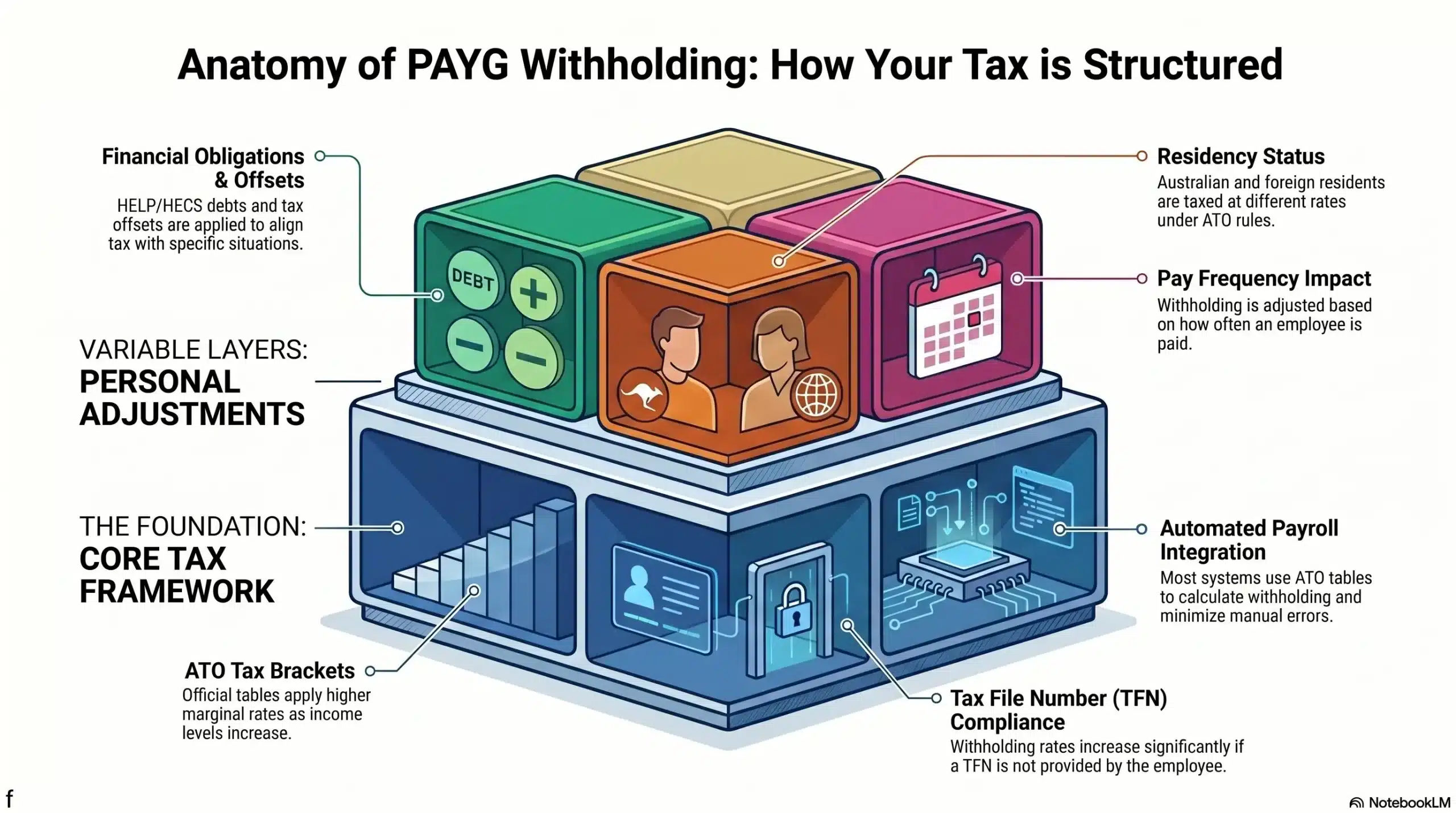
PAYG tax rates vary depending on employee earnings and personal tax circumstances. Employers must apply the correct rates to ensure accurate withholding throughout the year.
1. How PAYG tax rates are calculated
Tax rates are based on income levels, tax brackets, and employee declarations. The more an employee earns, the higher the marginal tax rate applied.
2. ATO tax tables and brackets
The ATO provides official tax tables that employers use to calculate withholding amounts. Most payroll systems automatically apply these rates to reduce manual errors.
3. Higher withholding without TFN
If an employee does not provide a Tax File Number, employers are required to withhold tax at a higher rate. This acts as a compliance safeguard until details are provided.
4. Factors affecting PAYG rates
Several factors can affect withholding, including HELP/HECS debt, tax offsets, and pay frequency. These details ensure tax is aligned with each employee’s situation.
5. Residency status impact
Tax residency also plays a role in withholding rates. Australian residents and foreign residents are taxed differently under ATO rules.
Common PAYG Withholding Mistakes Employers Make
PAYG errors are often caused by incorrect setup or outdated payroll information. These mistakes can lead to compliance issues and unexpected tax adjustments.
1. Using outdated tax tables
Using old tax tables can result in incorrect withholding amounts. This may cause employees to be underpaid or overpaid in tax throughout the year.
2. Late reporting or lodgement
Failing to report payroll on time through STP or BAS can lead to penalties. Late lodgements also create unnecessary administrative stress for businesses.
3. Poor employee setup
Incorrect employee tax settings in payroll systems can lead to ongoing errors. Even small setup mistakes can impact every pay cycle.
How to Manage PAYG Withholding More Efficiently
Managing PAYG withholding becomes much easier with automation and consistent processes. This helps reduce errors and saves time for business owners.
1. Use payroll software
Automated payroll tax software handles tax calculations, ATO reporting, and payslip generation in one connected workflow. This reduces manual work and improves accuracy across every pay cycle.
2. Review payroll regularly
Regular payroll reviews help identify errors early. Checking employee details and tax settings ensures ongoing compliance with ATO requirements.
3. Get professional advice
Accountants, payroll specialists, or a dedicated accounting solution for employers can help businesses manage complex PAYG obligations. Professional support becomes even more valuable as headcount grows or pay arrangements get more layered.
PAYG Withholding Updates in 2026
PAYG rules may change as the government updates tax thresholds and reporting systems. Staying informed helps businesses remain compliant.
1. Tax threshold changes
Each financial year may bring updated tax brackets or thresholds. These changes affect how much tax must be withheld from employee wages.
2. Reporting system changes
The ATO continues to improve digital reporting systems like STP. Businesses may need to adjust processes to stay compliant with updates.
3. Why staying updated matters
Staying updated helps prevent payroll errors and ensures accurate tax reporting. It also reduces the risk of penalties from incorrect withholding.
Conclusion
PAYG withholding is an important responsibility for Australian employers and helps keep the tax system running smoothly.
It ensures employees pay tax gradually throughout the year, rather than facing large end-of-year adjustments. Choosing a top financial platform in Australia also helps employers automate withholding, reporting, and reconciliation, so payroll stays accurate and admin stress drops.
For growing or more complex businesses, professional support can make PAYG management easier. It also helps reduce compliance risks and ensures you stay aligned with the latest ATO requirements in 2026.
Consult for free with our experts to better understand your PAYG withholding obligations and ensure your payroll stays fully compliant.

Frequently Asked Question
Yes, most employers in Australia must register for PAYG withholding and deduct tax from employee wages or salaries.
Yes, sole traders must comply if they employ staff or make payments that require tax withholding under ATO rules.
Most employers report PAYG withholding through Single Touch Payroll (STP) each pay run and include totals in their BAS monthly or quarterly.
The ATO may apply penalties, interest charges, and require back payments to correct any underpaid tax.
Yes, modern payroll software can automatically calculate tax, generate reports, and submit STP data directly to the ATO.