










For many Australian businesses, transport problems do not start with trucks on the road, but with limited visibility, delayed decisions, and costs that are harder to control each day. When delivery expectations keep rising, relying on manual coordination or disconnected systems can quietly drain margin and weaken service quality.
That pressure is becoming harder to ignore in Australia, where the freight and logistics sector accounts for 8.6% of GDP, more than 75% of non-bulk domestic freight moves by road, and the total domestic freight task is projected to grow by 26% between 2020 and 2050.
This is why transportation management software is no longer just a logistics tool, but a smarter way to stay in control as transport complexity grows. With better route planning, carrier coordination, and shipment visibility, transportation management transportation management system helps businesses reduce friction, manage freight costs, and move goods with more confidence.
Key Takeaways
|
Our Top Picks at a Glance (Shortlisted)
Best Because
Built for complex enterprise freight operations across multiple transport modes.


Best Because
AI-powered TMS with strong visibility and dynamic transport planning.

Best Because
Cloud TMS that connects transport execution with fulfilment operations.

What is a Transportation Management System?
Transportation management software is a logistics platform that automates the planning, execution, and optimisation of physical goods movement. It streamlines routing, dispatch, driver tracking, shipment coordination, and freight billing to help businesses reduce transport costs and improve delivery control.
Instead of working in isolation, transport management software integrates with ERP systems, warehouse operations, carriers, customers, and finance teams. This gives businesses better visibility, faster coordination, and a clearer view of transport spend and service performance.
Modern transportation management software does more than replace manual work. The real value comes from better integration, stronger user adoption, and smarter decision-making, helping teams respond to disruptions earlier and manage transport operations more effectively.
Differentiating TMS from WMS and ERP
To understand the role of transportation management software more clearly, it helps to compare it with ERP and WMS. While these systems often work together, each manages a different part of the supply chain and addresses a distinct operational challenge.
| System | Primary Focus | What It Manages | Where Its Role Begins and Ends | Main Business Value |
|---|---|---|---|---|
| ERP | Business-wide planning and control | Financials, procurement, HR, order data, and high-level inventory records | Starts from business transactions and planning, but does not deeply manage warehouse execution or freight movement | Gives businesses one central source of truth for operational and financial visibility |
| WMS | Warehouse execution and inventory movement inside the facility | Receiving, put-away, picking, packing, staging, and storage locations | Begins when goods arrive at the warehouse and usually ends once orders are loaded and leave the dock | Improves stock accuracy, warehouse productivity, and fulfilment speed |
| TMS | Transport planning, execution, and shipment visibility | Route planning, carrier selection, load optimisation, freight tracking, freight audit, and delivery coordination | Begins when freight needs to move between locations or to the customer, and continues until delivery is completed | Helps businesses reduce freight costs, improve delivery performance, and gain better transport visibility |
When businesses integrate ERP, WMS, and TMS effectively, they create a more connected supply chain from planning and warehousing to transport and final delivery. That end-to-end visibility helps teams reduce delays, improve coordination, and make better decisions across the entire logistics process.
What to Look for in Transport Management Software

The best transport management software should act as a platform for managing transportation, not just move freight from one place to another. It should help your business improve visibility, control costs, and make faster decisions as transport operations grow more complex.
A strong platform should also work well in daily operations, not just look impressive in a demo. The right system should support how your team plans, executes, tracks, and improves transport performance every day.
- Route planning and load optimisation: Helps reduce wasted space, avoid unnecessary trips, and improve delivery efficiency through better vehicle route optimization.
- Automated carrier selection and tendering: Speeds up load assignment and reduces manual coordination with carriers.
- Real-time visibility: Gives your team live tracking, dynamic ETAs, and early alerts when disruptions happen.
- Integration with existing systems: Connects with ERP, WMS, OMS, EDI, APIs, and carrier networks for a clearer flow of information.
- Freight audit and payment control: Helps validate invoices, flag charge discrepancies, and reduce freight cost leakage.
- Analytics and decision support: Turns transport data into useful insight on carrier performance, delivery reliability, service risks, and freight costs.
- Compliance and operational accountability: Supports better documentation, stronger process control, and clearer visibility for Australian transport operations.
- Ease of use: Helps planners, coordinators, and operations teams adopt the system consistently instead of returning to manual work.
Top 20 Transport Management Software Solutions in 2026
The market for transportation management software is diverse, ranging from hyper-specialised niche providers to massive, globally integrated enterprise suites. Below is an exhaustive analysis of the top 20 solutions leading the industry today.
All recommendations on this list are manually evaluated by our editorial team based on hands-on testing, demo sessions, and verified customer feedback from Australian businesses. We do not accept payment for placement or ranking on this list.
1. SAP Transportation Management
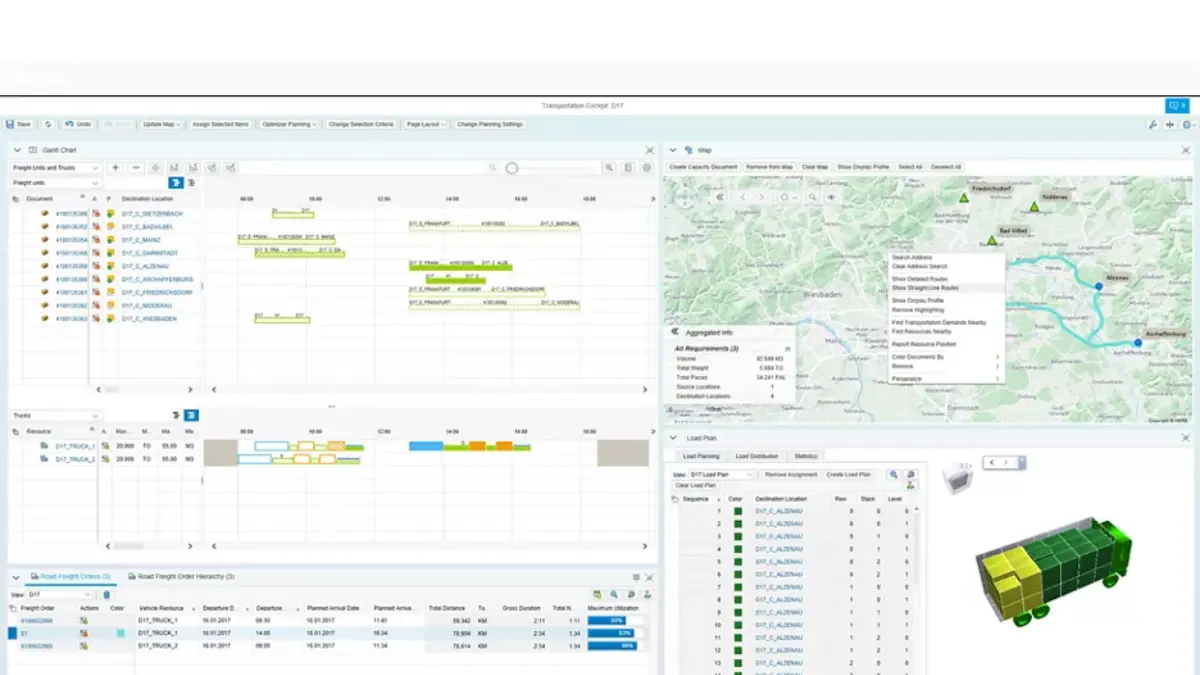
SAP Transportation Management is built for enterprises that manage complex freight operations across multiple regions and transport modes. It works best for businesses that already rely on SAP and want transportation planning, execution, and settlement within a single connected ecosystem.
Key Features:
- Multi-Modal Freight Management: Supports road, air, ocean, and rail transportation across complex supply chains.
- Freight Planning and Execution: Helps businesses plan shipments, assign carriers, and manage transport activity more efficiently.
- Freight Settlement: Improves control over freight charges through validation and settlement tools.
- SAP Integration: Connects transportation workflows with broader ERP and supply chain operations.
| Pros | Cons |
|
|
Pricing: Estimated from AUD 8,000–40,000+ per month, excluding implementation costs.
Suitable for: Large Australian enterprises with complex domestic and international freight operations.
2. Oracle Transportation Management Software
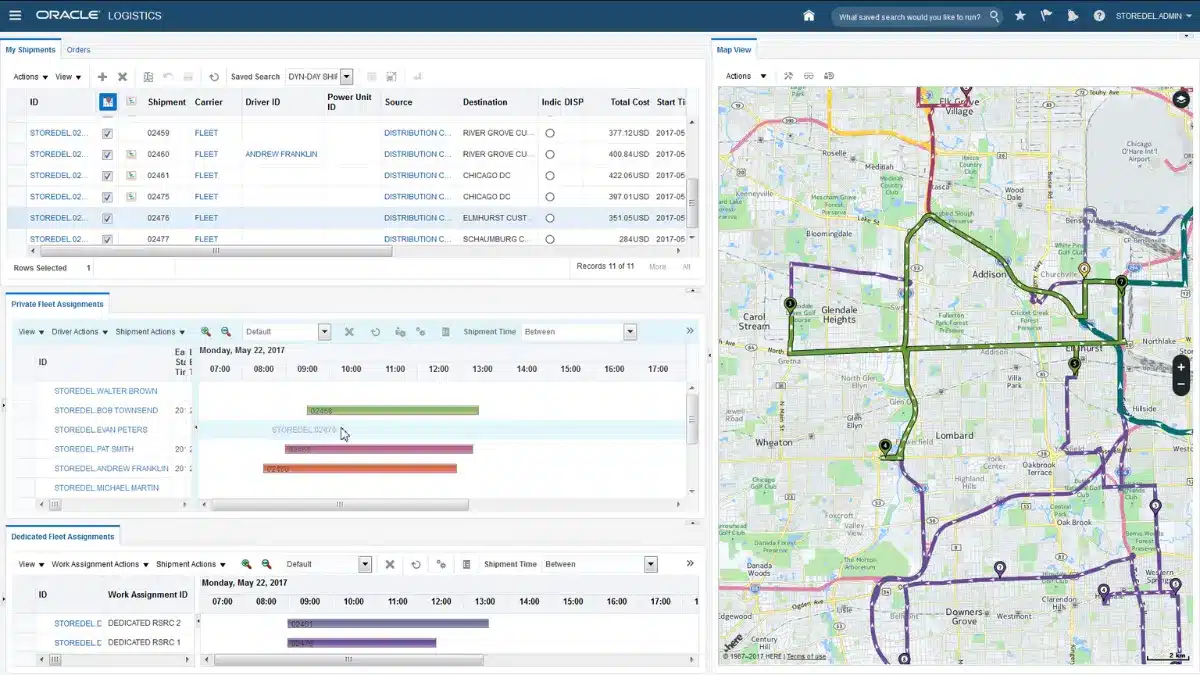
Oracle Transportation Management is a strong option for enterprises that need one platform to manage transportation activity across a global supply chain. It stands out for advanced optimisation, broad functionality, and the ability to support complex logistics environments at scale.
Key Features:
- Advanced Route Optimisation: Helps businesses solve complex routing constraints across large shipment volumes.
- Global Transportation Planning: Supports transport planning and execution across regions, carriers, and freight modes.
- Fleet and Carrier Management: Gives teams better control over carrier selection and service performance.
- Trade and Compliance Support: Helps businesses manage global logistics requirements more effectively.
| Pros | Cons |
|
|
Pricing: Estimated from AUD 10,000–50,000+ per month depending on deployment scope.
Suitable for: Australian enterprises with high freight volumes and complex logistics networks.
3. Blue Yonder Transportation Management

Blue Yonder Transportation Management fits businesses that want smarter transport planning backed by stronger data and real-time visibility. It is especially useful for operations where delivery timing, rapid inventory movement, and service performance directly affect results.
Key Features:
- AI-Driven Planning: Uses machine learning to improve transport planning and decision-making.
- Dynamic Routing: Helps teams adjust routes more effectively when conditions change.
- Real-Time Visibility: Gives businesses clearer oversight of shipments and disruptions.
- Prescriptive Analytics: Highlights issues and recommends actions before delays escalate.
| Pros | Cons |
|
|
Pricing: Estimated from AUD 8,000–25,000+ per month for enterprise deployments.
Suitable for: Australian retailers, distributors, and consumer goods businesses that want more predictive transport control.
4. Manhattan Active Transportation Management
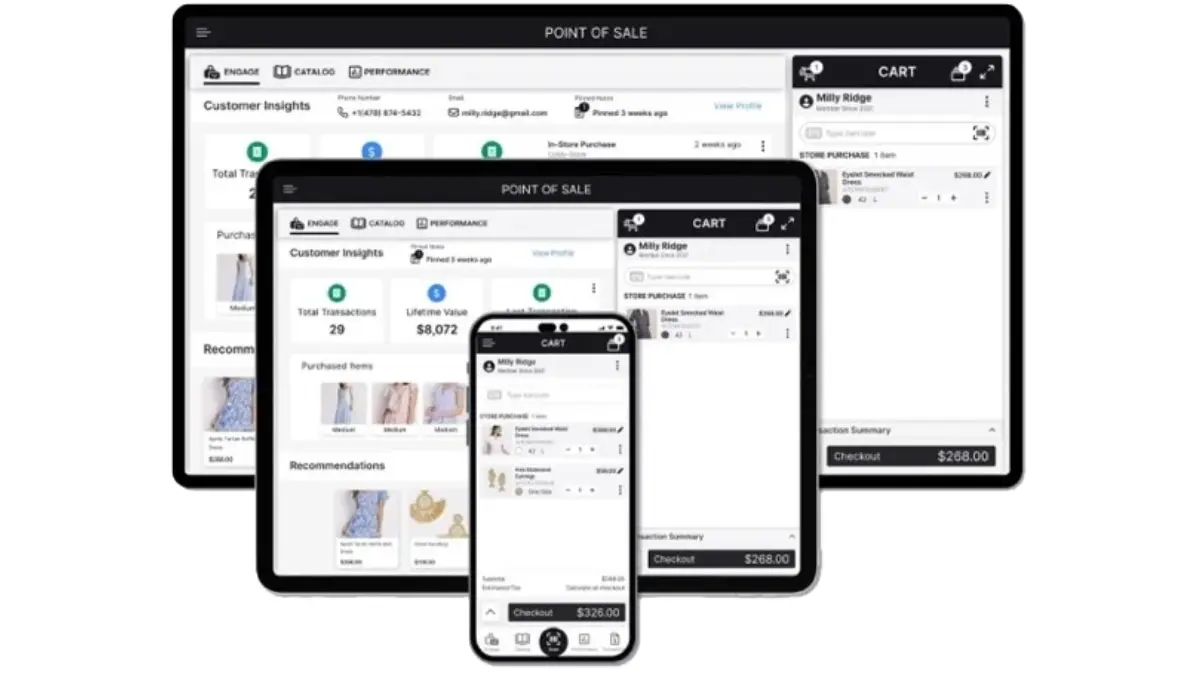
Manhattan Active Transportation Management works well for businesses that want transport execution closely aligned with warehouse activity. Its unified logistics approach makes it a strong option for retail and omnichannel operations that need tighter coordination between fulfilment and delivery.
Key Features:
- Unified Logistics Framework: Connects warehouse and transportation workflows in one environment.
- Continuous Optimisation: Adjusts transport activity based on real-time operational changes.
- Carrier and Load Management: Helps teams manage carriers, rates, routes, and loads more effectively.
- Warehouse-Transport Synchronisation: Improves coordination between picking schedules and transport execution.
| Pros | Cons |
|
|
Pricing: Estimated from AUD 10,000–60,000+ per month depending on operational complexity.
Suitable for: Australian retail, wholesale, and omnichannel businesses with complex fulfilment and delivery operations.
5. MercuryGate TMS
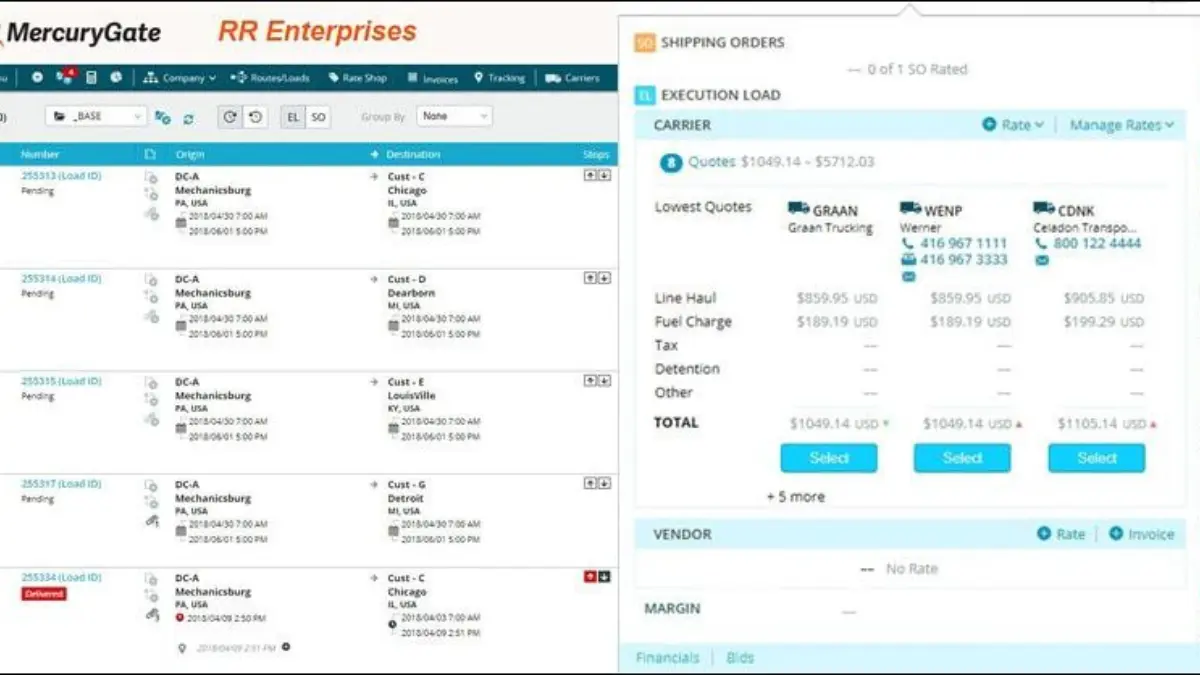
MercuryGate TMS is a flexible cloud-based platform that supports shippers, brokers, 3PLs, and large logistics providers. It works well for businesses that want multimodal transport management with configurable workflows and faster deployment than some heavier enterprise systems.
Key Features:
- Multi-Modal Support: Covers parcel, LTL, truckload, ocean, air, and rail transportation.
- Configurable Workflows: Lets businesses tailor transport processes to suit operational needs.
- Rapid Deployment: Helps organisations get value faster compared with more complex implementations.
- Broker and 3PL Tools: Supports carrier onboarding, spot quoting, and margin control.
| Pros | Cons |
|
|
Pricing: Estimated from AUD 5,000–25,000+ per month.
Suitable for: Australian shippers, freight brokers, and 3PLs that need flexible multimodal transport management.
6. HashMicro Transportation Management Software
HashMicro is ideal for businesses that want transport management to integrate with a larger operational system like ERP, not be another disconnected tool. By connecting transportation with procurement, inventory, accounting, and ERP workflows on a single platform, HashMicro helps businesses improve visibility, reduce coordination gaps, and manage deliveries with stronger end-to-end control.
Instead of forcing teams to jump between separate systems, HashMicro keeps key transport and operational data connected in one place. This gives businesses a clearer view of shipment activity, faster cross-departmental coordination, and better control over logistics decisions that affect costs, service, and daily execution.
Key Features:
- Integrated ERP Architecture: Connects transportation workflows with inventory, finance, and procurement.
- Shipment Monitoring: Helps businesses track delivery activity more clearly across operations.
- Delivery and Route Management: Supports smoother planning and execution from dispatch to drop-off.
- Centralised Business Data: Reduces siloed information between departments.
| Pros | Cons |
|
|
Pricing: Custom Pricing
Suitable for: Australian businesses that want transportation management integrated with ERP, inventory, procurement, and finance.
7. LoadMaster
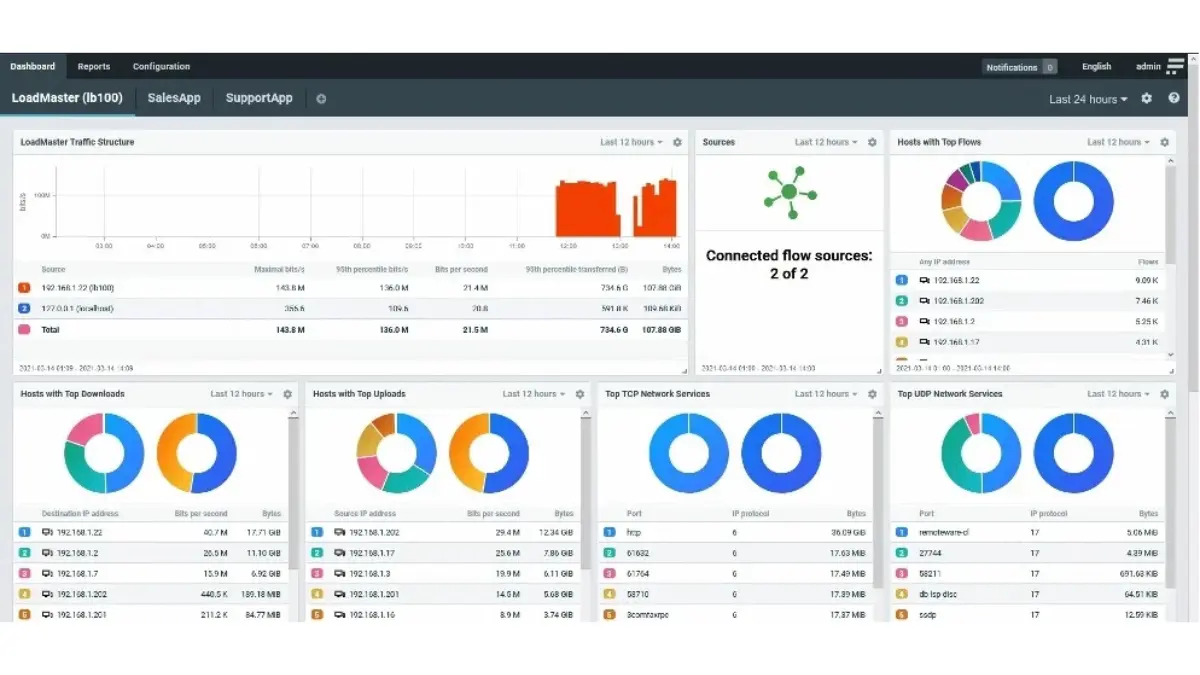
LoadMaster is a trucking-focused transport management system software from McLeod built for carriers, logistics providers, and private fleets that need stronger operational and financial control in one platform. It stands out for combining dispatch, driver workflows, analytics, and accounting in a single system.
Key Features:
- Freight Pricing Dashboard: Combines market trends, historical data, and lane performance to help teams price freight more confidently.
- Driver Sidekick App: Supports real-time dispatch, messaging, mileage reporting, stop logging, and compliance alerts for drivers.
- Integrated Financial Management: Unifies general ledger, accounts receivable, accounts payable, and factoring functions in one platform.
- Customer Portal: Gives customers secure access to load information, shipment status, and downloadable documents.
| Pros | Cons |
|
|
Pricing: Estimated from AUD 5,000–20,000+ per month.
Suitable for: Carriers, logistics providers, and private fleets that want a trucking-focused TMS with integrated financial control.
8. Trimble Transportation
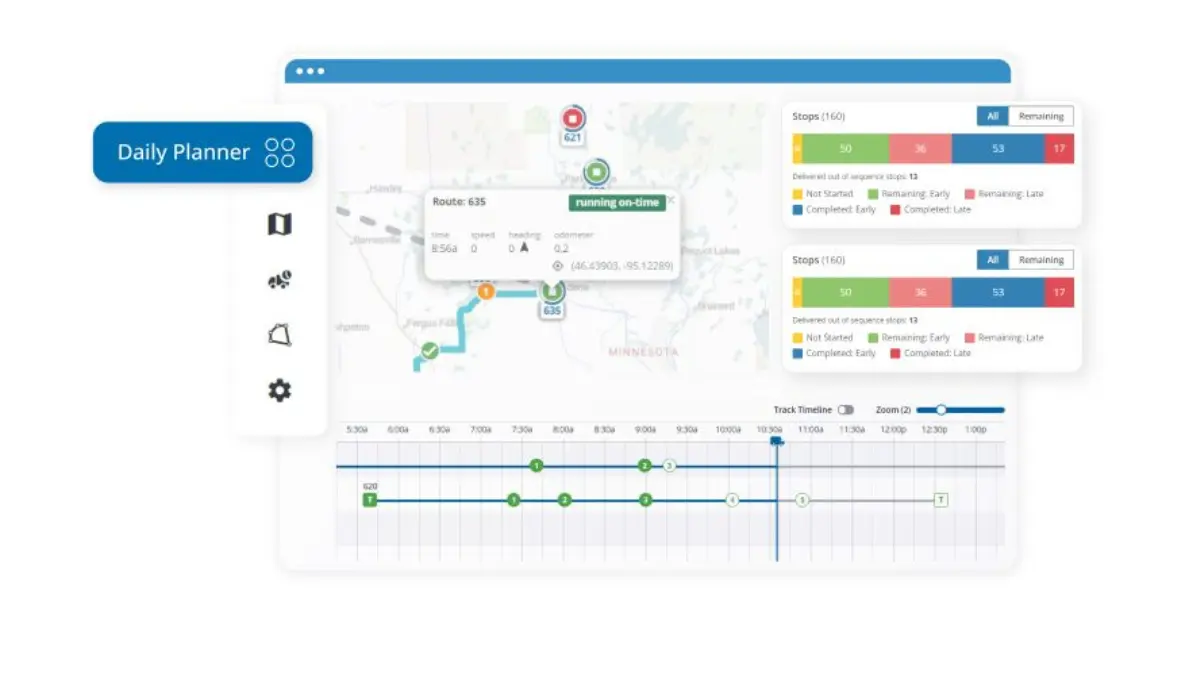
Trimble Transportation is a strong fit for carriers and fleet-heavy businesses that need transport software tied closely to telematics, dispatch, and driver operations. It is especially relevant for organisations that want deeper visibility into vehicle performance, compliance, and day-to-day fleet activity.
Key Features:
- Telematics Integration: Connects transport workflows with real-time vehicle and driver data.
- Fleet Management: Helps teams manage dispatching, vehicle activity, and operational performance more closely.
- Compliance Support: Assists with hours-of-service, maintenance scheduling, and driver-related transport requirements.
- In-Cab Visibility: Improves control with more detailed insight into location, behaviour, and route performance.
| Pros | Cons |
|
|
Pricing: Estimated from AUD 3,000–15,000+ per month.
Suitable for: Australian carriers, fleet operators, and transport businesses with heavy vehicle operations.
9. Cario

Cario is an Australian transport and freight management platform built for businesses that want better control over deliveries handled by their own fleet, contractors, or third-party carriers. It is especially strong for teams that want local support, carrier connectivity, and real-time transport visibility in one platform.
Key Features:
- Real-Time Route Optimisation: Helps teams optimise delivery runs and adjust transport activity more efficiently.
- Live Driver Tracking: Gives operations teams real-time visibility into driver movements and delivery progress.
- POD and Sign-on-Glass: Supports real-time proof of delivery capture and digital signature collection.
- Driver Checklists: Includes driver checklists for fatigue management and load balancing.
| Pros | Cons |
|
|
Pricing:Custom pricing based on features and shipment volume.
Suitable for: Australian businesses managing freight through their own fleet, contractors, or multiple third-party carriers.
10. Shipsy

Shipsy is an AI-native transportation management platform designed for businesses that want to plan, execute, track, and settle in one system. It is a strong option for enterprises that need predictive visibility, automated freight workflows, and more intelligent transport decision-making.
Key Features:
- Intelligent Planning: Uses AI-driven load planning, carrier selection, and route optimisation to balance cost and service.
- Real-Time Visibility: Provides live tracking, predictive ETAs, exception alerts, and automated escalation workflows.
- Automated Settlement: Supports freight audit, invoice reconciliation, and carrier payments with full audit trails.
- AI Agent Support: Uses purpose-built AI agents for planning, exception management, routing, and settlement.
| Pros | Cons |
|
|
Pricing: Estimated from AUD 5,000–30,000+ per month.
Suitable for: Enterprises and fast-scaling logistics teams that want AI-driven transportation planning, visibility, and settlement in one platform.
11. FreightPOP
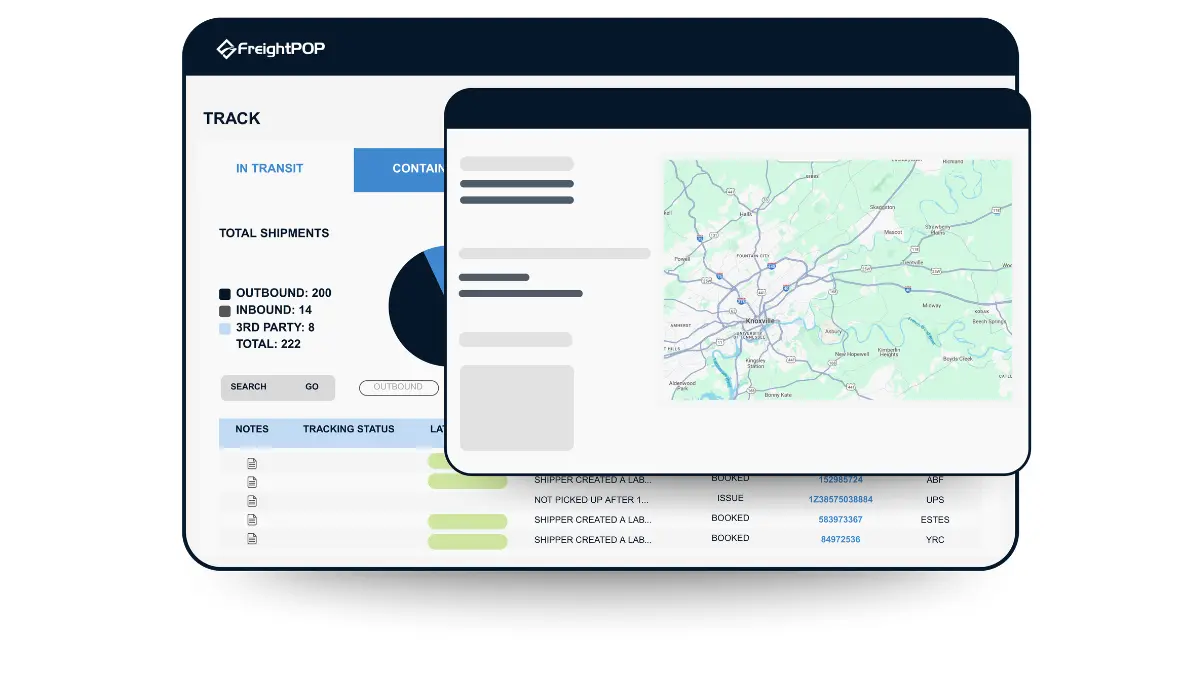
FreightPOP is a user-friendly platform that helps businesses centralise multi-carrier shipping without moving straight into a heavy enterprise rollout. It is a practical fit for manufacturers, distributors, and eCommerce businesses that want more control over shipping from one connected hub.
Key Features:
- Multi-Carrier Rate Shopping: Lets teams compare parcel, LTL, FTL, and international shipping options in one place.
- ERP and Commerce Integrations: Connects freight workflows with business systems more smoothly.
- Centralised Shipping Management: Replaces manual carrier portals with one clearer interface.
- Freight Audit Support: Helps businesses improve control over transport costs and billing review.
| Pros | Cons |
|
|
Pricing: Estimated from AUD 1,500–8,000+ per month.
Suitable for: Australian manufacturers, distributors, and eCommerce businesses that need a practical multi-carrier shipping platform.
12. Alpega TMS

Alpega TMS focuses on collaborative transport management and strong carrier connectivity. It is a good option for businesses that want scalable cloud transport software with network access and smoother integration into broader logistics workflows.
Key Features:
- Collaborative Transport Management: Helps businesses work more effectively with carriers and freight partners.
- Freight Exchange Access: Connects teams with wider carrier networks for transport execution.
- Scalable Cloud Architecture: Supports transport growth without relying on on-premise deployment.
- Cross-Border Support: Handles more complex regional and international movement requirements.
| Pros | Cons |
|
|
Pricing: Estimated from AUD 4,000–20,000+ per month.
Suitable for: Australian businesses that want collaborative transport execution and broader carrier-network access.
13. Allotrac.io
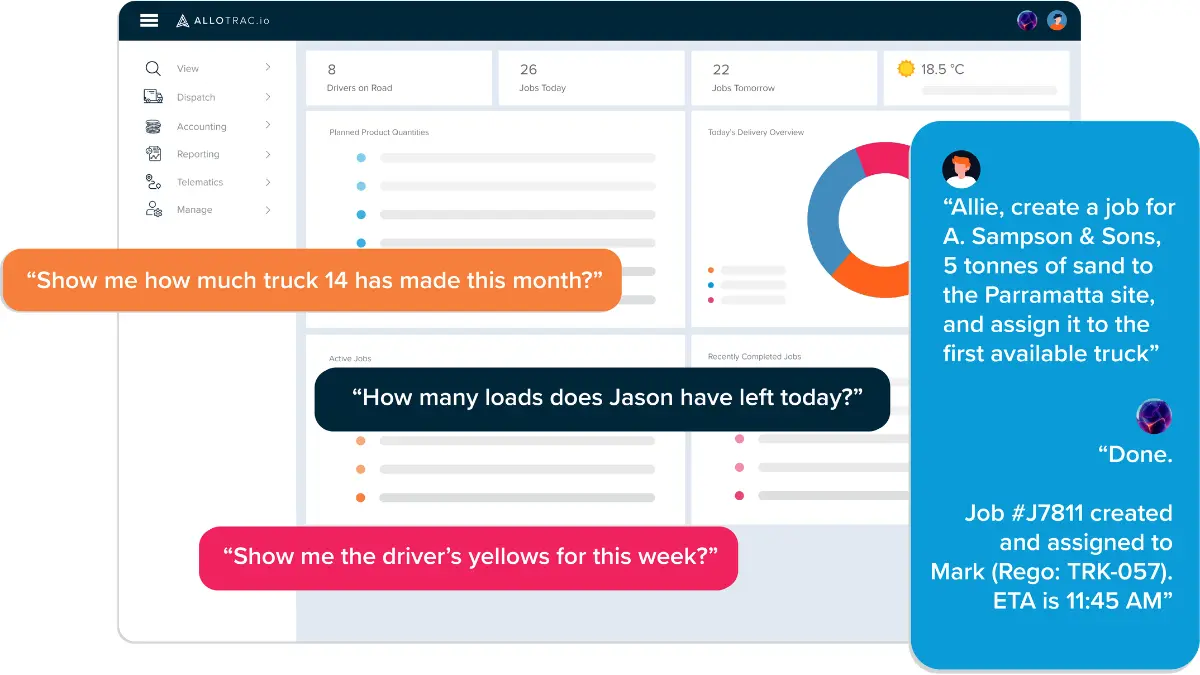
Allotrac.io is an Australian transport management platform built for fleet operators seeking real-time visibility, job management, compliance, and billing in a single cloud-based system. It is particularly attractive for transport teams that want clear pricing and the ability to scale from tracking to workflow automation.
Key Features:
- Live Vehicle Tracking: Tracks vehicles in real time without requiring Allotrac hardware installation.
- Job Management and Allocation: Supports job management, drag-and-drop allocation, and project jobs.
- POP/POD: Captures proof of pickup and proof of delivery digitally.
- Workflow and Subcontractor Management: Adds workflow, shift, and subcontractor management to higher plans.
| Pros | Cons |
|
|
Pricing: AUD 30–150 per vehicle/month depending on plan.
Suitable for: Australian transport operators that want cloud-based fleet tracking, job management, billing, and workflow automation with transparent per-vehicle pricing.
14. Consignmate

Consignmate is an Australian cloud-based transport management system Australia designed for carriers, senders, and receivers that want to simplify last-mile and general freight operations. It stands out for combining job creation, live tracking, driver workflows, invoicing, and fuel-levy-based pricing logic into a single browser-based system.
Key Features:
- Job and Manifest Management: Lets teams create, track, print, and email jobs while managing manifests more efficiently.
- Driver App Workflows: Supports real-time manifesting, job status updates, GPS data, and arrival and departure logging.
- POD and Signature Capture: Enables sign-on-glass and proof of delivery collection in real time.
- Invoicing and Accounting Integration: Creates invoices and connects with accounting tools such as Xero, MYOB, and QuickBooks.
| Pros | Cons |
|
|
Pricing: Custom pricing based on operational requirements.
Suitable for: Australian carriers, senders, and last-mile delivery teams that want a browser-based TMS with live tracking and integrated invoicing.
15. MachShip
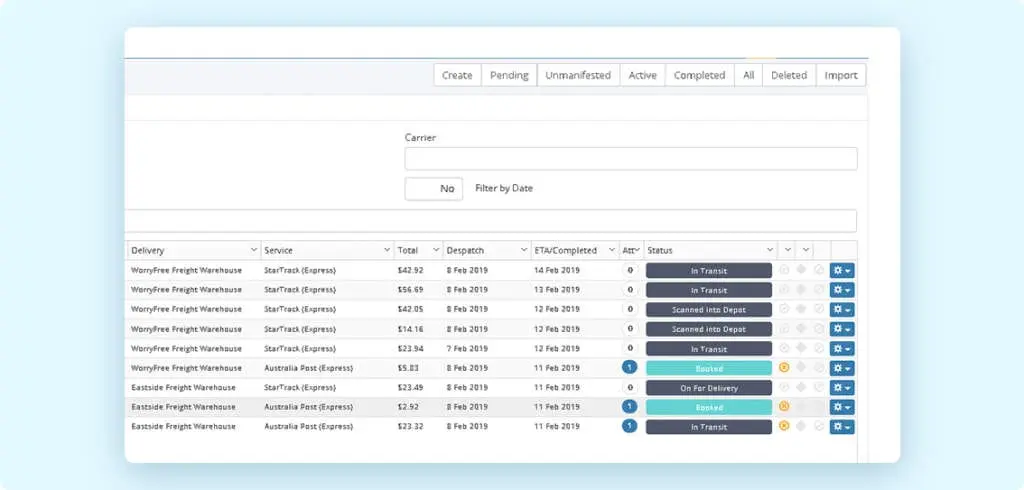
MachShip is a cloud-based freight management platform designed to simplify logistics and multi-carrier operations. The platform helps businesses centralise freight workflows, improve carrier selection, and manage deliveries more efficiently.
Key Features:
- Extensive carrier integration capabilities
- Integrations with e-commerce and ERP systems
- Centralised dashboard for freight management
- Real-time tracking and visibility tools
| Pros | Cons |
|
|
Pricing: Estimated from AUD 1,500–7,000+ per month.
Suitable for: Wholesalers, retailers, and logistics providers managing multi-carrier freight operations.
16. Myfreight
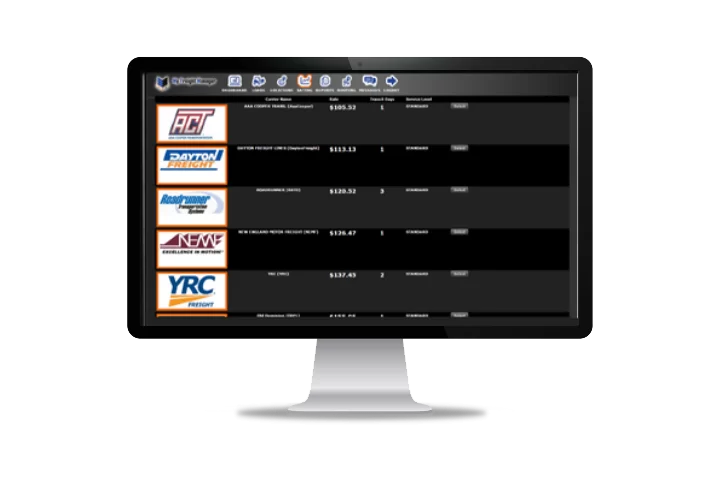
Myfreight is an Australian freight management provider offering both transport management software and managed logistics services. Its platform helps businesses streamline dispatch, carrier management, warehousing, and freight operations.
Key Features:
- Multi-carrier transport management platform
- Freight dispatch and consignment management
- Warehousing and system integrations
- Cost reconciliation and business analytics tools
| Pros | Cons |
|
|
Pricing: Estimated from AUD 2,000–10,000+ per month.
Suitable for: Businesses needing freight management software with multi-carrier dispatch, warehousing integration, and logistics visibility tools.
17. TransVirtual
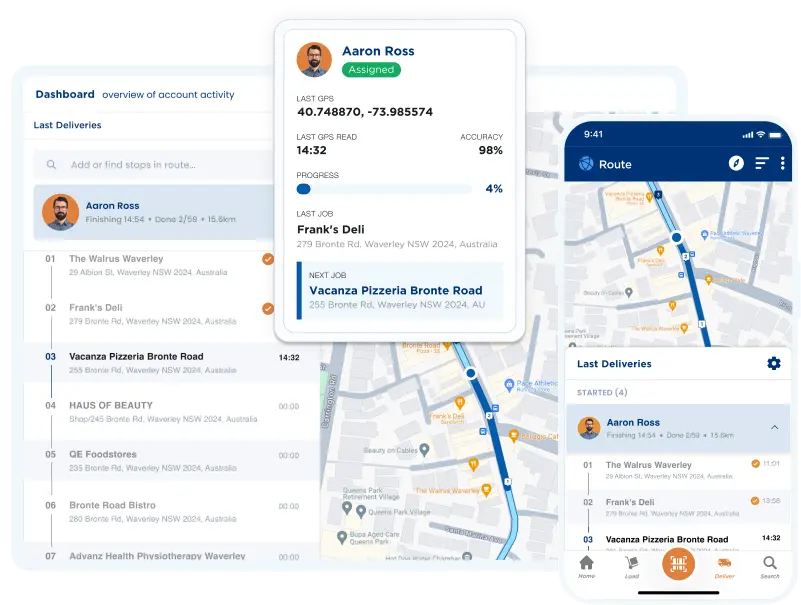
TransVirtual is a freight management system designed to help transport and logistics businesses automate high-volume freight operations. The platform supports carrier management, route optimisation, GPS tracking, and billing automation.
Key Features:
- Integration with hundreds of carriers
- Automated and manual order processing
- Freight consolidation and GPS delivery tracking
- Automated invoicing and POD management
| Pros | Cons |
|
|
Pricing: Estimated from AUD 2,000–12,000+ per month.
Suitable for: Courier, freight, and logistics businesses managing high-volume delivery operations.
18. MyTrucking
MyTrucking is a transport management system built for small to medium transport operators. Its platform helps businesses manage jobs, drivers, scheduling, invoicing, and daily transport workflows more easily.
Key Features:
- Job scheduling and dispatch management
- Driver and dispatcher access
- Auto pricing and job history
- Xero and MYOB accounting integrations
| Pros |
Cons |
|
|
Pricing: Estimated from AUD 65 per vehicle/month for the first five vehicles, then AUD 37 per additional vehicle/month.
Suitable for: Small to medium transport operators needing simple job management, driver coordination, and invoicing support.
19. Freight2020
Freight2020 is an Australian transport management system designed for road freight and logistics businesses. Its platform helps businesses manage freight operations, customer bookings, tracking, documentation, and transport workflows.
Key Features:
- Road freight management system
- Customer booking and tracking portal
- Automated email notifications
- Cloud and on-premise deployment options
| Pros |
Cons |
|
|
Pricing: Custom pricing in AUD based on business requirements.
Suitable for: Road freight and logistics businesses needing transport visibility, customer portals, and operational workflow control.
20. Transfocus

Transfocus is a transport management system designed for delivery and fleet operations. Its platform helps businesses manage mobile delivery workflows, fleet activity, and transport processes through web and mobile-based tools.
Key Features:
- Mobile delivery management
- Fleet and driver workflow support
- ERP and transport system integration
- Web-based transport management tools
| Pros |
Cons |
|
|
Pricing: Custom pricing in AUD based on business requirements.
Suitable for: Businesses needing mobile delivery workflows, fleet coordination, and ERP-connected transport management.
Quick Comparison Table
| Feature | SAP | Oracle | Blue Yonder | Manhattan | MercuryGate | HashMicro | LoadMaster | Trimble Transportation | Cario | Shipsy | FreightPOP | Alpega TMS | Allotrac.io | Consignmate | MachShip | Myfreight | TransVirtual | MyTrucking | Freight2020 | Transfocus |
|---|---|---|---|---|---|---|---|---|---|---|---|---|---|---|---|---|---|---|---|---|
| User-Friendly Interface | ||||||||||||||||||||
| Pricing | ||||||||||||||||||||
| Learning Curve | ||||||||||||||||||||
| Australian Accounting Support | Yes | Limited | No | Yes | Yes | Yes | Limited | Yes | Yes | Limited | Limited | Limited | Limited | Yes | Limited | Yes | Limited | Yes | Yes | Limited |
| Australian Courier Integration | Yes | Yes | Limited | Yes | Yes | Yes | Limited | Yes | Yes | Yes | Yes | Yes | Yes | Yes | Yes | Yes | Yes | Yes | Yes | Yes |
| 3PL Capable | No | No | No | Yes | Limited | Yes | Yes | Yes | Limited | Yes | Limited | Yes | Limited | Limited | Yes | Yes | Yes | Limited | Yes | Limited |
Emerging Trends Shaping the Future of Transportation Management
Transportation is no longer managed with static systems that only track shipments after problems appear. Modern transportation software solutions are evolving into more intelligent platforms that help businesses improve visibility, speed, and decision-making in real time.
- Artificial intelligence and machine learning: Modern transportation management system now uses AI to predict transit times more accurately and help teams respond faster to delays. Some systems can even recommend better routing decisions automatically based on real-time and historical data.
- IoT and telematics integration: Connected sensors give businesses real-time visibility into shipment conditions such as temperature, humidity, and shock exposure. This is especially important for industries like food, beverage, and pharmaceuticals, where product quality can change during transit.
- Sustainability and carbon tracking: Many businesses now expect transport management software to measure emissions as part of daily transport planning. Advanced platforms can track carbon emissions by shipment, helping companies reduce their environmental impact while supporting ESG goals and reporting requirements.
Measuring the ROI of Your Transportation Software
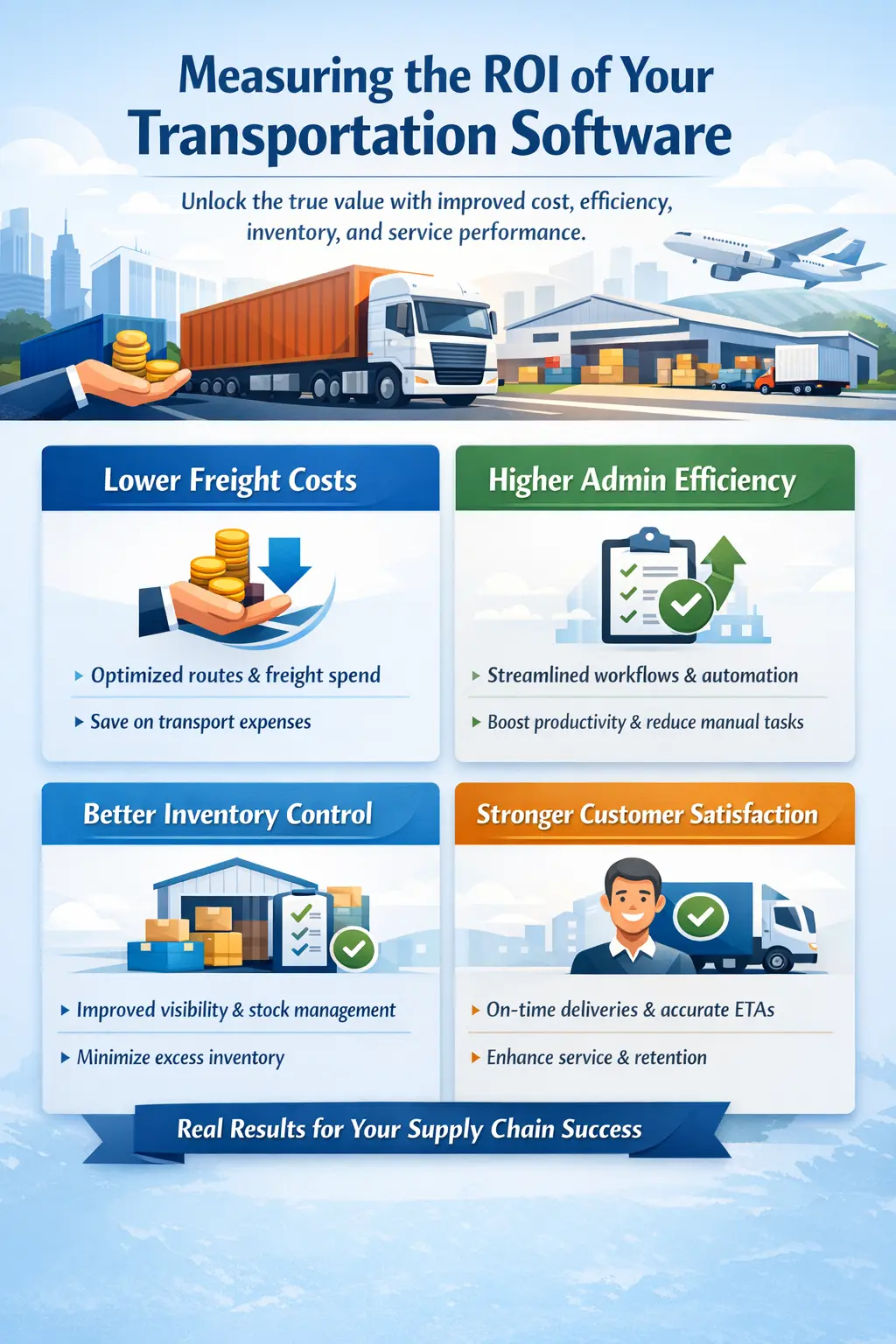
The value of transportation management system software should be measured not only by system usage, but by the business impact it creates over time. When implemented well, the right platform can improve cost efficiency, strengthen operations, and support better service performance across the supply chain.
- Lower freight costs: One of the clearest returns comes from reducing transport spend through better route planning, load consolidation, routing compliance, and freight audit controls.
- Higher administrative efficiency: Transportation management system software reduces manual work in tendering, tracking, and invoice checking, so teams can handle more shipments without adding the same level of headcount.
- Better inventory control: With more reliable inbound visibility, businesses can reduce safety stock and avoid holding excess inventory just to prepare for shipment uncertainty.
- Stronger customer satisfaction: Better delivery performance, proactive updates, and more accurate ETAs help improve the customer experience and support long-term retention.
How We Selected the Best TMS for Australian Businesses

Choosing the right transportation management transportation management system takes more than comparing brand names or checking who appears on a “top 10” list. We focused on the capabilities that help Australian businesses manage freight more efficiently today while staying ready for higher shipment volume, tighter delivery expectations, and more complex transport operations.
- We prioritised platforms that fit Australia’s transport reality, not just generic global use cases: With more than 75% of Australia’s non-bulk domestic freight moving by road, we focused on transportation management system software that can handle road-heavy operations, regional delivery complexity, and greater control across long distances.
- We looked beyond polished demos and vendor rankings: A system should prove its value in daily operations, not only during a sales presentation. That is why we favoured transportation management transportation management system that can improve routing, carrier coordination, tracking, and freight cost control in practical use.
- We gave strong weight to integration readiness: Software creates far more value when it connects smoothly with ERP, WMS, finance, and carrier systems. For that reason, we prioritised transport management software that supports easier integration and a faster path to operational results.
- We favoured systems that support smarter decision-making, not just basic execution: Modern transport teams need more than load tendering and static reports. The strongest transportation management transportation management system should help users flag exceptions early, recommend better actions, and respond faster when disruptions appear.
- We treated user adoption as a serious buying factor: Even the most advanced transportation management system software can underperform when teams still rely on spreadsheets, emails, and manual calls. We therefore prioritised platforms with a practical interface and a user experience that supports day-to-day adoption.
- We considered long-term fit, not just short-term functionality: Transport operations rarely stay simple for long. We selected transportation management transportation management system that can support business growth, broader carrier networks, additional freight modes, and stronger operational control without forcing a complete system replacement later.
Conclusion
In today’s fast-moving business environment, managing freight efficiently is no longer optional. Transportation management transportation management system helps businesses improve visibility, control transport costs, and keep deliveries moving faster and with greater confidence.
The right platform does more than support daily operations. It gives businesses a stronger foundation to handle disruption, improve service performance, and scale transport operations with better control over time.
If your business is evaluating the next step, this is the right time to speak with specialists who understand both the technology and the operational challenges behind it. Get a free consultation with our experts to find the transportation management software that fits your business needs and helps you move freight more strategically.
FAQ About Transportation Management Software
-
Which TMS has the best NHVR Chain of Responsibility compliance features?
No single TMS is automatically the best for every Australian operator. A strong option is one that helps you manage NHVR-related obligations with features such as fatigue and driver records, load and mass checks, maintenance workflows, document retention, proof of delivery, and clear audit trails.
-
Can I switch TMS providers without losing historical shipment data?
Yes, in many cases you can switch providers without losing historical shipment data, as long as your current system can export records and your new TMS supports import or structured migration. Before switching, confirm what data can be moved, such as shipments, PODs, customer records, rate cards, and attachments, then keep a read-only backup of the old system until the migration is fully verified.
-
How long does TMS implementation take in Australia?
In Australia, cloud TMS implementation often takes days or weeks for simpler rollouts, while larger operations with ERP integrations, custom workflows, multiple depots, or change-management needs may take several weeks or longer. The timeline usually depends more on data quality, integrations, and process complexity than on software setup alone.
-
Do I need a TMS if I already use a 3PL provider?
Often yes, especially if you still need better visibility, carrier performance tracking, freight cost control, customer service, or coordination across multiple 3PLs and in-house transport. A 3PL handles execution, while a TMS helps you plan, monitor, audit, and optimise transport operations from your side.
-
What is the best cloud TMS in Australia?
The best cloud TMS in Australia depends on your business needs and operational complexity. Large enterprises often use SAP or Oracle Transportation Management, while businesses seeking integrated ERP and logistics capabilities may prefer HashMicro. Australian transport operators also commonly choose platforms like Kynection, TransVirtual, or Allotrac.io for local fleet and compliance management.
-
What’s the difference between TMS software and a freight broker portal?
TMS software manages end-to-end transport processes such as planning, carrier selection, booking, tracking, documentation, freight settlement, and reporting. A freight broker portal is usually narrower, focusing on accessing broker capacity, rates, and job bookings rather than giving you full operational control across your transport network.