





Third-party logistics (3PL) is a service where businesses outsource supply chain operations such as warehousing, inventory management, order fulfillment, and shipping to an external provider. This allows companies to improve logistics efficiency while focusing on core business activities.
Supply chain efficiency directly shapes customer satisfaction and business growth. Australian customers expect fast delivery, clear tracking, and simple returns. Meeting these expectations puts serious pressure on in-house logistics teams.
Running warehousing, inventory, fulfilment, and transport takes major investment and specialist skills. For growing Australian businesses, managing logistics internally often drains time and budget. This distraction slows down product development, sales, and marketing.
Third-Party Logistics, or 3PL, offers a practical solution. By outsourcing logistics to experienced providers, companies gain access to advanced systems and national networks. This approach supports flexible growth and consistent customer experiences across Australia.
Key Takeaways
Outsourcing logistics to a 3PL allows Australian businesses to reduce fixed costs, access national infrastructure, and scale operations faster without owning warehouses or fleets.
From receiving and storage to fulfilment, shipping, and returns, a 3PL manages the full logistics flow while customers continue to experience your brand.
Accurate inventory, fast fulfilment, reliable shipping, and smooth returns are the operational pillars that protect delivery speed, margins, and customer satisfaction.
Transportation-based, warehouse-based, and full-service 3PLs solve different problems, so selecting the right model is essential for long-term efficiency and growth.
What Is Third-Party Logistics (3PL)?
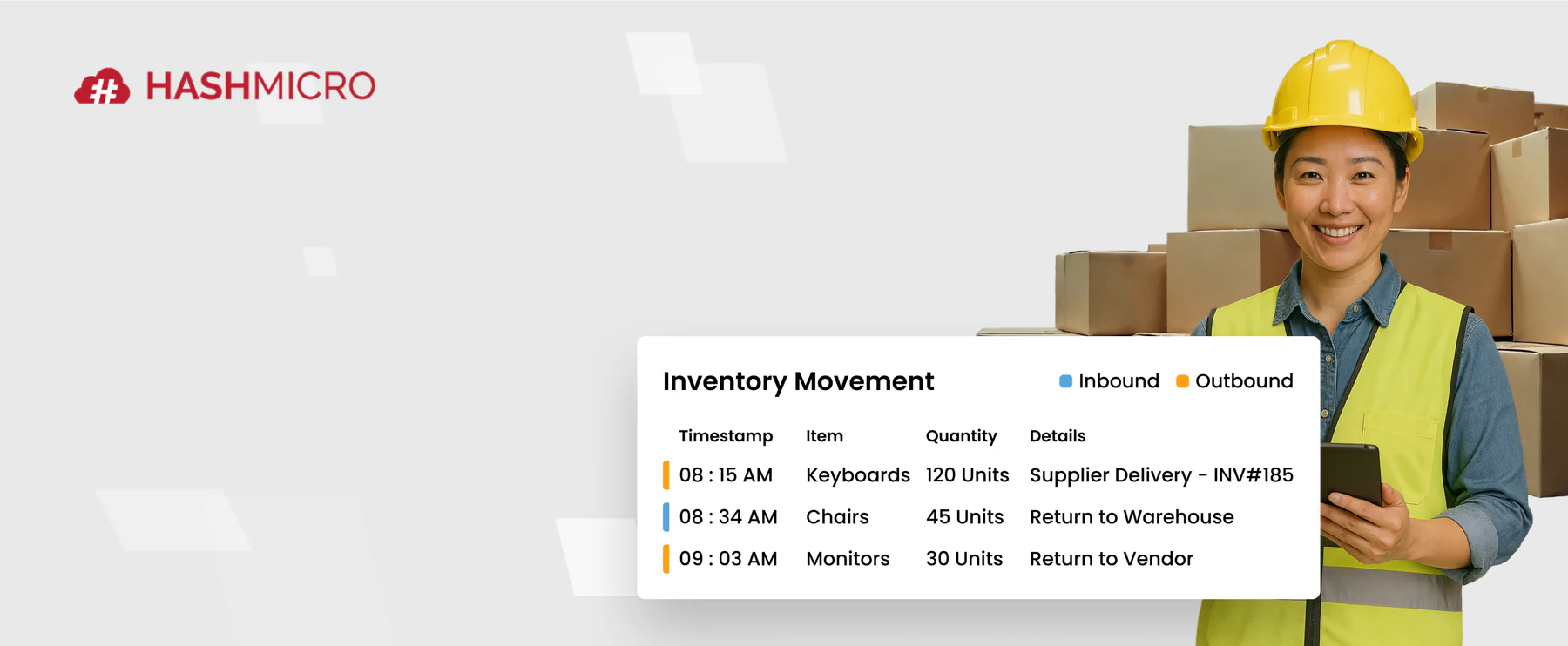
Managing a 3PL relationship well depends on having visibility across inventory levels, fulfilment status, and freight costs in real time. Hashy, HashMicro's AI Coworker, draws on connected logistics and procurement data through the Company Nexus to surface order delays, flag stock discrepancies, and answer operational questions without requiring a manual data pull from multiple platforms.
Third-Party Logistics, or 3PL, means outsourcing logistics operations to an external provider. These services include warehousing, inventory management, order fulfilment, and transportation. A 3PL company connects the seller directly to the customer.
The term “third-party” refers to a logistics business that operates separately from buyers and sellers. Even so, it works closely with the seller’s supply chain. Customers still experience the brand, not the logistics provider.
3PL services expanded after transport deregulation allowed logistics companies to offer more than freight movement. Over time, providers added technology, automation, and data-driven planning. Today, 3PL companies play a strategic role in supply chain decisions.
By using a 3PL, a business avoids heavy upfront investment in warehouses, staff, vehicles, and a logistics management software. Costs shift from fixed to flexible, based on usage. This model suits Australian e-commerce and retail businesses that need speed and cost control.
Managing a 3PL relationship well depends on having visibility across inventory levels, fulfilment status, and freight costs in real time. Hashy, HashMicro's AI Coworker, draws on connected logistics and procurement data through the Company Nexus to surface order delays, flag stock discrepancies, and answer operational questions without requiring a manual data pull from multiple platforms.






How 3PL Works in the Supply Chain
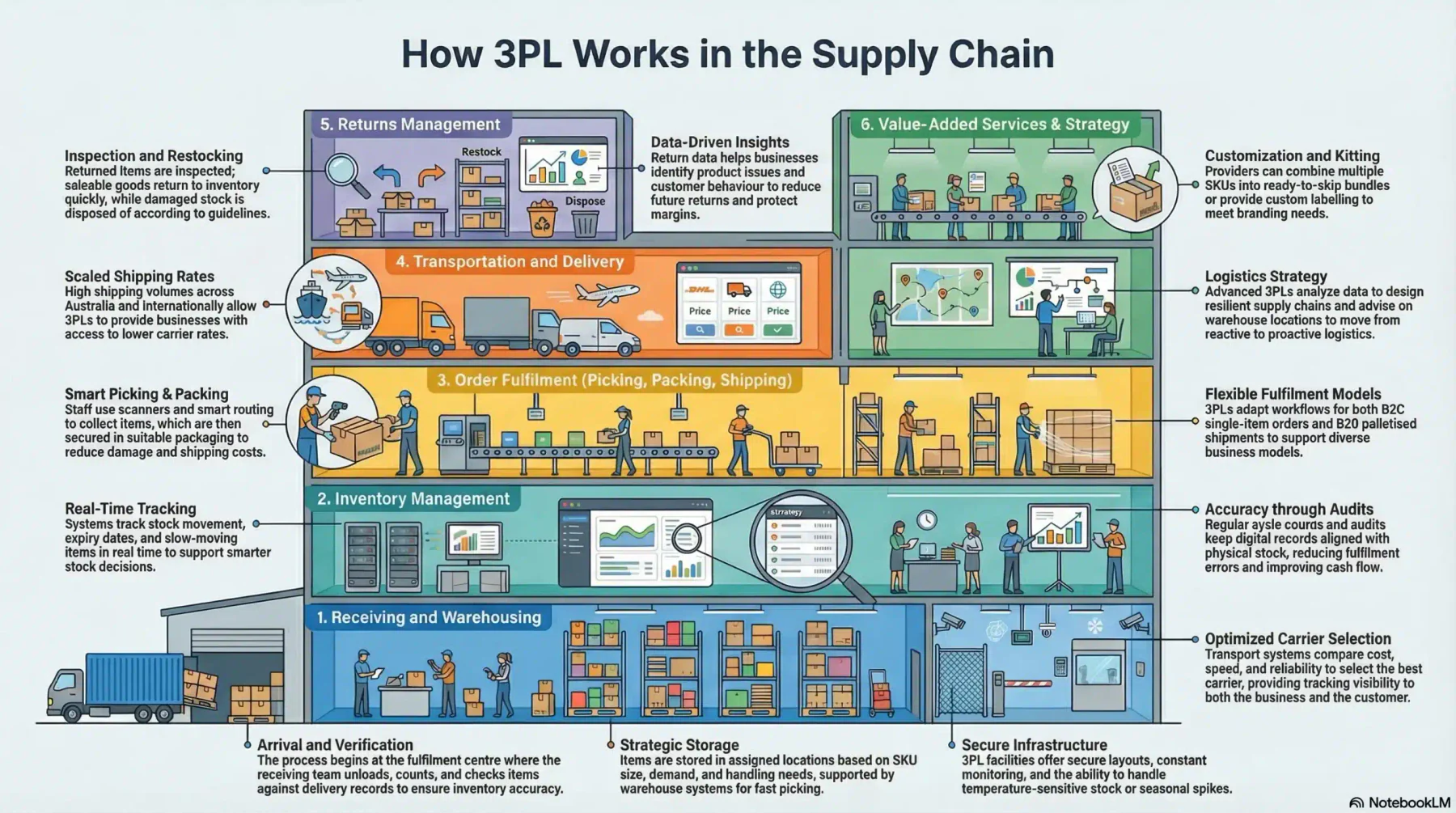
A 3PL acts as the operational link between suppliers, warehouses, carriers, and customers. Instead of managing logistics internally, businesses outsource fulfilment activities to a provider that handles storage, shipping, and inventory movement on their behalf.
The process typically follows a structured workflow from receiving inventory to managing customer returns.
1. Receiving inventory
The 3PL receives products from manufacturers or suppliers and stores them in its warehouse. Inventory is then recorded and organised for fulfilment.
2. System integration
The provider connects its warehouse management system (WMS) with the business’s e-commerce platform, marketplace, or ERP system. This allows orders and inventory data to sync automatically.
3. Picking and packing
When a customer places an order, warehouse staff pick the required items, pack them according to business requirements, and prepare them for dispatch.
4. Shipping and delivery
Orders are shipped through the 3PL’s carrier network, with transshipment coordinated when goods need to move between transport modes or locations. Customers receive tracking information while businesses maintain visibility over delivery performance.
5. Returns processing
Returned products are inspected and either restocked, repaired, or disposed of based on predefined return policies. This helps maintain inventory accuracy and customer satisfaction.
Core Functions of a 3PL Provider
A 3PL delivers practical logistics support that businesses can scale as needed. Each function works independently, so companies only pay for services that match their operational goals.
1. Warehousing
Warehousing forms the base of most 3PL services. Providers store goods in facilities designed for different product needs, from general stock to temperature-sensitive items. This setup helps Australian businesses manage stock safely and efficiently.
3PL warehouses use secure layouts, controlled access, and constant monitoring. Teams adjust storage layouts to handle seasonal spikes and fast-moving products. Businesses avoid long leases, facility upkeep, and rising property costs.
2. Inventory Management
A 3PL takes full control of inventory accuracy and visibility. Systems track stock movement, expiry dates, and slow-moving items in real time. This supports smarter stock decisions.
Regular cycle counts and audits keep records aligned with physical stock. Accurate inventory reduces fulfilment errors and improves cash flow. Businesses gain reliable data without managing complex systems themselves.
3. Order Fulfilment
Order processing directly affects customer experience. 3PL companies focus on speed, accuracy, and consistent packing standards. Automation helps process high order volumes efficiently.
Providers handle both B2C and B2B fulfilment models. They adapt workflows for single-item orders or palletised shipments. This flexibility supports online brands and wholesale distribution alike.
4. Transportation and Shipping
3PLs plan and manage goods movement across road, air, sea, and rail using a platform for shipment management. They balance cost and delivery speed to meet service expectations. High shipping volumes unlock better carrier rates.
Freight audits ensure accurate billing and cost control. Providers also manage consolidation and international compliance. This reduces risk in domestic and cross-border shipping.
5. Returns Management
Returns management focuses on recovering value and protecting brand trust. 3PLs inspect returned items based on clear rules. Saleable stock returns to inventory quickly.
Return data highlights product issues and customer behaviour. Businesses use these insights to reduce future returns. This improves margins and customer satisfaction.
6. Value-Added Services
Value-added services customise products before delivery. Kitting combines multiple SKUs into ready-to-ship bundles. This suits promotions and subscription models.
Labelling and light customisation meet retail and branding needs. Businesses maintain personalisation without extra labour. This keeps operations lean and flexible.
7. Planning and Logistics Strategy
Advanced 3PLs support long-term logistics planning. They analyse data to design resilient supply chains. This helps businesses prepare for disruptions.
Providers advise on warehouse locations and network design. Strategic planning shifts logistics from reactive to proactive. Businesses gain stability and cost control.
Types of 3PL Providers
"Switching to a 3PL completely transformed our delivery speed across Australia. Orders ship faster, returns are easier, and our team can finally focus on growth."
3PL providers differ by focus and capability. Understanding these types helps businesses choose the right logistics partner.
Transportation-Based 3PL
Transportation-based 3PLs focus on moving goods efficiently. Some own fleets, while others manage carrier networks. Both models offer flexible freight solutions.
Fleet performance here is vital in reducing fuel costs, minimising vehicle downtime, and extending asset lifespan by tracking driver behaviour, maintenance schedules, and route efficiency in real time.
These providers handle routing, consolidation, and freight coordination. They suit businesses with internal warehousing but complex shipping needs. Strong carrier access improves delivery reliability.
Warehouse-Based 3PL
Warehouse-based 3PLs specialise in storage and fulfilment. Their value lies in efficient picking, packing, and inventory handling. Technology supports fast order turnaround.
These providers suit growing e-commerce businesses. Storage space scales during peak seasons and contracts during slower periods. Brands focus on sales, not warehouse labour.
Financial and Information-Based 3PL
This type focuses on data, finance, and visibility. They manage billing, audits, and supply chain analytics. No physical handling takes place.
Large companies use these providers to control costs and performance. They improve transparency across complex logistics networks. This supports smarter decision-making.
Full-Service 3PL Providers
Full-service 3PLs manage logistics end to end. They combine warehousing, transport, and systems under one provider. This simplifies operations.
Businesses gain a single point of control and real-time visibility. Fewer handovers reduce delays and errors. This model suits companies seeking full logistics outsourcing.
3PL vs Other Logistics Models
Different logistics models offer varying levels of control and outsourcing. Comparing them helps businesses choose the right structure.
- 3PL vs 4PL, A 3PL executes daily logistics tasks like storage and shipping. A 4PL manages the entire supply chain strategy and oversees multiple providers. Businesses move to 4PL when logistics complexity grows beyond internal control.
- 3PL vs Freight Forwarder, Freight forwarders specialise in international cargo movement and customs handling. A 3PL manages warehousing and order fulfilment after goods arrive. Forwarders move pallets, while 3PLs ship individual orders.
- In-House Logistics vs 3PL, In-house logistics gives full control but demands high investment and ongoing management. A 3PL reduces overhead and scales faster. Many Australian businesses choose 3PL to stay agile and competitive.
Industry-Specific Use Cases for 3PL Partnerships
Different industries face different logistics pressures. 3PL providers adapt their services to solve sector-specific challenges.
E-commerce and Direct-to-Consumer (DTC) Retail
E-commerce brands rely on 3PLs to meet fast delivery expectations across Australia. Providers place stock in multiple fulfilment centres to cut delivery times and costs. They also handle peak sales periods and high return volumes without disrupting customer experience.
Healthcare and Pharmaceuticals
Healthcare logistics demand strict control and compliance. Medical-focused 3PLs manage cold storage, temperature monitoring, and regulated transport. They also track batches and expiry dates to support recalls and patient safety.
Manufacturing and Automotive
Manufacturers use 3PLs to keep production lines moving. Providers support inbound logistics and Just-In-Time delivery to reduce storage needs. They also manage oversized freight and specialised transport for heavy components.
A Step-by-Step Guide to Implementing a 3PL Solution

Moving to a 3PL requires planning and clear execution. A structured rollout helps avoid disruption and protects service levels.
Step 1: Internal Needs Assessment and Goal Setting
Start by reviewing order volumes, SKUs, shipping zones, and current bottlenecks. Define clear goals such as faster delivery or lower fulfilment costs. These targets guide provider selection and success measurement.
Step 2: Vendor Selection and Vetting
Shortlist 3PL companies based on capability, location, and experience. Compare pricing, systems, and operational fit. Site visits help confirm service quality and warehouse standards.
Step 3: Technology and Systems Integration
Integrate your sales platforms or ERP system with the 3PL’s warehouse software to keep data updated in real time and reduce errors. The 3PL’s WMS should sync inventory, orders, fulfilment status, and returns automatically to ensure accurate stock and order tracking.
Step 4: Pilot Testing and Inventory Transfer
Begin with a pilot using key SKUs. Test receiving, picking, packing, and shipping before scaling. Move inventory in phases to maintain order continuity.
Step 5: Continuous Monitoring and Optimization
Track performance against agreed KPIs after launch. Hold regular reviews to adjust forecasts and processes. Ongoing optimisation keeps costs down and service levels high.
Common Pitfalls to Avoid When Outsourcing to a 3PL
Outsourcing works best with clear controls and expectations. Avoid these common mistakes to protect performance and customer trust.
Inadequate SLAs create risk when expectations are unclear. Contracts should define accuracy, cutoff times, and acceptable error rates. Strong SLAs protect service quality.
Integration often takes longer than expected. System mismatches can delay launches and disrupt orders. Plan extra time and resources for testing.
Choosing the cheapest option often backfires. Low headline rates may hide higher storage or shipping fees. Poor service costs more through lost customers.
Outsourcing does not remove accountability. Brands must still monitor inventory, shipping quality, and customer feedback. Active oversight keeps standards consistent.
Advanced 3PL Practices Shaping the Future
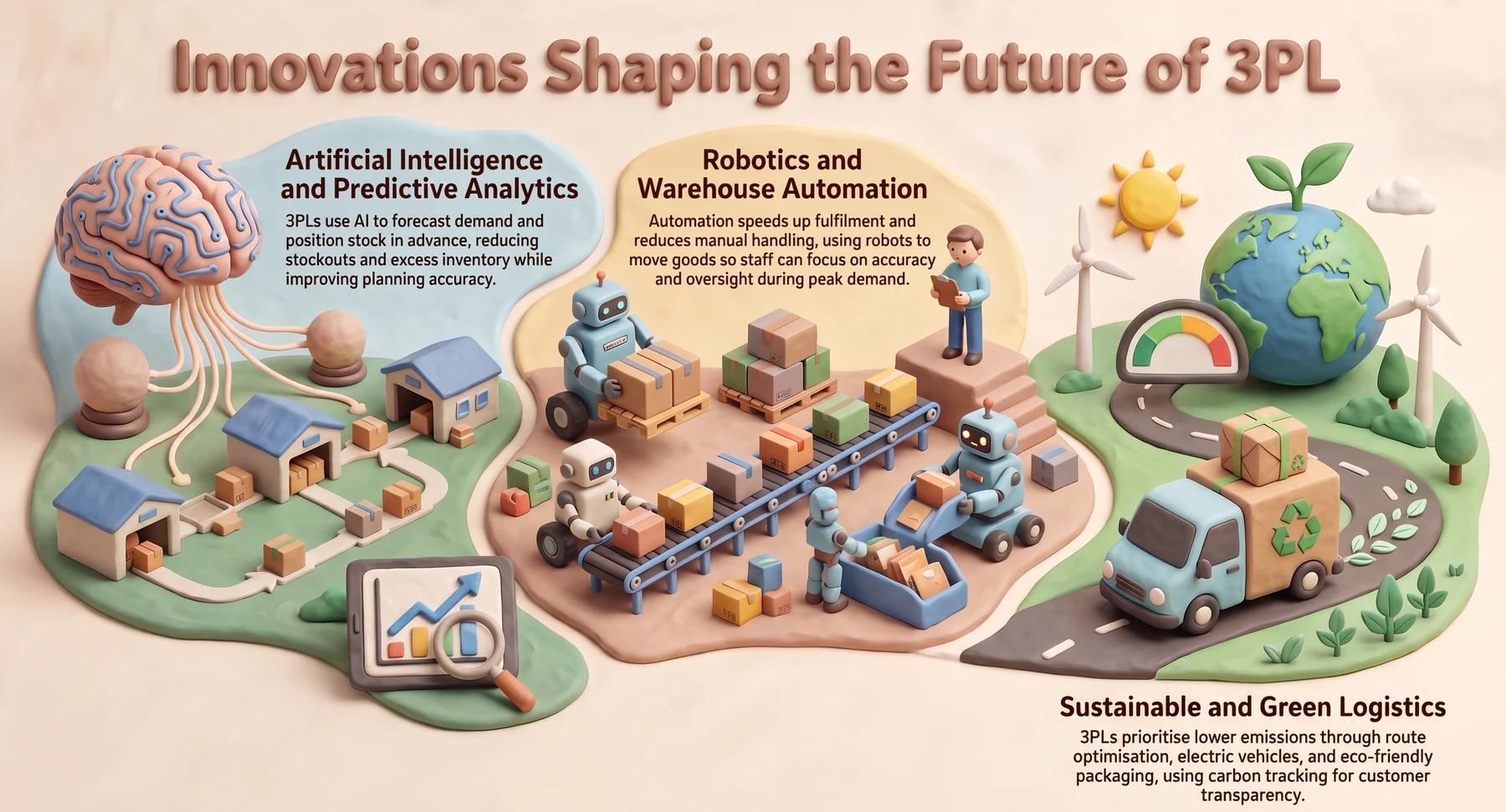
Leading 3PL companies invest in technology to improve speed, accuracy, and resilience. These innovations are reshaping logistics operations.
Artificial Intelligence and Predictive Analytics
3PLs use AI to forecast demand and position stock in advance. Predictive models reduce stockouts and excess inventory. Businesses gain better planning accuracy.
Robotics and Warehouse Automation
Automation speeds up fulfilment and reduces manual handling. Robots move goods while staff focus on accuracy and oversight. High throughput supports peak demand.
Sustainable and Green Logistics
3PLs now prioritise lower emissions and waste reduction. Route optimisation, electric vehicles, and eco-friendly packaging support sustainability goals. Carbon tracking adds transparency for customers.
Supply Chain and Transport Management Software
Supply chain management (SCM) software and transport management systems (TMS) give 3PLs real-time control over inventory, orders, and carrier performance. These platforms connect warehousing, fulfilment, and freight into one visible workflow. Businesses that use them reduce delays, cut manual coordination, and improve delivery consistency.
TMS tools automate carrier selection, route planning, and freight cost comparison. SCM software tracks purchase orders, supplier lead times, and stock levels across multiple locations. Together, they form the operational backbone that makes advanced 3PL practices scalable and repeatable.
How Much Does 3PL Cost in Australia?
3PL pricing in Australia varies depending on storage requirements, order volume, shipping activity, and service complexity. Most providers charge separate fees for warehousing, fulfilment, receiving, and system integration.
Common 3PL fees include:
- Setup and integration fee: One-time onboarding and system configuration cost.
- Receiving fee: Charged per pallet, carton, or hourly receiving activity.
- Storage fee: Charged based on warehouse space usage, often per pallet or cubic metre per month.
- Pick and pack fee: A fulfilment fee charged per order, with additional charges for individual items.
For businesses processing around 1,000 orders per month, 3PL costs often range between AUD $7,000 and $8,500, depending on storage, shipping volume, and service requirements. In many cases, outsourcing is more cost-effective than operating a private warehouse and fulfilment team.
Conclusion
Third-Party Logistics has become a practical growth lever for Australian businesses that need speed, flexibility, and cost control. By outsourcing logistics to experienced providers, companies can simplify operations while improving delivery performance and customer satisfaction.
Whether you run an e-commerce brand, manufacturer, or growing retailer, the right 3PL partner helps you scale without heavy upfront investment.
If you are considering this move, you can get free consultation with us to explore the best 3PL setup for your business.