














Construction equipment plays a critical role in completing building projects efficiently and safely. From earthmoving to lifting, the right machinery helps reduce manual work and speeds up operations.
For Australian construction businesses, choosing suitable equipment can improve productivity, reduce costs, and ensure compliance with safety standards. Different projects require different types of machinery.
In this guide, you will learn about the main types of construction equipment, their uses, and how to choose the right equipment for your needs.
Key Takeaways
Define the fundamental concepts, mechanical principles, and the evolution of heavy machinery in modern infrastructure.
Explore the diverse categories of machinery, including earthmoving, material handling, vehicles, concrete, and lifting equipment.
Analyze the specific operational applications and project lifecycle phases where different machines are utilized.
Delve into project requirements, sizing, total cost of ownership, and fuel efficiency metrics for fleet selection.

What Is Construction Equipment?
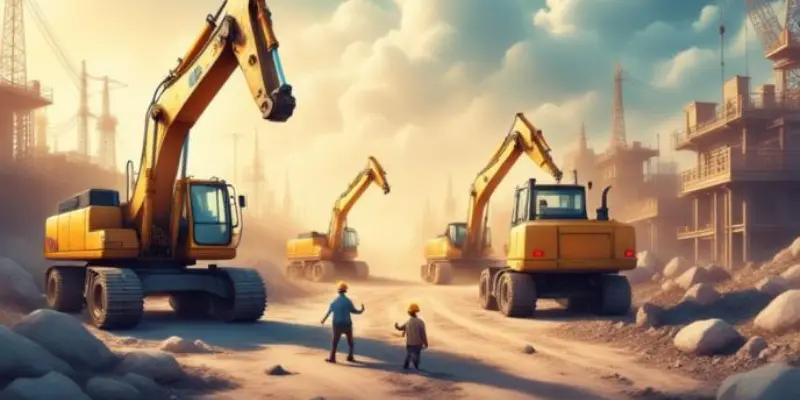
Construction equipment refers to heavy machinery and tools used in construction, infrastructure, and building projects. These machines are designed to perform tasks such as digging, lifting, transporting, and material processing.
They help increase efficiency, reduce labour requirements, and improve project timelines. Construction equipment is used across residential, commercial, and industrial projects.
Modern equipment often includes advanced technology for better performance, safety, and fuel efficiency.
Types of Construction Equipment
Construction equipment can be grouped into categories based on their function. Each type is designed for specific tasks on-site.
1. Earthmoving Equipment
Earthmoving equipment is used to dig, move, and shape soil and terrain. Common machines include excavators, bulldozers, and loaders. These machines are essential for site preparation and foundation work.
2. Material Handling Equipment
Material handling equipment is used to move materials around the construction site. Examples include forklifts and conveyors. They help improve efficiency and reduce manual handling risks.
3. Construction Vehicles
Construction vehicles transport materials, equipment, and workers. Dump trucks and concrete mixers are commonly used. They support logistics and ensure smooth site operations.
4. Concrete and Road Construction Equipment
This equipment is used for mixing, laying, and finishing concrete and roads. Examples include concrete mixers, pavers, and rollers. They are essential for infrastructure and road projects.
5. Lifting and Hoisting Equipment
Lifting equipment such as cranes and hoists is used to lift heavy materials to different heights. They are critical for high-rise construction and heavy lifting tasks.

Common Construction Machines and Their Uses
Common construction machines include excavators for digging, bulldozers for pushing materials, and loaders for moving debris. Each machine serves a specific purpose depending on the project.
Cranes are used for lifting heavy loads, while dump trucks transport materials across the site. Concrete mixers prepare materials for construction work.
Understanding how each machine works helps businesses choose the right equipment for their projects.
Factors to Consider When Choosing Construction Equipment
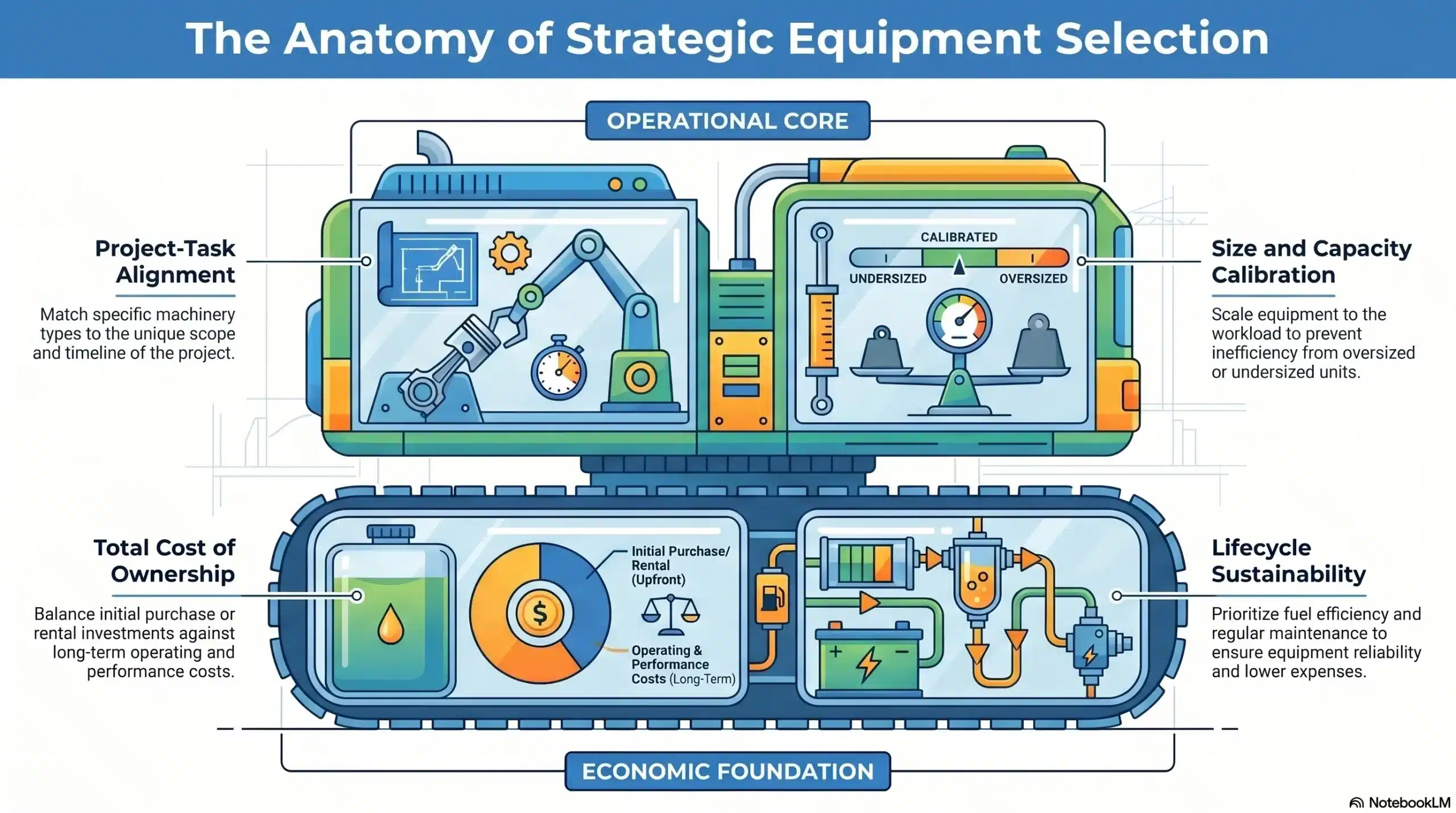
Selecting the right construction equipment depends on several important factors. Considering these factors helps ensure efficiency and cost-effectiveness.
1. Project Requirements
Different projects require different types of equipment. Understanding the scope, timeline, and tasks helps determine the right machinery. Choosing equipment that matches project needs improves performance.
2. Equipment Size and Capacity
Equipment should be suitable for the size and scale of the project. Oversized or undersized machines can reduce efficiency. Matching capacity to workload ensures optimal use.
3. Cost and Budget
Construction equipment involves significant investment. Businesses should consider purchase, rental, and operating costs. Optimizing equipment purchasing decisions by balancing cost with performance is important for long-term profitability.
4. Fuel Efficiency and Maintenance
Fuel consumption and maintenance requirements affect long-term costs. Efficient equipment reduces operating expenses. Regular maintenance also ensures reliability and longevity.
Benefits of Using Modern Construction Equipment
Modern construction equipment offers improved performance, efficiency, and safety. Advanced features such as automation, GPS tracking, and digital tools for site assets help optimise operations.
These machines reduce manual labour and speed up project completion. This leads to better productivity and cost savings.
Using modern equipment also helps businesses stay competitive and meet industry standards. Tools for construction workflows further support coordination between teams, enabling faster project delivery and better resource allocation.
Equipment Maintenance and Safety Practices
Proper maintenance and safety practices are essential to ensure equipment reliability and protect workers on-site.
1. Regular Inspections
Routine inspections help identify issues before they become serious problems. Checking equipment regularly improves safety and performance. It also helps prevent unexpected breakdowns. Tracking unresolved site issues through digital logs ensures problems are followed up before the next inspection cycle.
2. Preventive Maintenance
Scheduled maintenance ensures equipment remains in good condition. This includes servicing, lubrication, and part replacement. Preventive maintenance reduces downtime and repair costs.
3. Operator Training
Trained operators can use equipment safely and efficiently. Proper training reduces the risk of accidents and equipment damage. It also improves productivity on-site.
4. Compliance with Safety Regulations
Construction businesses must follow safety regulations and standards. Compliance helps protect workers and avoid legal issues. It also promotes a safer working environment.
The Future of Construction Equipment
The construction industry is evolving with new technologies such as automation, telematics, and electric-powered equipment. These innovations improve efficiency and reduce environmental impact.
Smart equipment with real-time data tracking supports centralised project supervision and helps businesses make better decisions. Automation also reduces reliance on manual labour.
As technology advances, construction equipment will continue to become more efficient, sustainable, and connected.
Conclusion
Construction equipment is essential for completing projects efficiently, safely, and on time. Choosing the right machinery can improve productivity and reduce costs for construction businesses.
Understanding different types of equipment, their uses, and key selection factors helps businesses make informed decisions. Proper maintenance and safety practices also play a crucial role in long-term performance.
As technology continues to evolve, modern construction equipment will offer even greater efficiency and innovation.
Book a free consultation with our experts to find the right solution for your business.

Frequently Asked Question
Construction equipment refers to heavy machinery and tools used for building, infrastructure, and construction projects such as digging, lifting, and transporting materials.
The main types include earthmoving equipment, material handling equipment, construction vehicles, concrete and road equipment, and lifting or hoisting machinery.
Key factors include project requirements, equipment size and capacity, cost and budget, and fuel efficiency and maintenance needs.
Modern construction equipment improves productivity, reduces labour, enhances safety, and helps complete projects faster and more efficiently.
Construction equipment can be maintained safely through regular inspections, preventive maintenance, proper operator training, and compliance with safety regulations.