




Behind every commercial building is a project that needs careful coordination to turn plans into reality. That is what construction project management does. It keeps people, resources, and timelines aligned from start to finish.
Project for building infrastructure is more complex than most other projects because they involve physical job sites, heavy equipment, safety risks, and changing site conditions.
Good construction project management matters even more today. With tighter budgets, stricter environmental rules, and supply chain issues, it is no longer optional. This blog covers everything you need to know about it.
Key Takeaways
Construction project management is the practice of planning, coordinating, and overseeing building projects from design through to final handover.
Core responsibilities of a construction project manager cover budget, schedule, communication, safety, and contract oversight across the project lifecycle.
In comparison, a construction project manager oversees the whole project, while a construction manager focuses on day-to-day on-site delivery.
The 5 phases of a construction project are initiation, planning, pre-construction, construction, and closeout or handover.

What Is Construction Project Management?

Construction project management is a professional service that oversees building projects from planning and design through to final construction, keeping work on schedule, within budget, and meeting quality standards.
The role applies project management principles to physical builds, and demands a specialised solution for constructors to manage materials, equipment, regulations, and teams across complex projects.
Core Responsibilities of a Construction Project Manager
A construction project manager takes responsibility for the full scope of a build, keeping work on track across budget, schedule, safety, quality, and communication with every stakeholder.
- Budget management: Estimate costs, monitor expenses, and keep spend within approved limits throughout every phase of the project.
- Schedule control: Plan timelines, track progress, and respond quickly to delays caused by bad weather, material shortages, or scope changes.
- Stakeholder communication: Coordinate between clients, engineers, contractors, and regulators to keep everyone aligned on goals, decisions, and risks.
- Safety and quality assurance: Ensure work meets WHS standards, contract quality requirements, and approved design documentation on site.
- Contract administration: Manage variations, claims, and obligations under the contract to prevent disputes and protect project margins.
Construction Project Manager vs Construction Manager
People often use these titles interchangeably, but the roles focus on different parts of a project and carry different responsibilities across the construction lifecycle.
1. Construction project manager
A construction project manager oversees the full project from early planning through to final handover, managing budgets, timelines, contracts, and stakeholder communication at a strategic level.
2. Construction manager
A construction manager focuses on on-site execution, supervising daily activity, coordinating subcontractors, and making sure the physical build follows approved plans and WHS standards.
| Aspect | Construction Project Manager | Construction Manager |
| Scope | Full project lifecycle | On-site execution phase |
| Focus | Strategy, budget, schedule, contracts | Daily site supervision and subcontractor coordination |
| Stakeholder engagement | Clients, regulators, executives | Subcontractors, site crews, suppliers |
| Typical location | Head office with site visits | On-site throughout construction |
| Key deliverables | Budgets, contracts, stakeholder reports | Work progress, site safety, quality compliance |
The 5 Phases of a Construction Project
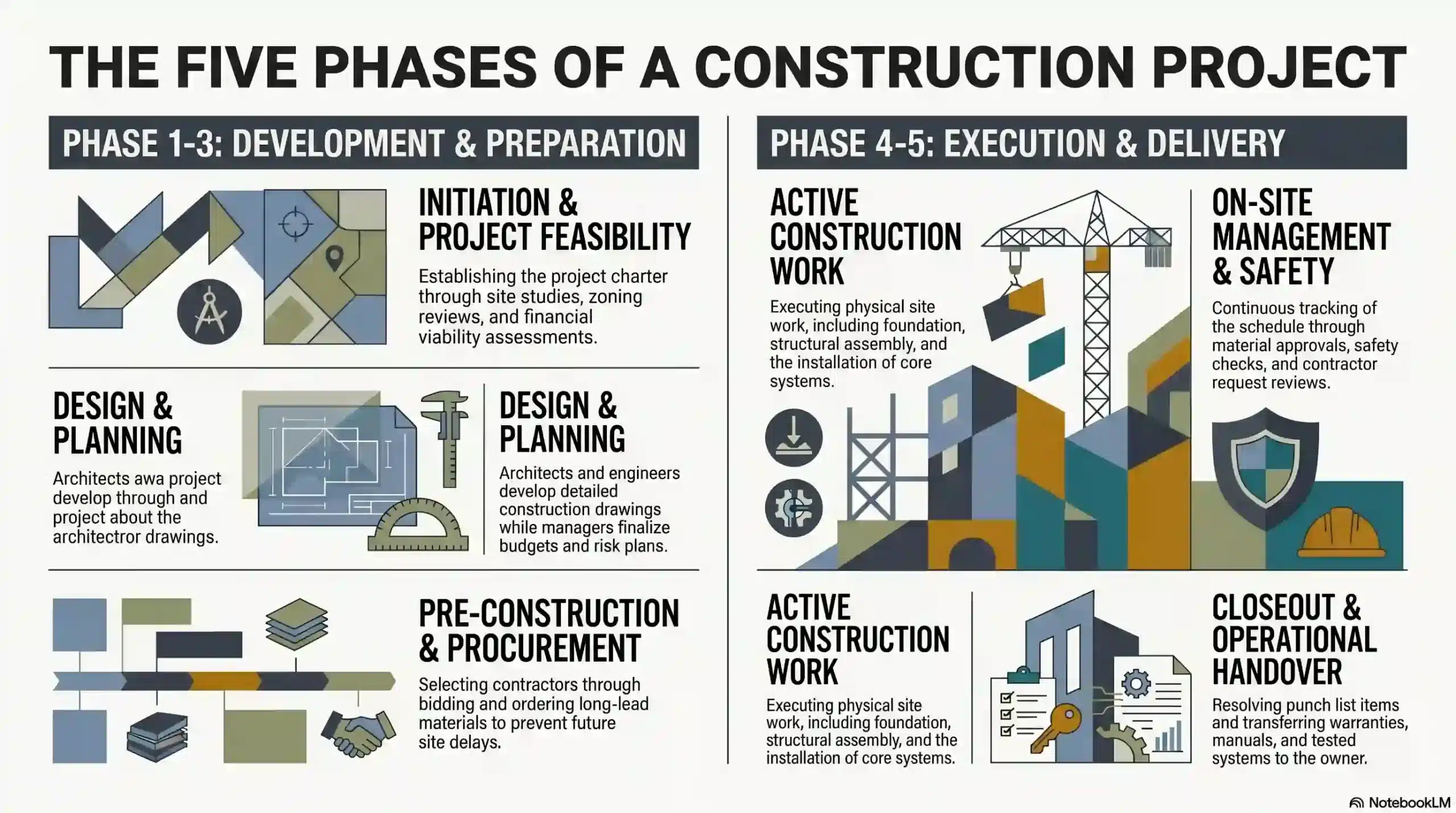
Construction projects are complex, so teams usually split the work into clear stages. Most industry standards recognise five main phases that guide a project from idea to completion.
Each phase has its own tasks, goals, and approvals before the project can move forward to the next stage.
1. Initiation / pre-design
The project idea takes shape in this phase, with owners deciding whether to move forward based on need, financial viability, and an early feasibility study.
Teams study the site, review zoning rules, and define scope, early budget, and goals, ending with a project charter that officially starts the project and sets its direction.
2. Planning / design
Architects, engineers, and the project management team work together to turn the idea into detailed plans that shape cost, schedule, and final quality.
Design develops in stages from rough concepts to detailed construction drawings, while managers prepare the budget, schedule, and risk plan alongside building permits.
3. Pre-construction
Pre-construction bridges planning and site work, with the team selecting contractors, reviewing bids based on price and reliability, and awarding the contract to the chosen partner.
Once contracts are signed, the team prepares the site, arranges temporary offices, and orders long-lead materials such as custom steel or lifts to avoid delays later on.
4. Construction
The construction phase is when building work begins, moving through site preparation, foundation, structural work, systems installation, and interior finishing.
Managers focus on progress and problem-solving, reviewing contractor requests, approving materials, running safety checks, and tracking the schedule against the original plan.
5. Closeout / handover
The final phase begins as building work wraps up, with the team inspecting the site and producing a punch list of small issues contractors must resolve before close.
Major systems such as electrical, HVAC, and safety equipment are tested, and the manager hands over warranties, manuals, and final drawings before the building moves into operation.
Australian-Specific Considerations in Construction Project Management
Managing a construction project in Australia comes with specific legal and regulatory requirements. The industry is highly regulated to protect workers, the environment, and fair business practices.
Project managers need a strong understanding of local rules to avoid legal and financial problems during every phase of delivery.
1. Security of Payment Act (SOP)
The Security of Payment Act helps ensure contractors and suppliers get paid on time, with each state and territory running its own version of the law.
The core goal stays the same across jurisdictions: keep cash flowing fairly through the construction chain, and give subcontractors a legal right to claim progress payments.
Project managers must follow the strict timelines set by the Act. When a contractor submits a payment claim, the other party usually has 10 to 15 business days to respond with a payment schedule.
Missing that deadline can mean paying the full claimed amount, so strong administrative tracking is essential to avoid financial exposure on every payment cycle.
2. National Construction Code (NCC) / BCA compliance
The National Construction Code sets the minimum building standards across Australia, covering structural safety, fire protection, accessibility, weatherproofing, and energy efficiency.
All building designs and construction work must meet these requirements before the project can proceed or be occupied after completion.
Project managers ensure compliance using standard Deemed-to-Satisfy solutions or alternative performance-based solutions that prove equivalent outcomes to the code.
Building certifiers and surveyors review the work and approve the project before occupation, so evidence of compliance must be documented at each stage of delivery.
3. Work Health and Safety (WHS)
Australia has strict workplace safety laws. The Work Health and Safety framework requires businesses to protect workers and anyone affected by the work.
Construction sites carry elevated risk, which makes WHS obligations especially important for site managers, contractors, and subcontractors.
Project managers oversee safety plans, worker inductions, and Safe Work Method Statements for high-risk activities throughout the project timeline.
They also report serious incidents to regulators and maintain a safe environment to avoid fines, site shutdowns, or legal action against the business.
4. Standard construction contracts (AS 2124 / AS 4000)
Construction projects in Australia often use standard contracts developed by Standards Australia, with AS 2124 and AS 4000 among the most common in the industry.
These contracts define how risks, payments, responsibilities, and dispute processes are handled between the owner and contractor throughout the project.
Project managers must understand these contracts in detail, because the clauses cover delays, scope changes, unexpected site conditions, and final completion requirements.
Misreading these clauses can lead to disputes, delays, and financial losses that ripple through the entire project budget.
5. BIM adoption in Australia
Building Information Modelling (BIM) is becoming more common in Australian construction, using digital models to help teams plan, design, and manage buildings efficiently.
Many government projects now require BIM through the Australasian BIM Advisory Board to improve coordination and reduce long-term costs.
For project managers, BIM makes planning and communication easier by detecting design conflicts early and visualising schedules and costs more clearly.
It also delivers a detailed digital record that owners can use for future maintenance and facility management after handover.

Common Challenges in Construction Project Management
Construction projects often face unexpected challenges, even with careful planning. Recognising the most common pressure points upfront helps project managers respond faster and limit impact on budget and schedule.
- Scope creep: Client changes requested after construction starts can quickly increase costs and delay the schedule if not managed carefully.
- Supply chain disruptions: Material shortages and shipping delays can slow projects, so managers order long-lead items early and work with multiple suppliers.
- Labour shortages: Limited availability of skilled trades can stall progress, especially during peak demand periods across specialised work.
- Unexpected site conditions: Weather, soil problems, or hidden infrastructure can surface once work begins, requiring rapid response from the site team.
- Regulatory pressure: Stricter environmental, safety, and compliance rules add administrative load, driving many teams toward ERP solutions for the construction industry to coordinate resources, schedules, and supply chains.
Key Metrics to Track in Construction Project Management
Construction project managers rely on data to keep projects running smoothly, and many firms adopt ERP solutions for the construction industry to track performance and spot problems early.
- Cost Variance (CV): Compares the budgeted cost of work with actual cost; negative values flag overspending that needs immediate investigation.
- Schedule Variance (SV): Shows whether the project is running ahead of or behind the planned timeline at any given moment in the build.
- Contingency utilisation: Tracks how much of the contingency budget has been used, with early drawdown signalling deeper cost or planning issues.
- Safety incident rate: Monitors the number and severity of on-site incidents to surface gaps in WHS practices before they escalate.
- Quality compliance rate: Measures rework rates and inspection pass rates, showing how closely delivery matches approved plans and standards.
How Construction Software Helps Streamline Construction Project Management
Construction software brings data, workflows, and teams into one system, replacing spreadsheets and paper tracking that slow down delivery and obscure project status.
- Centralised project data: Software stores plans, budgets, schedules, contracts, and approvals in one place, giving every stakeholder a single source of truth.
- Real-time progress tracking: Managers see cost, schedule, and resource status live, making it easier to spot problems before they escalate into major delays.
- Automated reporting and compliance: Standardised reports and audit trails support faster BAS, payroll, and regulatory obligations across WHS and NCC requirements.
- Supplier and subcontractor coordination: Integrated procurement and payment workflows keep subcontractors compliant, paid on time, and accountable against contract terms.
- Smarter site and asset management: Digital safety checks, incident reporting, and asset tracking cut rework, strengthen WHS compliance, and reduce administrative load.
Conclusion
Construction project management turns building plans into real structures through careful coordination and planning. Project managers oversee budgets, timelines, resources, and teams to keep delivery on track.
By following clear project phases and tracking key metrics, they ensure projects stay on schedule, within budget, and aligned with quality standards.
Construction projects often face challenges such as scope changes, material shortages, labour shortages, and strict regulations. Without proper management, these issues can quickly lead to delays and rising costs.
Strong planning, clear communication, and the right tools help project managers reduce risks and maintain project stability across every phase.
For businesses looking to improve efficiency and control across construction operations, it often helps to discuss with the expert to evaluate strategies, tools, and systems that support successful project delivery.

Frequently Asked Question
The 5 C's are commitment, communication, collaboration, compliance, and conclusion, covering the core mindsets and practices that keep any project moving from start to successful completion.
Construction project management can be demanding because managers juggle budgets, safety, deadlines, and multiple stakeholders, but structured processes and software tools help reduce the pressure.
Strong construction PMs combine technical construction knowledge with leadership, budget discipline, safety awareness, and the ability to communicate clearly across clients, contractors, and regulators.
Labour shortages, rising material costs, and stricter compliance under the SOP Act, WHS, and NCC are the biggest pressures on Australian construction, alongside ongoing supply chain volatility.