
Modern hospitality businesses operate in an environment where speed, accuracy, and customer experience are critical. Restaurants are expected to manage orders efficiently while maintaining consistent service, even during peak hours.
As operations become more complex, relying on manual processes or basic systems is no longer enough. Businesses need a solution that can handle transactions, coordinate workflows, and provide real time visibility across operations.
Restaurant POS systems play a central role in meeting these demands. By connecting different parts of the business into a unified POS program, they help streamline operations, improve decision making, and support a more efficient service experience.
Key Takeaways
Modern POS acts as a central system that connects orders, payments, and operations into one platform.
Cloud-based POS improves flexibility, enables remote access, and simplifies system updates.
POS systems improve speed and accuracy by automating order flow and reducing manual errors.
Identify needs, choose the right system, prepare infrastructure, and train staff to ensure successful implementation.
What Is a Restaurant POS System
A restaurant POS system is more than just a tool for processing payments. It acts as the central system that supports daily operations, from order handling to data management. As a solution for streamlining resto operation, it connects multiple workflows into a single platform.
To understand its role fully, it is important to look at how it functions across different areas of the restaurant.
From Transaction Tool to Operational Core
A restaurant POS system was originally designed to handle basic transactions, such as recording orders and processing payments. However, modern systems have evolved into comprehensive platforms that support a wide range of operational activities.
Today, POS systems help manage workflows, track performance, and support communication between teams. This shift has turned the POS into a core operational tool rather than just a checkout system.
How Orders Flow Across Front and Back of House
When an order is entered into the POS, it is instantly transmitted to the kitchen or bar through a connected system. This removes the need for manual communication and reduces the risk of errors during busy service periods.
The system ensures that each order is routed to the correct preparation station and processed in the right sequence. This improves coordination between front of house and back of house teams.
The Role of POS in Data and System Integration
Modern restaurant POS systems are designed to connect with other business tools such as inventory management, accounting, and online ordering platforms. This creates a unified system where data flows seamlessly across operations.
By consolidating information into a single platform, businesses can monitor performance more effectively and make decisions based on real time data. This level of integration helps improve both efficiency and accuracy.
Evolution of Restaurant POS Systems
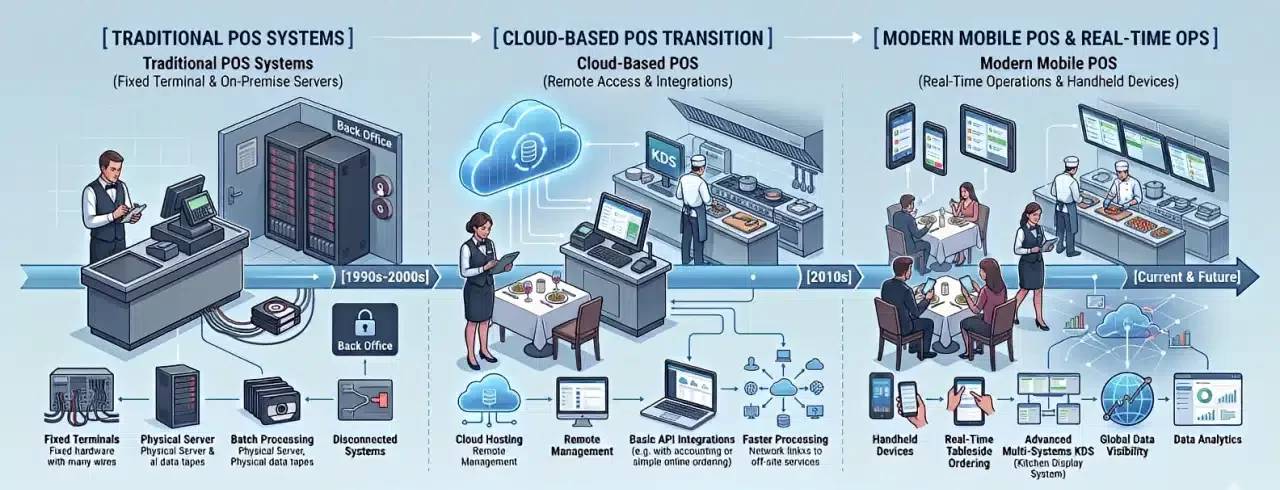
Restaurant POS technology has evolved alongside changes in customer expectations and operational complexity. What was once a simple transaction system has developed into a connected platform that supports multiple aspects of restaurant management.
Understanding this evolution helps explain why modern POS systems are designed to be more flexible, data driven, and integrated with other business tools.
Limitations of Traditional POS Infrastructure
Traditional POS systems relied on on site servers and fixed terminals to process transactions. While these systems were stable, they often limited access to data and made it difficult to manage operations remotely.
Updating software or integrating new features also required manual intervention, which could lead to downtime and higher maintenance costs. As restaurant operations became more complex, these limitations became more noticeable.
The Shift Toward Cloud Based Systems
Cloud based POS systems introduced a more flexible approach by storing data online instead of on local servers. This allows business owners to access real time information from any location using connected devices.
With automatic updates and easier integrations, cloud systems reduce the need for manual maintenance. They also support scalability, making it easier for restaurants to expand or manage multiple locations.
Mobility and Real Time Operations
Modern POS systems are designed to support mobility, allowing staff to take orders and process payments directly at the table or on the floor. This reduces unnecessary movement and speeds up service.
Real time data access also enables faster decision making during daily operations. Managers can monitor sales, track performance, and respond quickly to changes without waiting for end of day reports.
Types of Restaurant POS Systems
Restaurant POS systems come in several forms, each designed to support different operational needs. Choosing the right type depends on factors such as business size, service model, and level of flexibility required.
Rather than viewing these systems as isolated options, it is more useful to compare how each type performs in terms of accessibility, scalability, and daily usability.
Traditional On Premise Systems
Traditional on premise systems rely on local servers and fixed terminals installed within the restaurant. They offer stable performance and can operate without depending heavily on internet connectivity.
However, these systems often limit remote access and require higher upfront investment. Maintenance and updates can also be more complex compared to modern alternatives.
Cloud Based POS Platforms
Cloud POS platforms enable multi device access and centralised control. They are widely used across restaurant groups and POS software for hotelier operations managing multiple outlets.
They also support automatic updates and integrations with other tools, reducing the need for manual system management. This flexibility makes them suitable for growing businesses.
Mobile and Handheld POS
Mobile and handheld POS systems allow staff to take orders and process payments directly at the table or on the floor. This improves service speed and reduces the need for back and forth movement.
By bringing transactions closer to the customer, these systems help create a more efficient and engaging dining experience.
Tablet Based POS Setups
Tablet based POS systems use devices such as tablets combined with POS applications to handle transactions. They offer a balance between functionality and ease of use, with interfaces that are familiar to most users.
These systems are also relatively easy to set up and adapt, making them suitable for smaller restaurants, cafes, or businesses with limited space.
Core POS Systems in Restaurants
A restaurant POS system operates through a combination of interconnected systems that support different parts of daily operations. These components work together to ensure orders are processed efficiently, data is accurate, and workflows remain consistent.
Understanding how these systems function helps businesses maximise the value of their POS and maintain smoother operations across both front and back of house.
Order Processing and Payment Workflows
Order processing is at the centre of any POS system. When staff input an order, the system automatically calculates totals, applies modifiers, and prepares the transaction for payment.
Payment workflows are designed to handle multiple methods, including card, contactless, and digital payments. This ensures transactions are completed quickly and accurately during service.
Inventory Tracking and Cost Control
Inventory tracking allows restaurants to monitor ingredient usage in real time. Each transaction updates stock levels automatically, reducing the need for manual checks.
This visibility helps control costs and minimise waste. By understanding usage patterns, businesses can make better purchasing and portioning decisions.
Kitchen Display Systems and Workflow Coordination
Kitchen Display Systems replace manual tickets with digital order management. Orders are sent directly from the POS to the kitchen, where they are displayed based on preparation requirements.
This improves coordination between teams and reduces miscommunication. As a result, food preparation becomes more organised and consistent.
Reporting, Analytics, and Performance Insights
POS systems collect data from daily operations and convert it into useful reports. Businesses can track sales, identify trends, and evaluate performance over time.
These insights support better decision making. Managers can adjust pricing, staffing, or menu offerings based on real data.
Hardware and Infrastructure Requirements
The effectiveness of a POS system also depends on its hardware and infrastructure. Devices such as terminals, tablets, printers, and network systems must work reliably during service.
A stable network connection is essential to ensure smooth data flow between devices. Proper hardware setup helps prevent disruptions and supports consistent operations.
Why POS Systems Matter in Restaurants
Restaurant POS systems play a direct role in how efficiently daily operations run. Beyond processing transactions, they influence service speed, coordination between teams, and overall decision making.
When used effectively, a POS system helps reduce operational friction and creates a more structured workflow across the entire restaurant.
Improving Speed and Order Accuracy
A POS system allows orders to be entered and processed instantly, reducing delays during busy service periods. Staff can input requests quickly without relying on manual notes or repeated communication.
This improves order accuracy and minimises mistakes. As a result, customers receive their orders faster and with fewer errors.
Streamlining Kitchen and Service Coordination
By connecting front of house and back of house, POS systems ensure that orders are communicated clearly and consistently. Each item is sent directly to the appropriate preparation station.
This reduces confusion and helps teams stay aligned during peak hours. Better coordination leads to smoother service and more efficient kitchen operations.
Enabling Real Time Decision Making
POS systems provide real time data on sales, performance, and operations. Managers can monitor activity as it happens rather than relying on end of day reports.
This allows quicker adjustments to staffing, inventory, or service flow. Real time insights help businesses respond more effectively to changing conditions.
Supporting Cost and Labour Efficiency
Managing costs is critical in the restaurant industry, and POS systems help provide the necessary visibility. Businesses can track sales alongside labour usage and identify inefficiencies.
With better data, managers can optimise staffing levels and reduce unnecessary expenses. This supports more sustainable and efficient operations.

Chris O’Donnell, Lead Project Manager
How Different Restaurant Models Use POS Systems
Restaurant POS systems are used differently depending on the type of business and service model. Each concept has its own operational priorities, from speed and volume to experience and personalisation.
Understanding these differences helps businesses choose and configure a POS system that fits their specific needs.
Fine Dining and Experience Driven Service
In fine dining environments, the focus is on delivering a seamless and personalised guest experience. POS systems support this by managing table flow, course timing, and detailed customer preferences.
Staff can track orders more precisely and coordinate with the kitchen to ensure each course is served at the right time. This level of control helps maintain consistency and service quality.
Quick Service and High Volume Operations
Quick service restaurants rely on speed and efficiency to handle large volumes of orders. POS systems are designed to process transactions quickly and reduce delays during peak hours.
Simple interfaces and fast order input help staff move through queues efficiently. This improves throughput while maintaining order accuracy.
Bars, Nightlife, and High Speed Transactions
Bars and nightlife venues operate in fast paced environments where transactions happen rapidly. POS systems support this by enabling quick order entry and easy tab management.
Features such as pre authorisation and fast payment processing help staff serve customers without interruption. This ensures smooth operations even during busy periods.
Ghost Kitchens and Delivery First Concepts
Ghost kitchens focus on online orders and delivery rather than dine in service. POS systems play a key role in managing orders from multiple platforms in a single interface.
This helps reduce errors and streamline kitchen workflows. Efficient order handling is essential to maintaining delivery speed and food quality.
Mobile Food Businesses and Pop Ups
Food trucks and pop up businesses require flexible and portable systems. POS solutions in this space are often mobile and designed to work in limited or changing environments.
These systems allow transactions to be processed quickly while adapting to different locations. This flexibility supports operations where traditional setups are not practical.
Implementing a Restaurant POS System Successfully
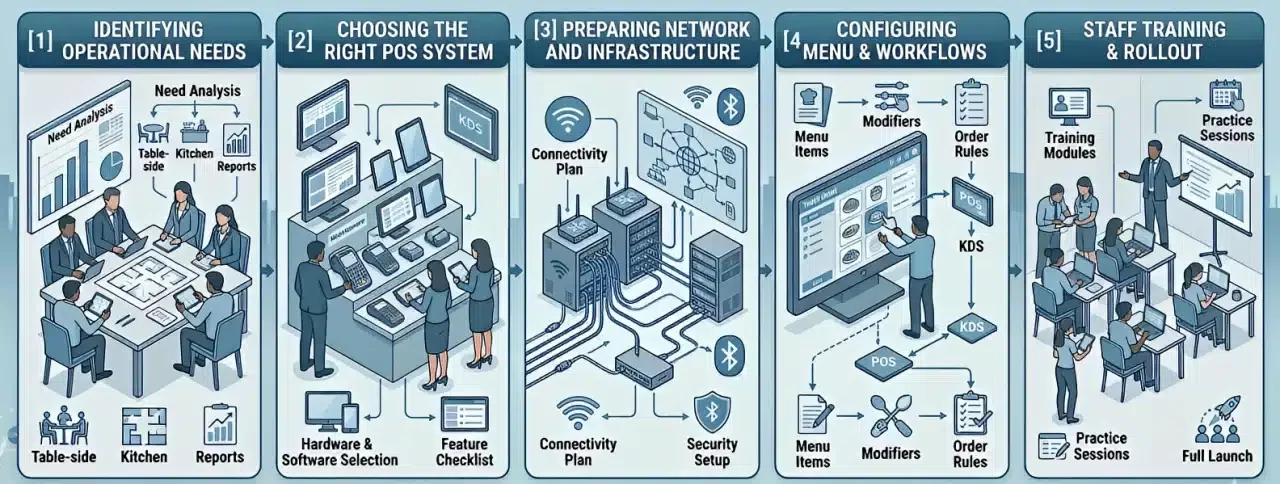
Implementing a restaurant POS system requires more than simply installing new software. A structured approach helps ensure the system fits daily operations and avoids disruptions during service.
With proper planning, businesses can improve adoption, reduce errors, and maximise the long term value of their POS investment.
Identify Operational Needs
The first step is understanding how your restaurant operates and where improvements are needed. Identify challenges such as slow service, order errors, or inefficient workflows.
This helps define the features required and ensures the POS system supports real operational needs.
Choose the Right System
Selecting the right POS system involves evaluating both software capabilities and hardware requirements. Businesses should consider usability, scalability, and integration with existing tools.
A system that aligns with current operations and future growth will deliver better long term results.
Prepare Network and Infrastructure
A stable network is essential for POS performance, especially for cloud based systems. Restaurants should ensure strong Wi Fi coverage and minimise connectivity issues across service areas.
Proper infrastructure setup helps prevent disruptions and ensures smooth communication between devices.
Configure Menu and Workflows
Setting up the digital menu requires careful configuration of items, modifiers, and pricing. This ensures orders are entered accurately and routed correctly to the kitchen.
Well defined workflows also help staff follow consistent processes during busy service periods.
Train Staff and Manage Rollout
Staff training is critical to successful implementation. Employees need to understand how to use the system for daily tasks such as order entry and payment processing.
Starting with a controlled rollout allows businesses to identify issues early. This helps ensure a smoother transition before full implementation.
Common POS Challenges in Restaurants
Even with a well designed system, restaurants often face practical challenges when using POS technology in daily operations. These issues usually come from how the system is configured, maintained, or used by staff.
Recognising these challenges early helps businesses maintain performance and avoid disruptions during service.
Overcomplicated Menus and Order Flows
Menus that are too complex can slow down order entry and increase the risk of mistakes. Too many modifiers or unclear categories make it harder for staff to process orders quickly.
Simplifying menu structure and keeping workflows intuitive helps improve speed and accuracy during service.
Connectivity and Offline Risks
POS systems that rely on internet connectivity can be affected by network instability. Slow or disconnected networks may delay transactions and disrupt service flow.
Using reliable network infrastructure and ensuring offline functionality can help reduce these risks.
Hardware Limitations in Busy Environments
Restaurant environments can be demanding, with heat, spills, and constant use affecting device performance. Standard hardware may struggle to handle these conditions over time.
Using durable, commercial grade devices helps maintain reliability and reduce downtime during peak hours.
Underusing Data and Reporting Features
Many restaurants only use their POS for basic transactions, without fully utilising reporting and analytics features. This limits the system’s potential to support decision making.
Regularly reviewing data helps identify trends, improve operations, and uncover areas that need attention.
Advanced Ways to Get More from Your POS System
Once a POS system is fully integrated into daily operations, it can be used beyond basic transaction processing. Many restaurants use their systems to improve planning, optimise workflows, and enhance customer engagement.
By leveraging advanced capabilities, businesses can gain more value from their POS and strengthen overall performance.
Using Data for Predictive Planning
POS systems collect data that can be used to identify patterns in sales and customer behaviour. By analysing this data, restaurants can better predict demand during different times or seasons.
This helps with planning inventory and staffing levels more accurately. As a result, businesses can reduce waste and improve operational efficiency.
Managing Orders Across Multiple Channels
Many restaurants now receive orders from multiple sources, including dine in, online platforms, and delivery services. POS systems help consolidate these orders into a single workflow.
This reduces confusion and ensures that all orders are processed consistently. It also helps maintain service quality across different channels.
Automating Inventory and Procurement
Advanced POS systems can support automated inventory tracking and restocking processes. When stock levels reach a certain point, the system can alert staff or trigger reordering.
This reduces manual work and helps maintain consistent supply levels. It also supports better cost control by preventing overstocking or shortages.
Personalising the Guest Experience
POS systems can store customer preferences and purchase history, which can be used to personalise service. Staff can provide recommendations based on past orders or recognise repeat customers.
Customer data enables tailored service and supports a restaurant rewards system that encourages repeat visits.
Conclusion
Restaurant POS systems play a central role in managing daily operations across modern hospitality businesses. By connecting order processing, kitchen workflows, and payment systems, they help improve efficiency and service consistency.
Beyond operational support, POS systems also provide valuable insights that help restaurants make better decisions. From tracking sales to managing costs, businesses can respond more effectively to changing demands.
If your organisation wants to improve operational efficiency, the right system can make a significant difference. Request a free consultation with our experts to explore restaurant POS solutions that support more efficient operations.
Frequently Asked Questions About Restaurant POS Systems
-
What is a restaurant POS system?
A restaurant POS system is a digital platform used to manage orders, process payments, track inventory, and monitor daily operations within a food and beverage business.
-
How does a restaurant POS system work?
A restaurant POS system captures orders, sends them to the kitchen, processes payments, and updates data such as sales and inventory in real time.
-
What are the benefits of using a restaurant POS system?
Restaurant POS systems help improve service speed, reduce errors, streamline operations, and provide real time insights for better decision making.
-
What types of restaurant POS systems are available?
Common types include traditional on premise systems, cloud based platforms, mobile POS, and tablet based POS systems designed for different operational needs.
-
Is a cloud based POS system better for restaurants?
Cloud based POS systems offer flexibility, real time access, and easier integration with other tools, making them suitable for modern and growing restaurant operations.