Key Takeaways
Discover the fundamental objectives and legal importance behind issuing payslips to employees.
Learn about the essential components and data points found in a standard payslip.
Understand the critical importance of accurate payslips for compliance and transparency.
Explore the various methods and technologies employers use to create and distribute payslips.
Understanding the Purpose of a Payslip

A payslip does more than simply show how much an employee was paid. It explains how the salary was calculated by breaking down earnings, taxes, and other deductions. This helps employees clearly understand where their money goes each pay period.
Payslips also play an important legal and financial role. In many countries, employers are required to provide an itemized payslip to show that wages and deductions follow labor regulations. Employees can also use payslips as proof of income when applying for loans, renting property, or managing their personal finances.
Key Information in a Payslip
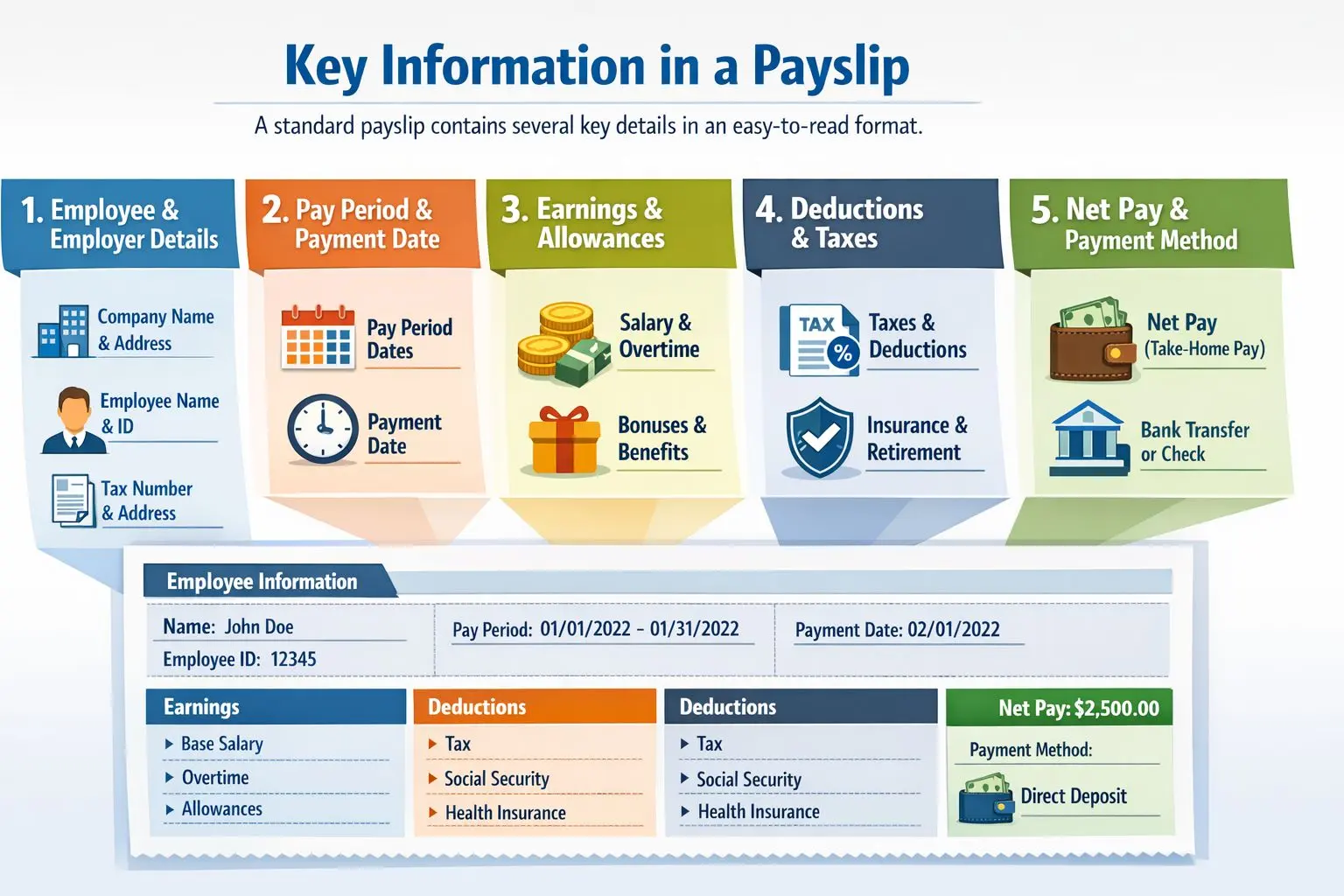
A standard payslip contains a lot of financial and personal information in one document. To keep everything clear and transparent, it usually includes several key details organized in an easy-to-read format. While the layout may vary between companies or payroll systems, the main components of a payslip are generally the same.
1. Employee and Employer Details
Every payslip begins with basic information about both the employer and the employee. It usually includes the company name, business address, and sometimes a company tax or registration number.
On the employee side, it lists details like the employee’s full name, address, employee ID, and tax identification number. These details help make sure the salary is recorded for the correct person and allow tax authorities or financial institutions to verify the source of the income.
2. Pay Period and Payment Date
A payslip also clearly shows the pay period, which is the timeframe the salary covers. This could be weekly, bi-weekly, or monthly, and the document will display the exact start and end dates.
It also includes the payment date, which is when the salary is actually sent to the employee. Knowing these dates helps employees check their work records and plan their personal finances more easily.
3. Earnings, Allowances, and Overtime
The earnings section shows the employee’s total income before deductions. It usually includes the base salary or hourly wages, along with additional earnings such as overtime pay, bonuses, or commissions.
Some payslips also list allowances like transportation, housing, or meal benefits. By showing each type of income separately, the payslip helps employees understand exactly how their total earnings were calculated.
4. Deductions, Taxes, and Superannuation
After listing total earnings, the payslip shows the deductions taken from that amount. These typically include income tax, social security contributions, and other government-required payments.
Some deductions may also be voluntary, such as health insurance, union fees, or retirement savings contributions. This section helps employees see where part of their salary goes and ensures that all required payments are properly recorded.
5. Net Pay and Payment Method
The final part of the payslip shows the net pay, which is the amount the employee actually receives after all deductions. This is often called “take-home pay” and is usually highlighted because it is the most important number for employees.
The payslip will also mention the payment method, such as direct bank transfer or check. This confirms how and where the salary has been paid.
Why Accurate Payslips Matter
Creating and distributing accurate payslips is more than just a routine administrative task. It plays an important role in maintaining transparency, employee trust, and smooth business operations. When companies manage payroll carefully and provide accurate payslips, they reduce legal risks and help build a more reliable and positive workplace environment.
1. Transparency for Employees
Payslips play an important role in keeping payroll transparent for employees. They show exactly how salary is calculated, including earnings, overtime, bonuses, and deductions, so employees can clearly understand their pay.
When payslips are accurate and easy to read, employees are less likely to question their salary or raise payroll concerns. Clear payslips also help build trust, while confusing or incorrect ones can quickly lead to frustration and lower employee morale.
2. Compliance With Employment Regulations
Payslips also help companies stay compliant with labor and tax regulations. In many countries, employers must provide detailed payslips to show that wages, taxes, and benefits are calculated correctly according to the law.
If a company fails to issue accurate payslips, it could face fines, audits, or other legal consequences. Because of this, maintaining accurate payroll records is an important way for businesses to protect themselves from legal and financial risks.
3. Financial Record Keeping
Accurate payslips are also valuable financial records for both employers and employees. For businesses, payroll data helps track labor costs, manage budgets, and maintain proper financial reporting.
For employees, payslips provide a record of income that can be used for loans, tax filing, or future financial planning. Keeping these records organized ensures that both sides can easily verify salary information whenever it is needed.

How Employers Generate Payslips
1. Manual Payslip Preparation
In some small businesses, payslips are still prepared manually. This usually involves using tools like calculators, paper records, or simple spreadsheets to track work hours, calculate salaries, and determine taxes and deductions.
After completing the calculations, the information is written or typed into a payslip template and given to the employee along with their payment. While this method may work for very small teams, it is time-consuming and increases the risk of mistakes in payroll calculations.
2. Payroll Software and Automation
To make payroll more accurate and efficient, most businesses now use streamlined payroll software. These systems automatically calculate salaries, taxes, and deductions once employee information such as salary, tax codes, and benefits is entered into the system.
Payroll administrators only need to update variable details like overtime hours, leave, or bonuses for each pay period. Automation helps reduce human errors, speeds up payroll processing, and ensures companies stay compliant with changing tax regulations.
3. Digital Payslip Distribution
Technology has also changed how companies deliver payslips to employees. Instead of printing and handing out paper documents, many organizations now provide digital payslips.
Employees can access them through secure employee portals where they can view or download their payslips anytime. This method improves convenience, keeps sensitive information secure, and reduces the need for paper-based records.
Common Payslip Errors

1. Incorrect Tax or Deduction Calculations
One of the most common payslip mistakes involves incorrect tax or deduction calculations. This often happens when the wrong tax code is assigned to an employee or when payroll records are not updated after changes in personal or financial details.
As a result, employees may pay too much tax and receive less take-home pay, or pay too little and face an unexpected tax bill later. Similar issues can also happen with deductions like retirement contributions or loan repayments if payroll data is outdated or entered incorrectly.
2. Missing Mandatory Information
Another common issue is when a payslip does not include all the required information. Even if the final salary amount is correct, missing details such as year-to-date earnings, tax totals, or a breakdown of overtime and deductions can cause problems.
Employees need these details to understand how their pay was calculated and to track their income throughout the year. Without clear information, payslips become confusing and may not meet legal payroll requirements.
3. Inconsistent Payroll Records
Digital Payslips in Modern Payroll
As payroll processes become more digital, many companies are moving from paper payslips to digital ones. Digital payslips make it easier to generate salary records automatically, give employees secure access to their information, and connect payroll data with HR systems.
1. Automated Payslip Generation
Automated payroll systems can generate payslips quickly without manual calculations. Once employee details, salary structures, and deductions are set up, the system automatically calculates pay for each pay period.
This reduces human errors and saves time for HR and payroll teams. As a result, companies can process payroll faster and ensure employees receive accurate payslips.
2. Secure Employee Access
Digital payslips are usually shared through secure employee portals instead of printed documents. Employees can log in to their accounts to view or download their payslips whenever they need them.
This makes it easier to access salary records while keeping sensitive payroll information protected. It also removes the need for HR teams to manually distribute payslips every pay period.
3. Integration With HR and Payroll Systems
Modern payroll systems connect with HR and attendance systems to automatically update payroll calculations using employee data, work hours, and leave records. This reduces manual errors and keeps records consistent, especially when using HRM software commonly adopted by Australian businesses.
Industry-Specific Payslip Dynamics
While the main parts of a payslip are generally the same, different industries often have their own payroll challenges. In sectors like manufacturing, healthcare, and retail, payslips need to include details such as shift pay, overtime rates, hazard pay, or pay based on the number of units produced.
In contrast, industries like technology, finance, and professional services often have more complex compensation structures. Payslips in these sectors may include stock options, commissions, or performance bonuses in addition to base salary. Meanwhile, in freelance or gig-based work, traditional payslips are often replaced with payment summaries that show project earnings, service fees, and other deductions.
Implementation Steps for Modern Payslip Systems
Moving from manual or outdated payroll systems to a modern digital payslip system requires careful planning. Companies usually start by reviewing their current payroll process to understand how salaries, deductions, and employee data are handled.
This step helps identify what needs to be improved and ensures all payroll information is complete and accurate before switching systems. After that, the company selects payroll software that follows local tax regulations and meets security standards.
During implementation, payroll teams often run the old and new systems at the same time for several pay periods to check for errors and make sure the calculations match. Clear communication and simple training are also important so employees know how to access and download their digital payslips.
Advanced Practices in Payroll Management
Many companies are starting to treat payslips as more than just a record of salary payments. With digital payroll systems, payslip portals can now connect to tools like earned wage access, allowing employees to see their earnings in real time and withdraw part of their wages before payday if needed.
This new approach has supported companies in mastering payroll administration to optimize the payslip processes. The benefits of this change are vital in a business.
Some organizations also use advanced technology to improve payroll accuracy and employee support. AI tools can scan payroll data to detect unusual overtime claims, incorrect deductions, or other errors before payslips are issued.
At the same time, digital payslip platforms may include helpful features like budgeting tools, retirement calculators, or tax planning information to help employees manage their money more effectively.