In today’s HR landscape, performance management is more than a year-end formality. It’s a continuous process that aligns individual work with company goals. By using the right HR tools, this approach drives engagement and helps businesses stay competitive.
Good performance management goes beyond tracking output. It includes setting goals, giving regular feedback, and providing coaching. This helps employees feel valued and motivated to grow.
Making the shift requires HR teams and business leaders to understand motivation, accountability, and the right tech tools. With these in place, progress can be tracked efficiently. Continuous improvement becomes part of the company culture.
Key Takeaways
Real-time feedback replaces slow annual reviews, helping employees correct course quickly. Teams stay agile, and feedback becomes a natural part of daily work.
Employees succeed when goals, behaviors, and values are clearly defined. SMART goals or OKRs turn high-level objectives into actionable daily tasks.
Coaching and transparent career pathways motivate employees and foster development. Performance insights guide skill development and internal mobility.
Performance tools centralize metrics, automate tasks, and reduce bias. Analytics support fair evaluations and informed management decisions.
How Performance Management Has Evolved
From Annual Reviews to Continuous Feedback
Annual reviews used to dominate, with managers evaluating a whole year’s work in a single meeting. This method was slow, stressful, and prone to recency bias, often ignoring achievements earlier in the year.
Today, continuous feedback takes the lead. Managers give praise or guidance in real-time, reinforcing good work and correcting issues quickly. This approach keeps teams agile and encourages a culture where feedback feels natural, not punitive.
The Rise of Development Conversations
Modern performance talks focus on growth, not just evaluation. Managers act as coaches, helping employees set goals, learn new skills, and plan their career paths.
These development conversations are forward-looking and separate from pay discussions. Employees feel safe to share ambitions and weaknesses, which accelerates personal growth and builds a strong internal talent pipeline for the future.
What Strong Performance Management Looks Like

Strong performance management is more than just a performance enhancement plan. It’s a continuous cycle of planning, monitoring, reviewing, and rewarding. When done right, it boosts productivity, lowers turnover, and engages employees who see how their work contributes to the company’s goals.
Clear Expectations for Each Role
Clarity is key. Employees need to know exactly what’s expected of them, from measurable targets to the behaviours and values they should demonstrate. SMART goals or OKRs help turn high-level objectives into actionable daily tasks.
Expectations should start at onboarding and be reinforced regularly. Hitting targets isn’t enough if employees ignore company values. Strong performance management balances results with behaviour to define holistic success.
Regular Manager–Employee Check-ins
Check-ins keep performance management alive. Weekly, bi-weekly, or monthly one-on-one meetings let managers give timely feedback, coach employees, and address issues before they grow.
Employee-led agendas empower staff to own their performance journey. Managers listen actively, uncover roadblocks, and build trust, making it easier to give constructive feedback when needed.
Data-Based Performance Discussions
Decisions based on gut feelings create bias. Strong performance management relies on objective data like sales, project completion, customer satisfaction, or peer feedback.
Data transforms reviews into collaborative discussions. It highlights achievements, identifies gaps, and ensures rewards and promotions are fair, helping employees grow while keeping conversations fact-based, not personal, especially when supported by comprehensive HRM solutions available in Australia.
Connecting Performance With Employee Growth
Many businesses treat performance management and talent development as separate, but they’re closely linked. Measuring performance should identify ways to grow employees’ skills. When staff see a clear link between their work, coaching, and career path, motivation and engagement soar.
Coaching and Skill Development
Modern managers act as coaches, not just bosses. They guide employees, encourage autonomy, and help solve problems. Frameworks like the GROW model give structure to development.
Skill growth should be personalised and based on performance data. Using an Individual Development Plan (IDP) and the 70-20-10 model makes learning practical and tied to real work. Continuous upskilling keeps teams adaptable in a fast-changing business environment.
Career Progression Opportunities
High performers want to see how their work leads to advancement. Clear career pathways and succession planning help retain top talent.
Employees need transparency on the skills, experiences, and results required to move up. Managers should sponsor high performers and give them visibility through key projects. Linking performance with progression motivates staff and strengthens talent pipelines.
Recognition and Rewards
Intrinsic motivation drives performance, but recognition and rewards matter too. How a business acknowledges achievements reflects its values and reinforces behaviours.
Recognition should include financial and non-financial elements. Performance data guides merit increases, bonuses, and equity grants. Public praise, peer programs, extra leave, or special projects also reward and motivate employees.
Tools Used to Manage Employee Performance
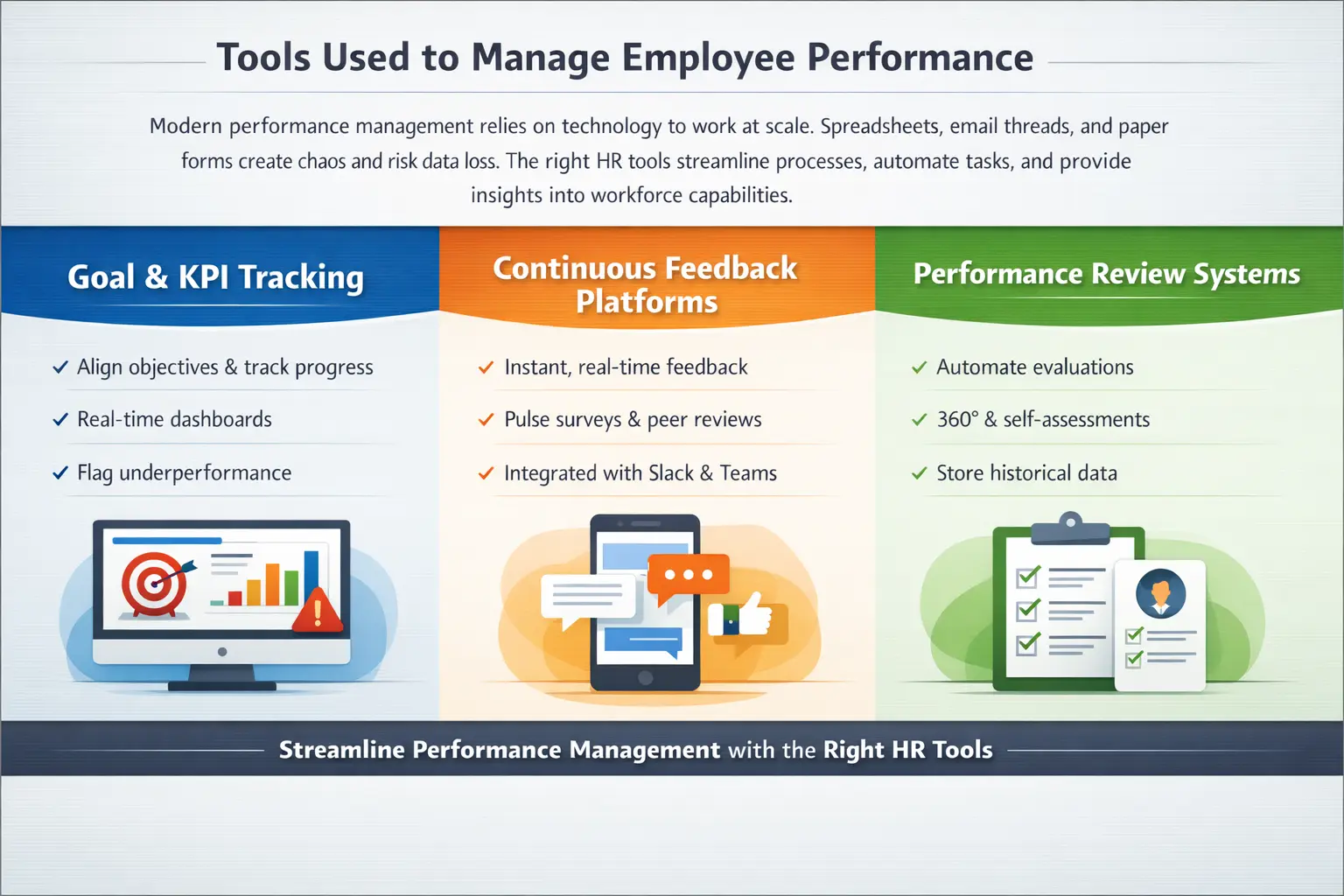
Modern performance management relies on technology to work at scale. Spreadsheets, email threads, and paper forms create chaos and risk data loss. The right HR tools streamline processes, automate tasks, and provide insights into workforce capabilities.
Goal and KPI Tracking
Goal and KPI tracking platforms align the whole business. Executives set high-level objectives, which cascade down to teams and individual contributors. Everyone can see how daily tasks support the company’s strategic vision.
Advanced dashboards update in real-time, letting managers monitor progress instantly. modern performance management system flag lagging results, enabling proactive intervention. Transparent goals break down silos and encourage cross-team collaboration.
Continuous Feedback Platforms
Continuous feedback platforms make giving and receiving feedback easy and immediate. They integrate into daily tools like Slack or Teams, keeping feedback timely and relevant.
These platforms support top-down, bottom-up, and peer-to-peer feedback. Pulse surveys capture engagement and sentiment, creating a rich, ongoing stream of performance data.
Performance Review Systems
Structured performance review systems automate periodic evaluations. They manage self-assessments, reminders, approvals, and securely store historical data for compliance.
Modern systems reduce bias with structured ratings, written justifications, and 360-degree reviews. Centralized data ensures managers conduct objective, comprehensive, and defensible performance evaluations.
Common Gaps in Performance Practices
Even with modern tools, many businesses struggle to make performance management effective. Poor systems add admin work, hurt morale, and push top talent away. Closing these gaps is essential for a strong workplace culture.
Most failures come from unclear expectations, weak communication, or lack of accountability. Employees need transparency and guidance to perform at their best. HR leaders must act early to prevent disengagement and frustration.
Reviews often fail because they lack measurable criteria. Without clear metrics, employees cannot track progress or know how to improve. Structured, data-driven evaluations keep performance discussions fair and actionable.
Industry-Specific Use Cases for Performance Management
Core principles of performance management stay the same, but applications vary by industry. Tailoring strategies ensures metrics reflect each sector’s challenges, compliance needs, and workflows.
- Technology and Software Development, Core principles of performance management stay the same, but applications vary by industry. Tailoring strategies ensures metrics reflect each sector’s challenges, compliance needs, and workflows.
- Healthcare and Medical Services, Healthcare links performance to patient outcomes, safety, and compliance. Multi-rater feedback and competency tracking ensure staff meet standards and maintain critical skills.
-
Retail and Hospitality, High-turnover sectors like retail and hospitality rely on visible, immediate feedback. Managers track customer satisfaction, daily targets, and operational efficiency to coach and motivate staff in real time.
Step-by-Step Implementation Steps for a Modern Framework
Switching from annual reviews to continuous performance management needs careful planning. Rushing leads to confusion, extra admin work, and employee resistance. A structured roadmap ensures smooth adoption and long-term success.
1. Define Objectives
Leadership must clarify what performance means for the company. Are you driving sales, fostering innovation, or promoting collaboration and psychological safety? A clear philosophy guides all structural and tech decisions.
2. Choose a Framework
Pick a goal-setting model that fits your business style. Use OKRs for ambitious growth, KPIs for steady operations, or a hybrid for balanced development. Consistency across teams ensures fairness.
3.Train Managers and Employees
Performance systems only work if people use them well. Train managers in delivering constructive feedback and coaching. Show employees how to set goals, self-evaluate, and accept feedback productively.
4. Implement Technology
Use a performance platform that integrates with HR systems and daily tools. The right tech reduces admin tasks, makes goal tracking easy, and supports feedback and check-ins in real time.
5. Monitor and Improve
Start with a pilot program and collect feedback from employees. Track check-ins and satisfaction, then refine the process. Early adjustments make adoption smoother and increase long-term effectiveness.
Common Pitfalls to Avoid in Performance Management
Even with good intentions and modern tools, performance management can fail. Avoiding common mistakes is key to keeping trust, engagement, and efficiency high.
- Micromanagement vs Feedback
Frequent check-ins can easily turn into micromanagement. If one-on-ones become status updates instead of coaching, employees feel untrusted. Feedback should remove roadblocks and empower growth.
- Weak Executive Support
Without active leadership, staff see performance management as just HR paperwork. Executives must set clear goals, request upward feedback, and show commitment to their own development.
- Overcomplicated Metrics
Too many metrics overwhelm managers and employees. Complex rating systems lead to rushed or inaccurate evaluations. Focus on a few core behaviours and high-impact goals instead.
- Linking Development to Pay
Tying every coaching conversation to bonuses or promotions discourages honesty. Employees focus on proving themselves, not learning. Keep development separate from compensation to encourage real growth.
Advanced Practices Shaping the Future
Mature companies are taking performance management further by using technology and behavioural insights. These practices create resilient teams and optimise talent development across the business.
AI and Predictive Insights
AI now helps HR spot patterns in performance data. Predictive analytics flag burnout risks and turnover, allowing managers to act early. It also recommends tailored learning paths for each employee’s growth.
Peer Coaching Networks
Peer-to-peer coaching breaks down silos and spreads learning across teams. Employees act as accountability partners, share perspectives, and reduce the coaching load on managers.
Project-Based Reviews
Feedback is moving from quarterly reviews to project-based evaluations. Employees get structured, immediate insights from team leads, making feedback timely and directly relevant to their work.
Conclusion
In modern HR, effective performance management is continuous, data-driven, and aligned with business goals. When done right, it boosts engagement, supports growth, and strengthens talent pipelines. Organizations that integrate feedback, coaching, and clear expectations create a culture of high performance and trust.
Adopting the right frameworks, technology, and development practices ensures employees grow while the business thrives. Advanced tools like AI analytics, peer coaching, and project-based reviews make this scalable and actionable. Get a free consultation today to see how your organization can transform its performance management system.
Frequently Asked Questions About Performance Management
-
What is performance management?
Performance management is a continuous process of setting goals, giving feedback, and coaching employees to align their work with company objectives. It helps drive engagement, growth, and productivity.
-
How has performance management evolved?
It has shifted from annual reviews to ongoing feedback and development conversations. Modern approaches focus on growth, skill development, and real-time insights rather than just evaluating past work.
-
What are the key components of strong performance management?
Clear expectations, regular check-ins, data-based discussions, coaching, and recognition form the core. These elements ensure employees know what success looks like and how to achieve it.
-
How do technology tools support performance management?
Tools like KPI trackers, continuous feedback platforms, and review systems help scale processes, centralize data, automate tasks, and give managers actionable insights.
-
What common mistakes should organizations avoid?
Pitfalls include micromanagement disguised as feedback, weak executive support, overly complex metrics, and tying coaching too closely to pay. Avoiding these ensures trust, engagement, and effective growth.