

Finding and keeping great employees has become more challenging than ever. Today’s professionals don’t just apply for jobs, they carefully evaluate the companies behind them. Many want more than a salary; they look for workplaces that support growth, offer purpose, and respect their values.
This shift has made the Employee Value Proposition (EVP) more important for organizations. An EVP explains why people should choose to work for a company and what they gain in return for their skills and contributions. It helps businesses stand out in a competitive talent market.
A strong EVP includes fair pay, career growth, a positive culture, and meaningful work. When these elements come together, companies can attract better talent and keep employees engaged longer. Understanding EVP helps businesses build workplaces where people want to grow and stay.
Key Takeaways
Understand the core definition and fundamental concepts of an EVP.
Discover the critical business benefits of maintaining a strong EVP.
Explore the essential pillars that make up a comprehensive EVP.
Learn the strategic, step-by-step process to build your own EVP.
What Is an Employee Value Proposition (EVP)

An Employee Value Proposition (EVP) explains what employees receive in return for the skills, effort, and commitment they bring to a company. It represents the balance between what a business offers and what employees contribute. While many people confuse EVP with an employer brand, they are different. The employer brand reflects how people view the company, while the EVP is the real experience employees have inside it.
A strong EVP includes both tangible and intangible benefits. Tangible benefits include salary, health insurance, paid leave, and workplace facilities. Intangible benefits involve company culture, leadership support, career development, and flexibility. When these elements work together, they give employees clear reasons to join and stay with a company.
Why an Employee Value Proposition Is Important
The way a company supports and values its employees can make a real difference in business success. This is why building a clear and compelling EVP has become a priority for many organizations.
1. Attracting Top Talent
Today’s job market gives skilled professionals more choices than ever, especially in fields like technology, engineering, healthcare, and leadership. Many top candidates receive multiple offers, so salary alone is rarely enough to attract them. This is where a strong Employee Value Proposition (EVP) helps companies stand out.
A clear EVP highlights what makes a company unique, such as its culture, career growth opportunities, and work-life balance. Candidates can quickly see whether the company fits their goals and values. This helps attract the right people while filtering out those who may not be a good fit.
2. Improving Employee Retention
Hiring great employees is important, but keeping them is often the bigger challenge. When employees leave, companies lose valuable knowledge and spend time and money finding replacements. A strong Employee Value Proposition helps reduce this risk.
When companies deliver what they promise in their EVP, employees feel valued and supported. Fair pay, career growth, and a healthy work environment build trust. This encourages employees to stay longer and stay engaged.
3. Strengthening Employer Branding
An Employee Value Proposition also shapes how people see a company as an employer. The EVP reflects the real experience employees have, while the employer brand shows that experience to the outside world. Without a clear EVP, branding efforts may feel empty.
When the EVP is clear, companies can share a consistent message across job posts, career pages, and social media. Employees who enjoy their work often share their experiences with others. Their stories and referrals help attract new talent.

Key Components of a Strong EVP
To build a strong Employee Value Proposition (EVP), companies need to understand what employees truly value at work. These core pillars help create a positive and meaningful employee experience.
1. Competitive Compensation and Benefits
Compensation and benefits form the foundation of any job offer. While money may not be the only reason employees stay, it often influences their decision to join or leave a company. If salaries are not competitive, other parts of the EVP may struggle to make up for it.
Today, compensation goes beyond just a monthly paycheck. Many companies offer bonuses, profit sharing, or stock options to reward performance. Benefits may include health insurance, retirement plans, wellness support, and mental health programs. Together, these rewards help employees feel financially secure and supported in their daily lives.
2. Career Growth and Development
Many employees leave their jobs because they feel stuck and see no clear path forward. People want to know that their time and effort will help them grow professionally. For this reason, career development should be a key part of a strong Employee Value Proposition.
Companies can support growth by offering clear career paths and promotion opportunities. They can also encourage learning through training programs, mentorship, and access to online courses. When employees continue building their skills, they stay motivated and see a future within the company.
3. Work Environment and Company Culture
The work environment shapes how employees feel every day at work. It affects how teams communicate, how leaders support their staff, and how people collaborate. Even strong pay and benefits cannot make up for a negative or toxic culture.
A positive culture encourages respect, openness, and teamwork. Employees should feel safe sharing ideas, asking questions, and learning from mistakes. Supportive leadership and inclusive values help create a workplace where people feel comfortable and motivated to do their best.
4. Work-Life Balance and Flexibility
Today’s employees value work-life balance more than ever. Many no longer want rigid schedules that make it hard to manage personal responsibilities. Instead, they look for workplaces that respect their time and well-being.
Companies can support balance by offering remote work, hybrid setups, or flexible schedules. Policies like reasonable workloads, clear boundaries after work hours, and fair leave options also help. These practices show employees that their personal lives matter too.
5. Purpose and Meaningful Work
Many professionals today want their work to have a deeper purpose. They want to know that their efforts contribute to something meaningful beyond daily tasks. When employees connect with a company’s mission, their motivation often grows stronger.
Organizations can create this sense of purpose by clearly sharing their goals and values. Initiatives related to community impact, sustainability, or ethical business practices also help. When employees see how their work makes a difference, they feel more engaged and committed.
How to Develop an Effective EVP
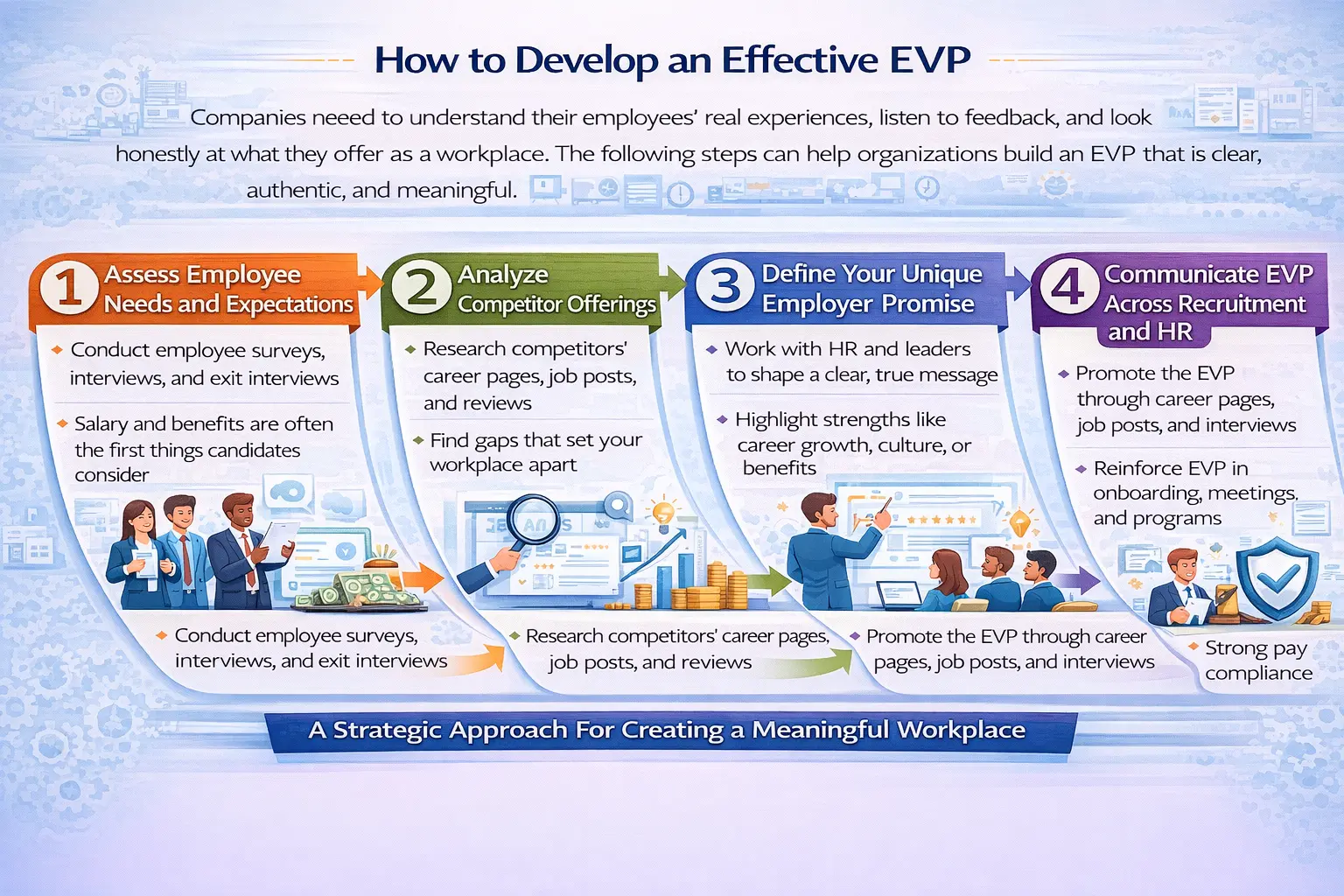
Companies need to understand their employees’ real experiences, listen to feedback, and look honestly at what they offer as a workplace. The following steps can help organizations build an EVP that is clear, authentic, and meaningful.
1. Assess Employee Needs and Expectations
A strong Employee Value Proposition (EVP) starts with understanding what employees truly value. Companies need to listen to their people and learn why they stay, what they enjoy, and what they feel is missing. Building an EVP without employee input often leads to assumptions that don’t reflect reality.
Organizations can collect feedback through surveys, employee interviews, and small group discussions. Exit interviews also help reveal why employees decide to leave. By studying this feedback, companies can identify their strengths as an employer and see which areas need improvement.
2. Analyze Competitor Offerings
An EVP does not exist on its own. Companies compete with other organizations to attract the same talent, so understanding what competitors offer is important. This helps businesses see what employees expect in the job market.
Companies can review competitors’ career pages, job posts, and social media to see how they promote their workplace. Employee review platforms can also reveal what workers actually experience. These insights help organizations find gaps and highlight what makes their workplace different.
3. Define Your Unique Employer Promise
After gathering employee feedback and market insights, companies can begin shaping their Employee Value Proposition. The goal is to clearly explain what makes the organization a great place to work. This message should reflect real experiences, not just ideal ideas.
HR teams, leaders, and other stakeholders should work together to define this promise. The EVP should highlight the company’s strengths, such as career growth, culture, or leadership support. When clearly defined, it gives candidates and employees a strong reason to choose the organization.
4. Communicate EVP Across Recruitment and HR
Once the EVP is defined, companies need to communicate it clearly. If employees and candidates do not see or understand it, the EVP will have little impact. It should appear consistently across hiring, onboarding, and internal communication.
Career pages, job descriptions, and recruiter conversations should all reflect the EVP. Inside the company, leaders and HR teams should reinforce it through policies, meetings, and employee programs. When the EVP is consistently practiced, it becomes part of the real employee experience.
Examples of Employee Value Propositions
Companies often shape their EVP based on their culture, goals, and the type of talent they want to attract. These examples show how organizations highlight what makes their workplace unique.
- Example 1: The High-Growth Technology Startup
Core Promise: “Build the future, accelerate your career, and share in the success.”
Tech startups often focus their EVP on fast career growth, innovation, and ownership. They may not offer the highest salaries, but they often provide equity or stock options. This attracts ambitious people who enjoy fast-paced work and want to grow quickly. - Example 2: The Global Healthcare Provider
Core Promise: “Empower your purpose, care for your community, and find stability in a supportive environment.”
Healthcare organizations often build their EVP around purpose and meaningful work. They emphasize strong benefits, mental health support, and wellness programs. This approach attracts professionals who want to help others while building a stable career. - Example 3: The Legacy Financial Institution
Core Promise: “Achieve excellence, build generational wealth, and grow within a tradition of prestige.”
Large financial institutions often highlight competitive pay and professional prestige. They offer strong salaries, bonuses, and structured career development programs. This EVP attracts professionals seeking financial security and long-term career growth.
Common Mistakes When Building an EVP
When organizations handle EVP development poorly, they may end up making promises they cannot deliver or creating expectations that don’t match the real employee experience.
- Overpromising What the Company Cannot Deliver
One of the biggest mistakes is promoting benefits, culture, or opportunities that employees rarely experience. When the workplace reality doesn’t match the message, employees quickly lose trust. Over time, this can lead to dissatisfaction and higher turnover. - Ignoring Employee Feedback
Some companies design their EVP without asking employees what they actually value. Without real feedback, the EVP may focus on the wrong priorities. Listening to employees helps ensure the EVP reflects real needs and experiences. - Focusing Only on Salary and Benefits
Compensation matters, but it is not the only factor employees consider. Culture, growth opportunities, leadership support, and work-life balance also shape the employee experience. A strong EVP should reflect both financial and non-financial value. - Lack of Clear Communication
Even a well-designed EVP can fail if it is not communicated clearly. Employees and candidates need to understand what the company stands for as an employer. Consistent messaging across recruitment, onboarding, and internal communication is essential. - Treating EVP as a One-Time Project
An EVP should evolve as the workforce and workplace change. Companies that create it once and never review it risk becoming outdated. Regular feedback and updates help keep the EVP relevant and effective.
Conclusion
An Employee Value Proposition (EVP) helps organizations clearly show what they offer employees beyond a paycheck. When companies focus on fair rewards, career growth, supportive culture, and meaningful work, they create a workplace where people feel valued and motivated.
A strong EVP also helps businesses attract better candidates and keep employees engaged for the long term. By listening to employees and regularly improving the workplace experience, organizations can build a value proposition that truly supports both their people and their long-term success.
Frequently Asked Question
An Employee Value Proposition (EVP) is the value a company offers employees in exchange for their skills, time, and contributions. It includes compensation, benefits, career opportunities, company culture, and the overall work experience.
An EVP is important because it helps companies attract skilled candidates and keep employees engaged. When employees feel valued and supported, they are more likely to stay longer and contribute to the organization’s success.
A strong EVP usually includes competitive compensation, career development opportunities, a positive workplace culture, work-life balance, and meaningful work. These elements together create a workplace where employees feel motivated and supported.














 is, why it matters, and how companies can build a strong EVP to attract talent and improve employee retention.)