Workforce management has become increasingly complex as regulations and reporting standards continue to evolve. The best HR software helps businesses stay organized while keeping operations compliant and efficient.
Human Resource Management (HRM) systems have evolved from simple employee databases into comprehensive ecosystems that drive engagement and operational efficiency.
By automating administrative burdens, Australian organizations can focus on strategic growth and building a resilient, high-performance culture.
Key Takeaways
|
Our Top Picks at a Glance (Shortlist)
Finding the right solution requires a quick comparison of market leaders against your specific business requirements. We have categorized these based on their primary strengths.
Best Because
Highly flexible to match unique HR processes.


Is HR Management Software Worth It for Your Business?
Many small business owners question whether the investment in dedicated HR software is justifiable against their current manual processes. However, as your headcount grows past ten employees, the administrative overhead of managing leave, payroll, and compliance exponentially increases.
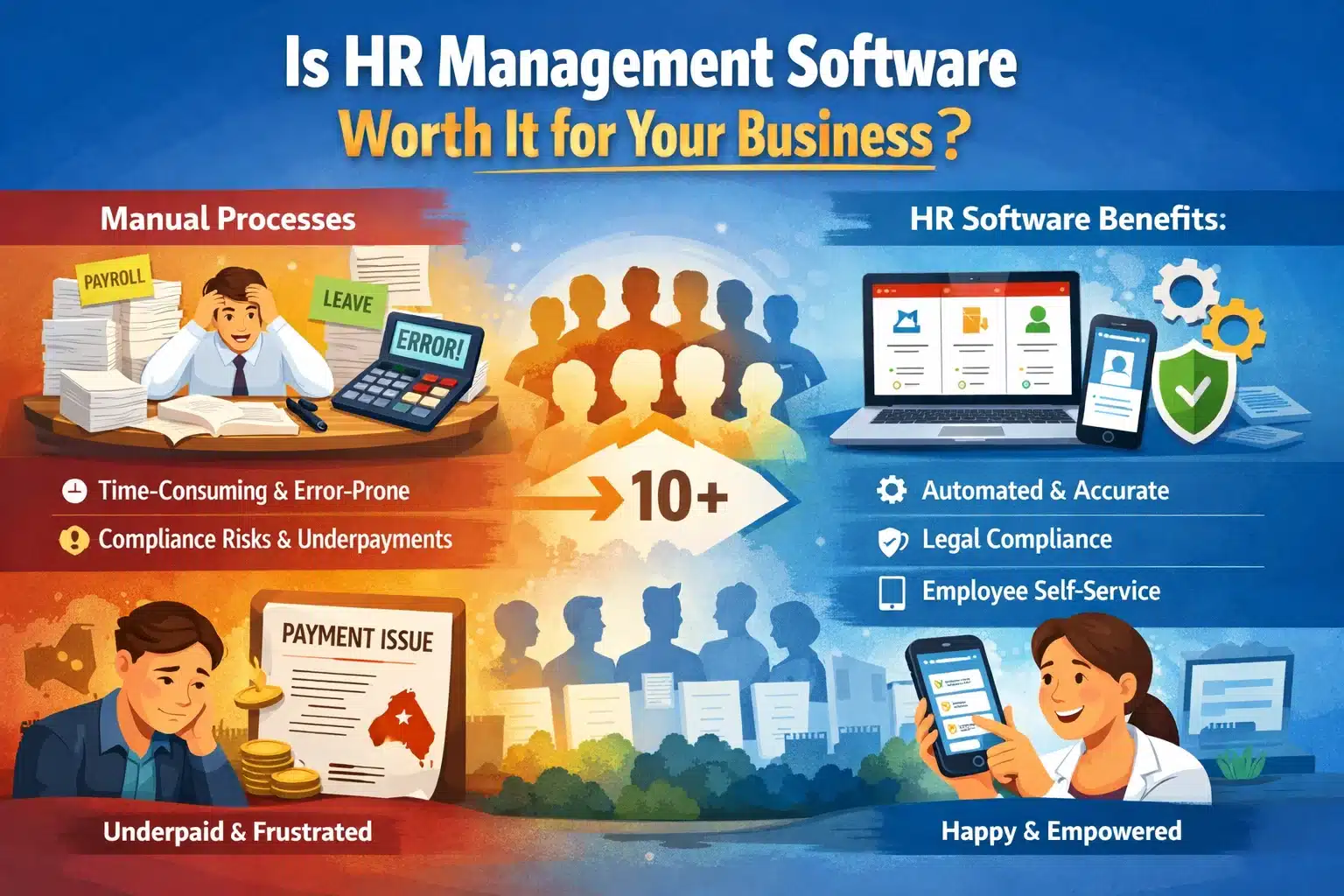
Manual HR processes are error-prone and often drive underpayment issues in Australia. Dedicated software reduces risk by automating calculations and keeping records compliant.
Furthermore, the intangible benefits of a self-service portal cannot be overstated regarding employee satisfaction. Modern workers expect digital autonomy to access payslips, apply for leave, and update personal details without email chains.
What to Look for in HR Software in Australia
The Australian market has unique requirements that global software providers often overlook or address poorly. When evaluating the best HR software, specific local functionalities must be non-negotiable.
1. Core HR & employee records management
Software for HR management stores all employee records in one place, including personal, banking, and tax details, so data stays consistent. Strong privacy controls and role-based permissions help protect sensitive information.
2. Payroll & Australian compliance (STP, Fair Work, Super)
Handles Single Touch Payroll (STP) Phase 2 reporting and automates Super calculations with updates when rates change. Award interpretation should calculate overtime, penalties, and allowances accurately to reduce compliance risk.
3. Leave, attendance & rostering
Supports scheduling and time tracking with conflict alerts, fatigue checks, and clear shift visibility. Leave should sync with rosters and cover Australia-specific entitlements like Long Service Leave.
4. Onboarding & recruitment targets ‘best HR onboarding software’
The best HR onboarding software capabilities should include digital contract signing, TFN declaration submission, and Super choice forms to support a structured new hire program from day one.
5. Performance & development management
Modern systems facilitate continuous feedback loops and 360-degree reviews. The software should help identify training needs and track professional development hours (CPD), which is vital for regulated professions.
6. Analytics, reporting & AI features
Provides dashboards for turnover, absenteeism, labour costs, and pay equity signals. Advanced reporting and AI insights help identify patterns and flag potential retention risks earlier.
7. Integrations key for AU SME market
Seamless API integrations reduce double-handling of data and keep your general ledger accurate. Many organisations adopt a seamless human resources application to keep employee, payroll, and finance data connected without manual reconciliation.
10 Best HR Software in Australia — Detailed Reviews
We have analyzed the top platforms available to Australian businesses. Below is a detailed breakdown of the 10 best options for 2026.
1. Payroller
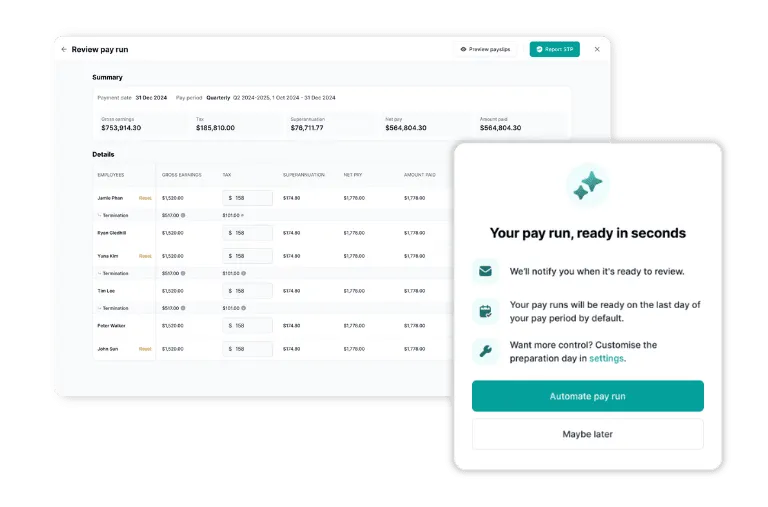
Payroller is a streamlined, mobile-first option as software for HR management focused mainly on payroll and STP reporting for micro-businesses. It keeps pay slips and ATO submissions fast without enterprise HR complexity.
Key Features:
- STP reporting
- Pay slip management
- Leave management
| Pros | Cons |
|
|
Pricing: Payroller offers a free version for basic STP needs. Paid plans start at approximately $0 per month for the basic mobile app usage (sponsored model) or a low monthly fee for web access and advanced features.
Suitable for: Micro-businesses that need straightforward payroll and compliance without extra complexity.
2. Employment Hero
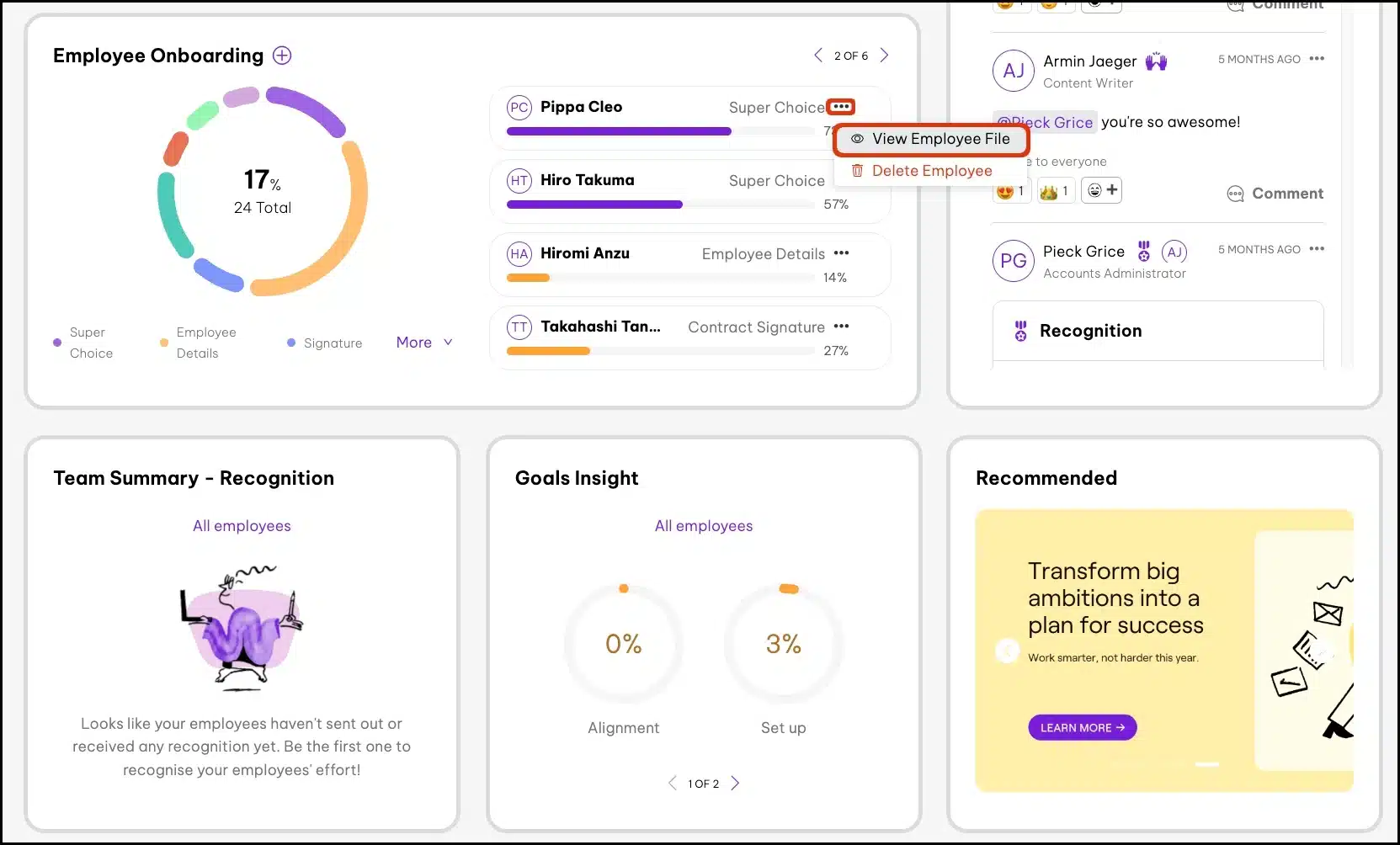
Employment Hero combines HR, payroll, and compliance tools in one platform as HR management software for Australian SMEs. It also supports employee benefits and options for managing global hires.
Key Features:
- Integrated payroll and HR
- Employment contract
- Performance review module
- OKR tracking
| Pros | Cons |
|
|
Pricing: Pricing is tiered based on modules (Standard, Premium, Platinum). Costs generally start around $7-$10 per employee per month, with bundles available for combining HR and Payroll.
Suitable for: Australian SMEs wanting HR and payroll tools aligned with local compliance needs.
3. BambooHR
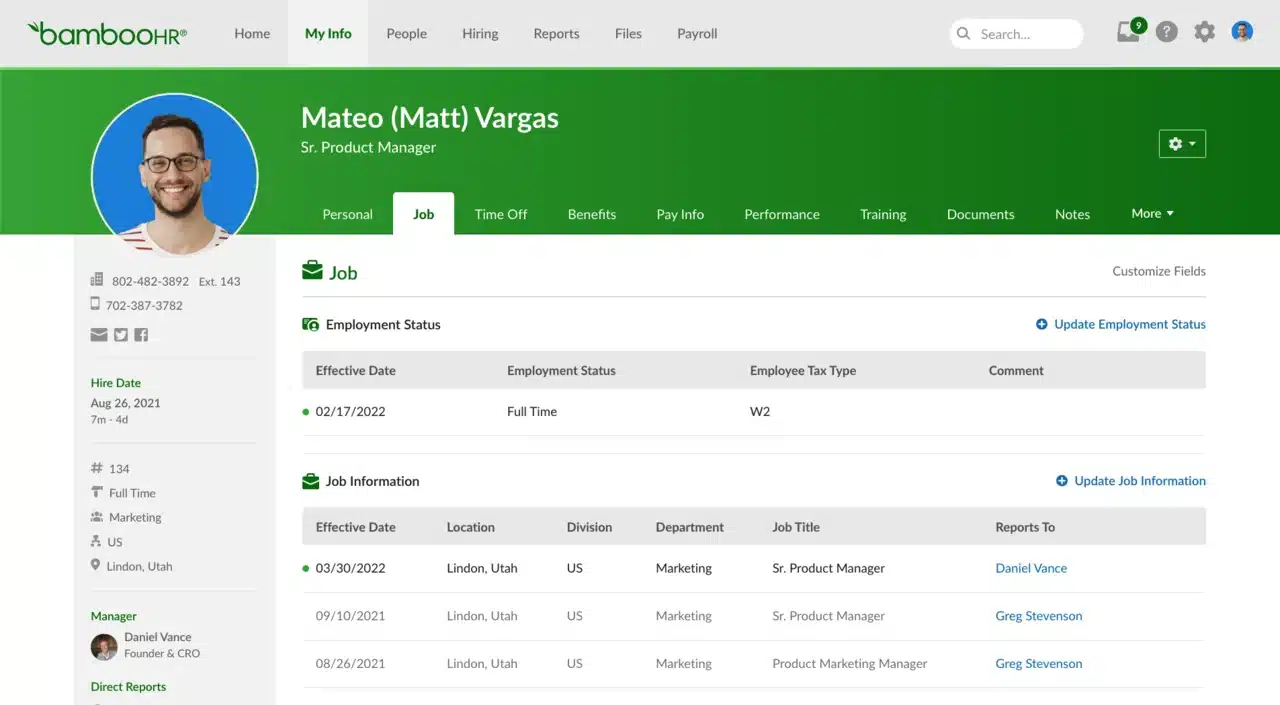
BambooHR is one of the best HR software Australia options for teams that want a clean, user-friendly HR platform focused on the employee lifecycle. Payroll typically requires integration with a local provider for Australian compliance.
Key Features:
- Applicant tracking system (ATS)
- Employee self-service mobile app
- Time-off management
| Pros | Cons |
|
|
Pricing: BambooHR uses a quote-based system, typically charging on a per-employee, per-month basis. It is generally positioned as a premium product for mid-market companies.
Suitable for: Teams prioritizing an intuitive HR experience for onboarding, performance, and people processes.
4. HashMicro
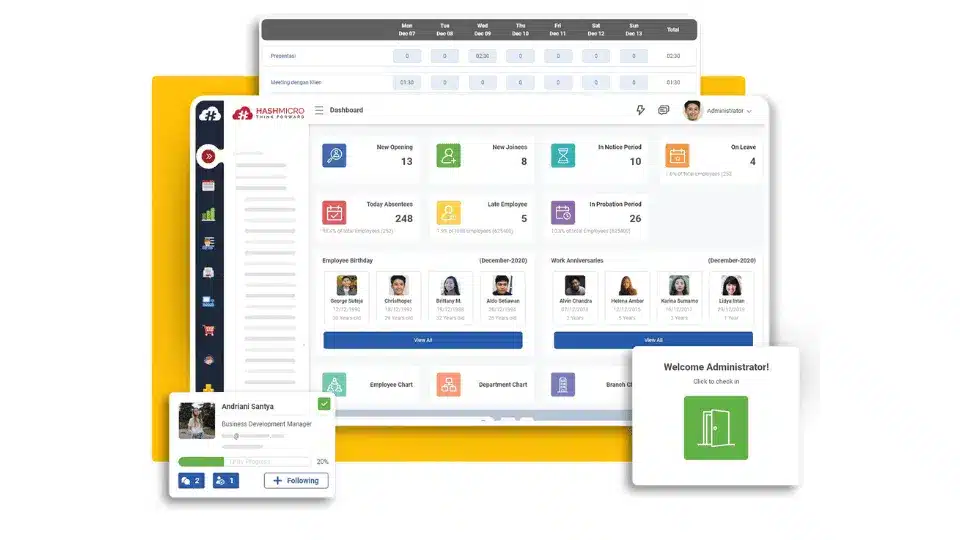
HashMicro is an AI-driven HRM powerhouse designed for mid-to-large enterprises that require deep customization and seamless integration across all business functions. Its ability to tailor the software to specific operational nuances makes it a strategic choice for scaling organizations.
Key Features:
- Face recognition attendance
- Competency management
- GPS tracking
- Recruitment portal
| Pros | Cons |
|
|
Pricing: HashMicro typically offers a perpetual license or a subscription model with unlimited users, which significantly reduces TCO for larger organisations. Pricing is provided upon consultation based on modules required.
Suitable for: Businesses needing HR connected to wider ERP workflows like finance, procurement, and operations.
5. Rippling
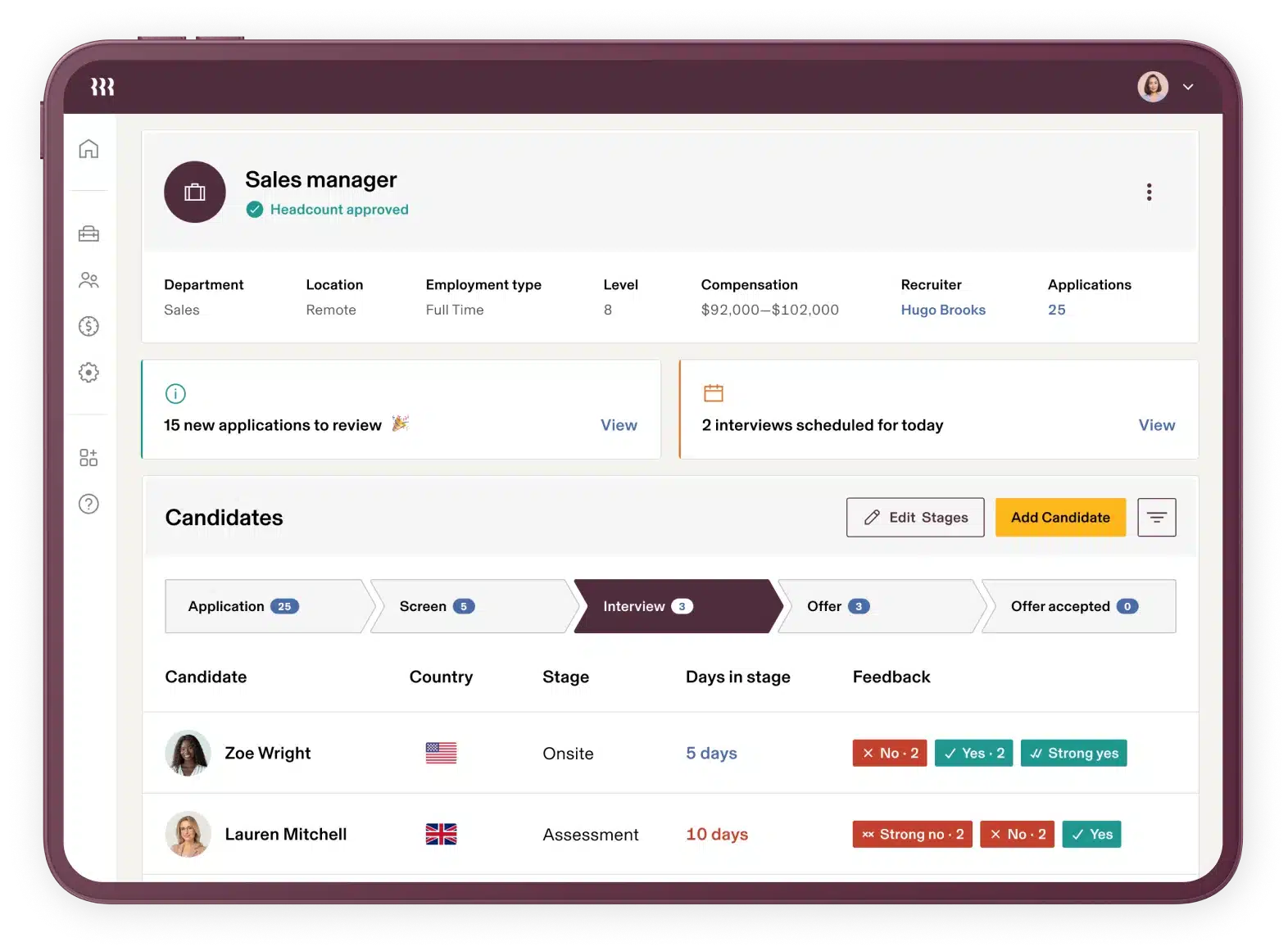
Rippling is an HR software Australia option that combines HR and IT management into one platform for fast onboarding and access control. It automates account and device setup across business tools when employee data changes.
Key Features:
- Device management
- Workflow automation builder
- Global payroll
| Pros | Cons |
|
|
Pricing: Rippling starts at a low base fee per user, but costs accumulate as you add modules like Device Management, App Management, and Payroll. It is a modular pricing structure.
Suitable for: Global or multi-entity teams that want HR, IT, and workforce management under one platform.
6. Deputy
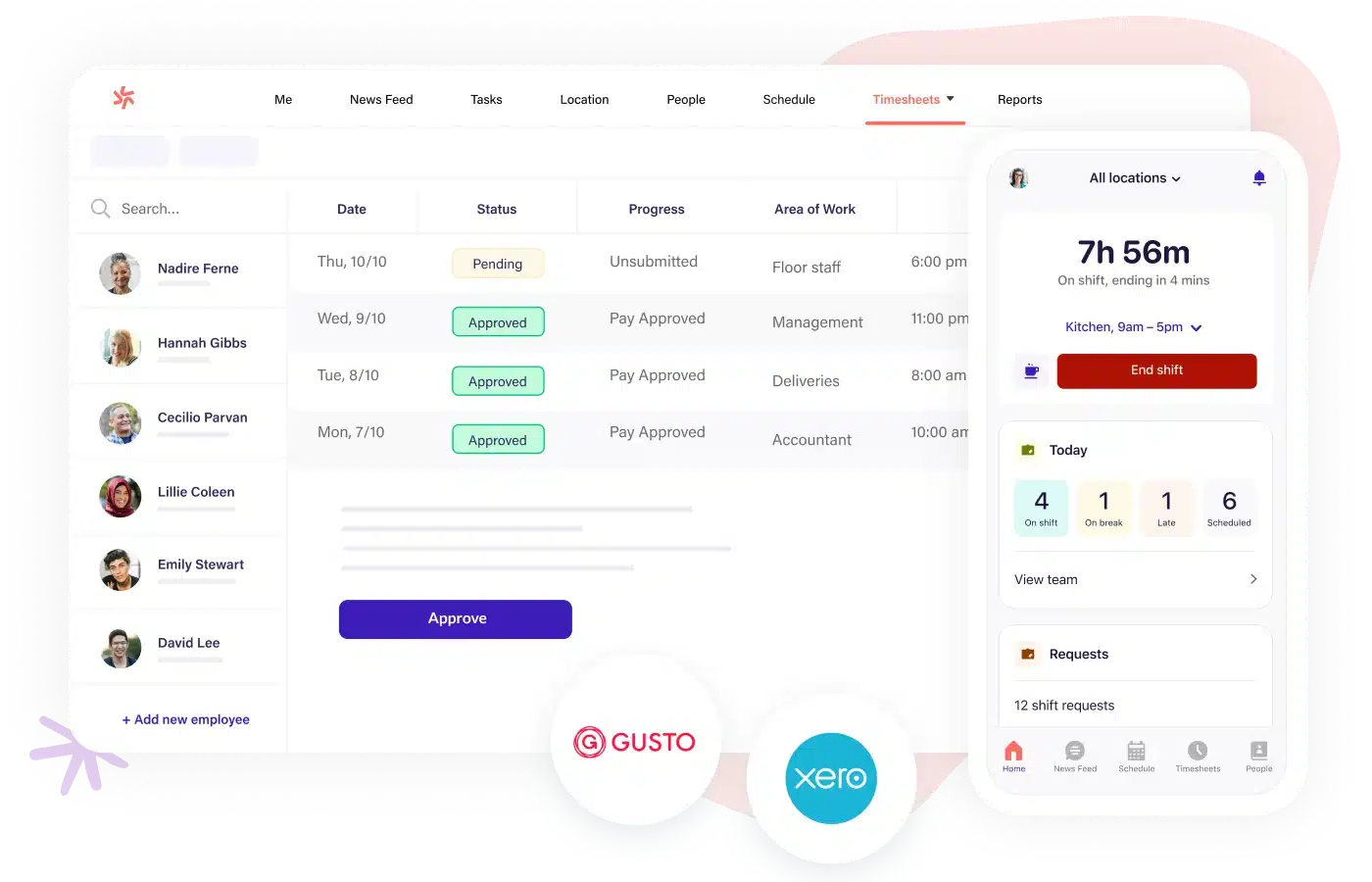
Deputy is a integrated software for HR management that integrates with many HRIS and payroll platforms, its core strength lies in optimizing schedules and capturing accurate time and attendance data.
Key Features:
- AI auto-scheduling
- Task management
- Geolocation clock-in
- Demand forecast rosters
| Pros | Cons |
|
|
Pricing: Deputy offers plans starting from approximately $6 per user per month for scheduling, with higher tiers for time and attendance features. Enterprise custom pricing is available.
Suitable for: Shift-based workplaces that rely on rostering, timesheets, and award-aware scheduling.
7. Zoho People
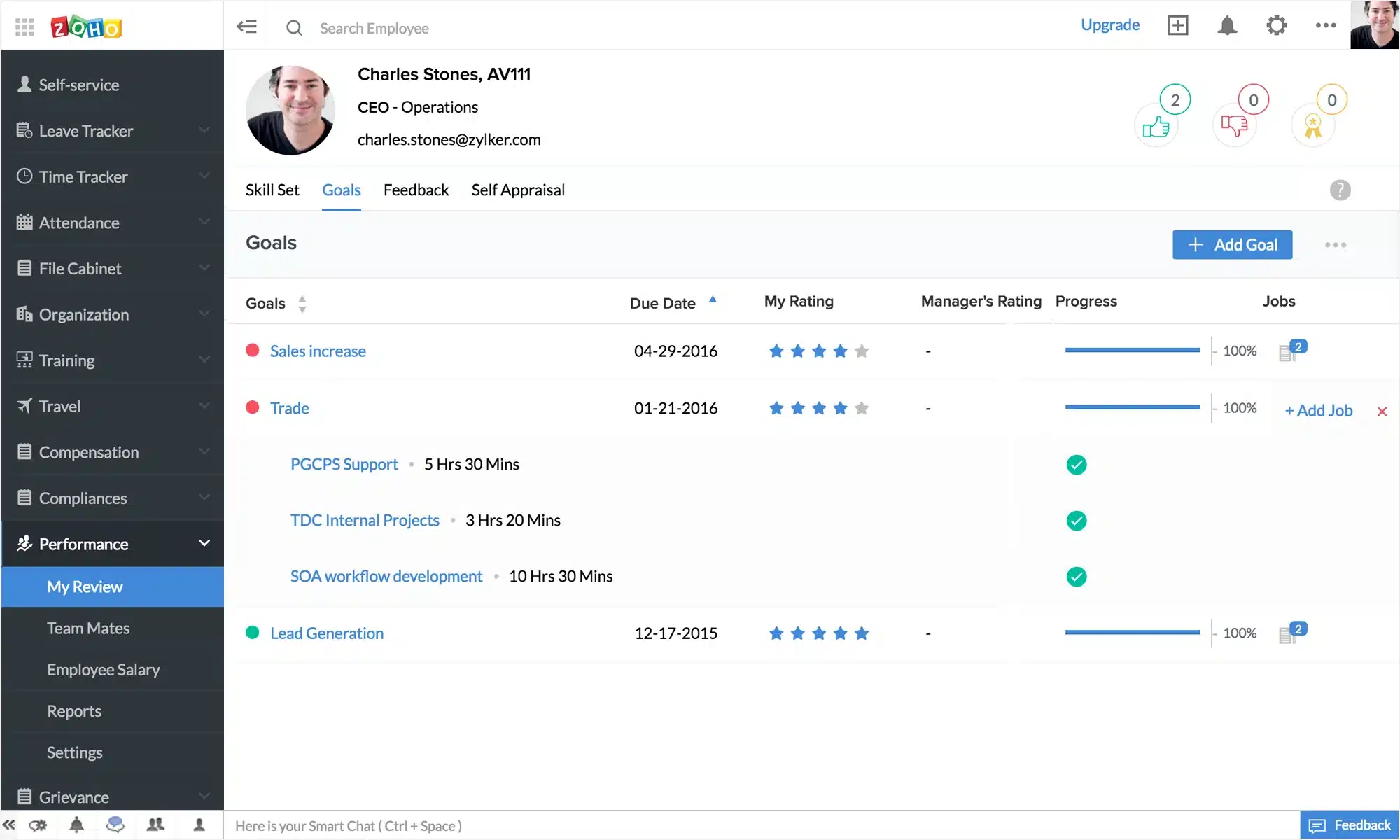
Zoho People is a flexible and affordable cloud-based HR solution that appeals to businesses already invested in the Zoho ecosystem. It is known for its extreme customizability, allowing HR managers to build custom workflows.
Key Features:
- HR case management
- Employee helpdesk ticketing
- Shift scheduling
- Attendance tracking
| Pros | Cons |
|
|
Pricing: Zoho People is one of the most budget-friendly options, with a free tier for small teams and paid plans starting at a very low cost per user per month.
Suitable for: Organizations wanting strong customization and flexible HR workflows at scale.
8. Sage HR
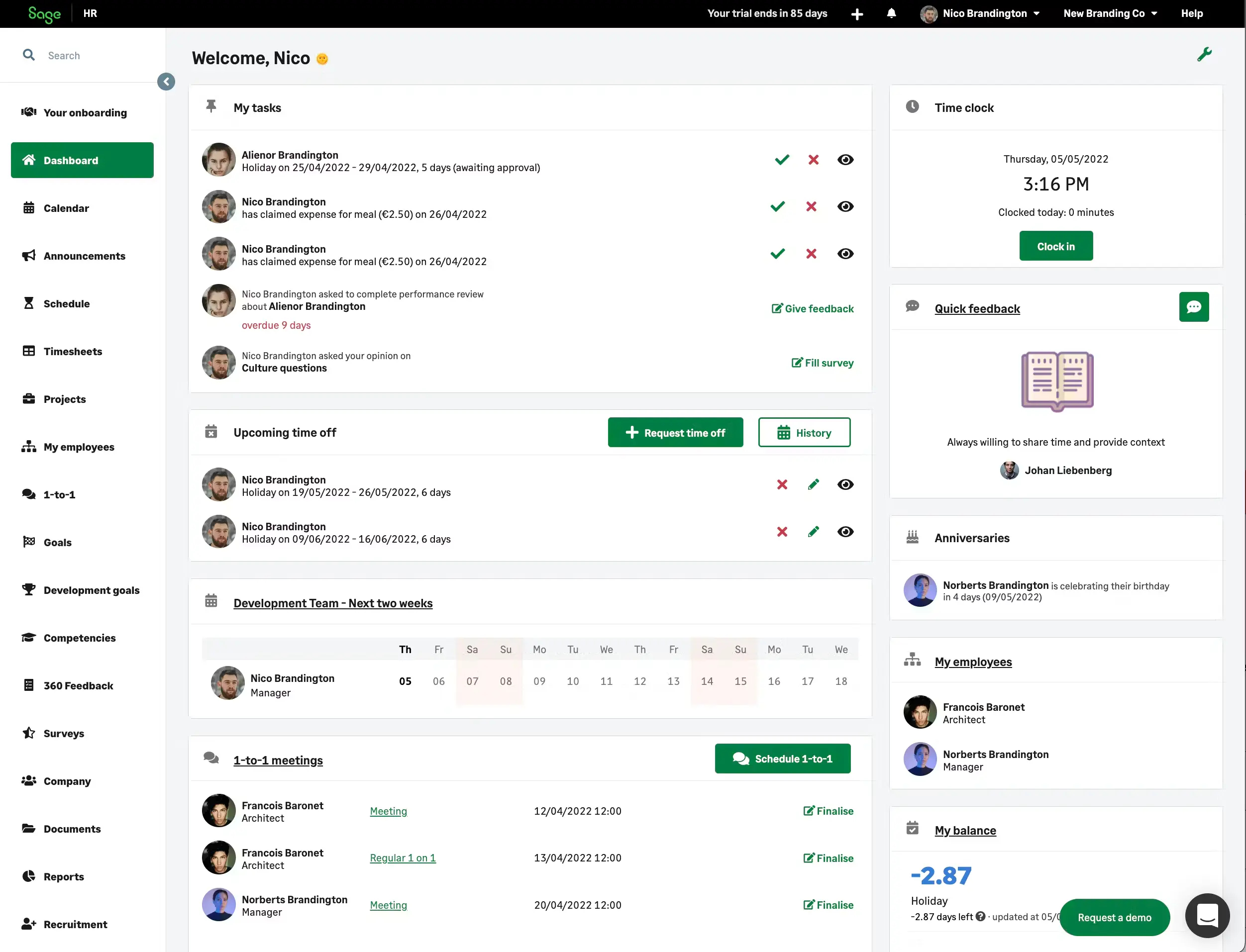
Sage HR is user-friendly HR management software for SMEs that streamlines leave and performance management with a clean, visual interface. Ideal for teams that want HR processes organized and easy to manage in one place.
Key Features:
- Visual organization chart
- Shared team calendar
- OKR performance module
- Expense management
| Pros | Cons |
|
|
Pricing: Sage HR uses a modular pricing calculator. You pay a base fee per employee and add costs for modules like Performance, Shift Scheduling, and Expenses.
Suitable for: Growing teams needing core HR management with practical leave, shift, and reporting tools.
9. Tanda
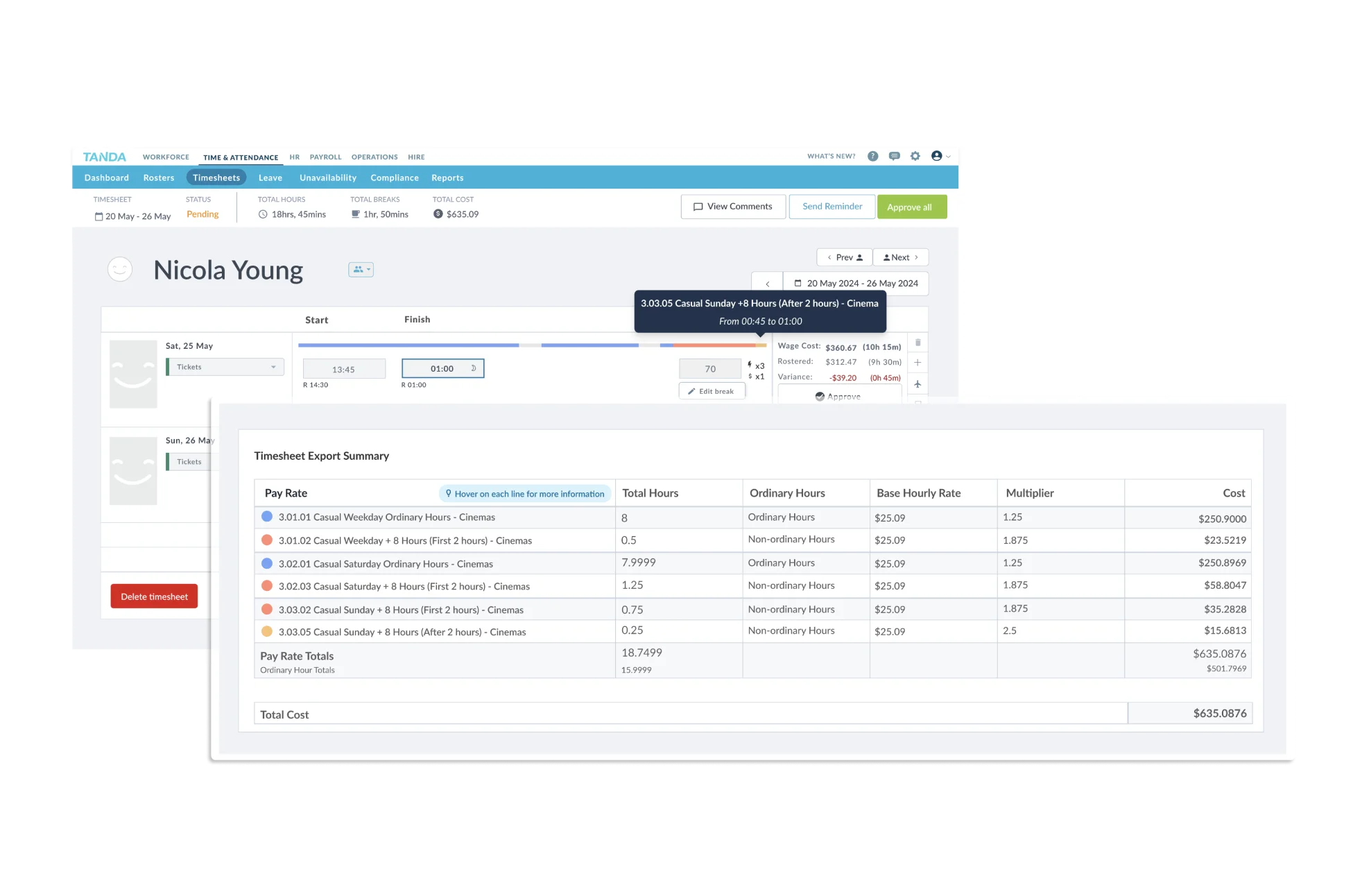
Tanda is one of the best HR software Australia options for compliance-driven rostering and time tracking, built around Australian Award interpretation and payroll-ready timesheets.
Key Features:
- Award interpreter
- Paperless onboarding
- Broken shift rules
- Predictive staffing forecasting
| Pros | Cons |
|
|
Pricing: Tanda offers tiered pricing (Starter, Business, Enterprise). It generally charges per user per month, with enterprise deals available for large franchises.
Suitable for: Australian businesses focused on time tracking, rostering, and payroll-ready timesheets.
10. Connecteam
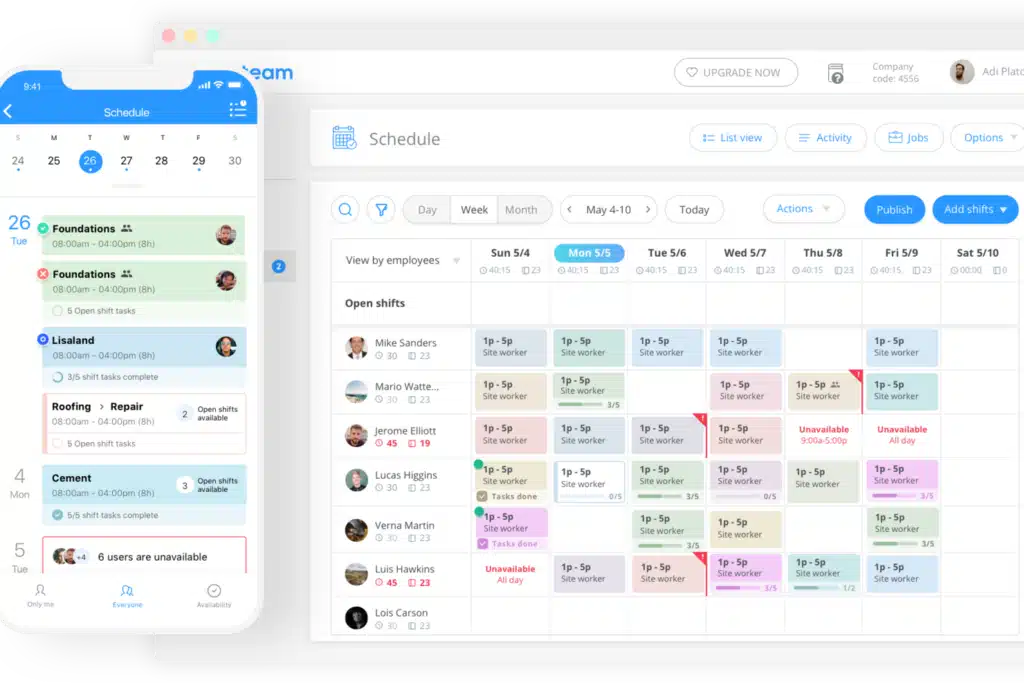
Connecteam is an HR software Australia option for deskless teams, combining scheduling, checklists, and internal communication in one mobile app. It fits field-based operations where day-to-day execution matters most.
Key Features:
- Job scheduling
- GPS clock-in
- Training & knowledge base
- Safety forms & checklists
| Pros | Cons |
|
|
Pricing: Connecteam offers a “Free for Life” plan for up to 10 users. Paid plans are fixed price per “hub” (group of features) for the first 30 users, making it scalable.
Suitable for: Deskless and field teams needing mobile scheduling, checklists, and internal communication.
Australian HR Rules Your HR Software Should Support
In Australia, compliance with payroll and employment laws is ongoing rather than a one-off task. Payroll systems must support Single Touch Payroll (STP) Phase 2 employer reporting, which requires detailed disaggregation of income components directly to the ATO.
STP Phase 2 is now mandatory. This requires granular reporting of income types (e.g., distinguishing between gross pay, allowances, and overtime) directly to the ATO. Software that “sort of” handles this will leave you exposed to audits.
Furthermore, the “Right to Disconnect” legislation and changes to casual conversion rules require systems that can track contact hours and automate conversion offers.
Your system must be able to flag when a casual employee has worked a regular pattern for 6 months and trigger the necessary compliance workflows.
How to Choose the Right HR Software for Your Business
1. By business size & headcount
Micro (under 10 staff): Prioritise low cost and basic payroll reporting compliance, with simple HR records and leave tracking.
SME (10–100 staff): Prioritize onboarding, employee experience, and process automation to reduce admin workload as the team scales.
Mid-market and enterprise (100+ staff): Prioritize integrations, custom workflows, advanced reporting, and multi-entity support to handle complex structures and compliance at scale.
2. Key selection criteria
During demos, test real scenarios, not just feature slides, such as public holiday pay rules, leave edge cases, or how workplace complaints are logged and handled.
Local Australian support matters because payroll and compliance issues need fast help from teams that understand Fair Work requirements.
Conclusion
Choosing the best HR software for your Australian business is a strategic decision that impacts compliance, culture, and the bottom line. It affects payroll accuracy, recordkeeping, and how confidently audits and policy enforcement are handled.
The right system should match operational complexity, reporting requirements, and how teams actually work day to day. It should also support smooth data flow across hiring, onboarding, time tracking, leave, and performance.
Selection should be based on workflow mapping, risk areas, and scalability, not quick feature comparisons. For tailored guidance, you can consult the expert to identify the most suitable HR solution for your organisation.
Frequently Asked Questions About Best HR Software
-
Is Single Touch Payroll (STP) Phase 2 mandatory for all HR software?
Yes, STP Phase 2 is mandatory. Any software you choose must be ATO-compliant to ensure you are reporting income types, allowances, and tax details correctly to avoid penalties.
-
What is the difference between an HRIS and an ERP like HashMicro?
An HRIS (like BambooHR) focuses solely on people management. An ERP (like HashMicro) integrates HR data directly with finance, inventory, and supply chain modules, providing a holistic view of how labour impacts overall business profitability.
-
How much does HR software cost in Australia?
Prices vary significantly. Basic tools start around $5-$10 per user/month. Comprehensive suites can range from $10-$20 per user/month. Enterprise ERP solutions often use a different model, sometimes offering perpetual licenses or unlimited user pricing.