
In today’s competitive market, businesses face a growing challenge: retaining customers while pursuing growth. As acquisition costs rise across industries, the focus has shifted to retention. A strong customer loyalty program is no longer optional but essential for sustainable profitability, rewarding repeat purchases and encouraging long-term engagement.
Customer rewards are not new, but loyalty programs have evolved from simple stamp cards to data-driven digital systems integrated with POS platforms. By combining consumer psychology with technology, businesses can turn occasional buyers into loyal advocates. This article outlines the key types, benefits, and steps to build an effective customer loyalty program.
Key Takeaways
|
What is a Customer Loyalty?

Customer loyalty is an ongoing emotional relationship between a customer and a business, shown through repeat purchases and continued engagement over competitors. It grows from positive experiences and trust. True loyalty goes beyond habit; customers choose the brand even when cheaper or more convenient options exist because they value the monetary, functional, or emotional benefits they receive.
In business terms, loyalty is measured through retention rates, share of wallet, and net promoter scores. A loyal customer buys frequently and resists competitive offers. For example, someone may pass other cafes to visit their preferred one, not just for the product but for rewards points or personalised service, reflecting a strong psychological bond.
Customer loyalty has two dimensions: behavioral and emotional. Behavioral loyalty relates to purchase frequency and value, while emotional loyalty is rooted in how the brand makes customers feel. Effective loyalty programs connect both by using rewards to build lasting emotional relationships and make customers feel valued.
Benefits of Customer Loyalty Program
Implementing a customer loyalty program directly improves retention and long-term profitability. Acquiring new customers can cost five to seven times more than retaining existing ones, so encouraging repeat purchases helps stabilise revenue and reduce churn. Even a 5% increase in retention can boost profits by 25% to 95%, showing the strong financial impact of loyalty.
Loyalty programs also increase Customer Lifetime Value. Customers are more likely to spend more and purchase more often when working toward rewards or tier status, expanding share of wallet. At the same time, every transaction generates valuable data on buying habits and preferences, enabling personalised offers that improve marketing effectiveness and enhance the customer experience.
Beyond financial gains, loyal customers often become brand advocates. Satisfied members are more likely to recommend the brand to others, creating powerful word-of-mouth marketing at little cost. By rewarding referrals and engagement, businesses can turn loyalty into a cycle that drives both retention and new customer growth.
Successful Loyalty Programs
Successful loyalty programs show what works in practice. Starbucks Rewards stands out for its seamless mobile app integration, allowing customers to order, pay, and earn stars in one step. Its frictionless experience and gamified rewards build loyalty while generating valuable data on preferences and buying patterns.
Sephora’s Beauty Insider highlights the strength of tiered and experiential rewards. With Insider, VIB, and Rouge levels, customers are motivated to spend more to unlock exclusive perks, events, and early access. Amazon Prime takes a different approach through a subscription model, where the upfront fee and free shipping benefits encourage members to consolidate spending and maximise value.
These programs share one principle: they align with brand identity and customer needs. Whether focused on convenience, status, or value, each offers clear benefits and uses technology to make the experience simple and integrated into the purchase journey.
Types of Loyalty Program
Businesses need a loyalty program that fits their industry, margins, and customer behaviour. There is no one-size-fits-all approach. What works for a high-frequency coffee shop will not suit a luxury car dealership. The most common structures are point-based, tiered, value-based, and subscription programs, each designed to drive different customer behaviours.
1. Point-Based Program
Point-based programs are the most common loyalty structure. Customers earn points for every dollar spent and redeem them for discounts, free products, or services. The model is simple, easy to manage through POS systems, and works well for high-frequency, lower-value businesses like grocery stores, fast-food chains, and retailers.
The main challenge is keeping customers engaged. If points accumulate too slowly or rewards feel out of reach, interest drops. The earning ratio must balance profitability and motivation. Digital integration also matters, as apps and digital wallets that track points automatically drive higher participation than physical cards.
2. Tiered Based Program
Tiered programs add gamification and status to loyalty. Customers move through levels such as Silver, Gold, and Platinum based on spending or engagement, unlocking better rewards at each stage. This model works well in industries where exclusivity matters, including airlines, hospitality, and luxury retail, as it encourages customers to concentrate their spending with one brand.
The key driver is aspiration. Customers close to the next tier are often motivated to spend more to unlock added benefits, reducing the risk of switching to competitors. For this model to work, higher tiers must offer clear and meaningful advantages. If the gap between levels feels small, the incentive to move up weakens.
3. Value Based Program
Value-based loyalty programs connect with customers through shared values rather than direct discounts. Instead of offering freebies, the business donates a portion of each purchase to a cause that aligns with its audience. For example, a pet store might donate a meal to an animal shelter for every bag sold. This model resonates strongly with Millennials and Gen Z, who prioritise social responsibility.
Although it does not provide direct financial rewards, it builds brand trust and emotional connection. It also helps differentiate the brand in competitive markets. However, authenticity is critical. If the initiative feels like greenwashing, it can damage credibility. The cause must genuinely align with the target audience to strengthen loyalty.
4. Subscription Program
Subscription loyalty programs, or paid programs, charge customers a recurring fee for exclusive benefits. Examples include Amazon Prime and Costco memberships, where members receive perks like free shipping, discounts, or premium access. This model attracts high-value customers who are willing to commit financially in exchange for better service or savings.
Its main strength is psychological commitment. After paying the fee, customers are more likely to increase usage to justify their investment, driving higher transaction volumes. However, the entry barrier is higher. Businesses must clearly prove that the benefits are immediate, valuable, and better than what non-members receive.
Different Types of Customer
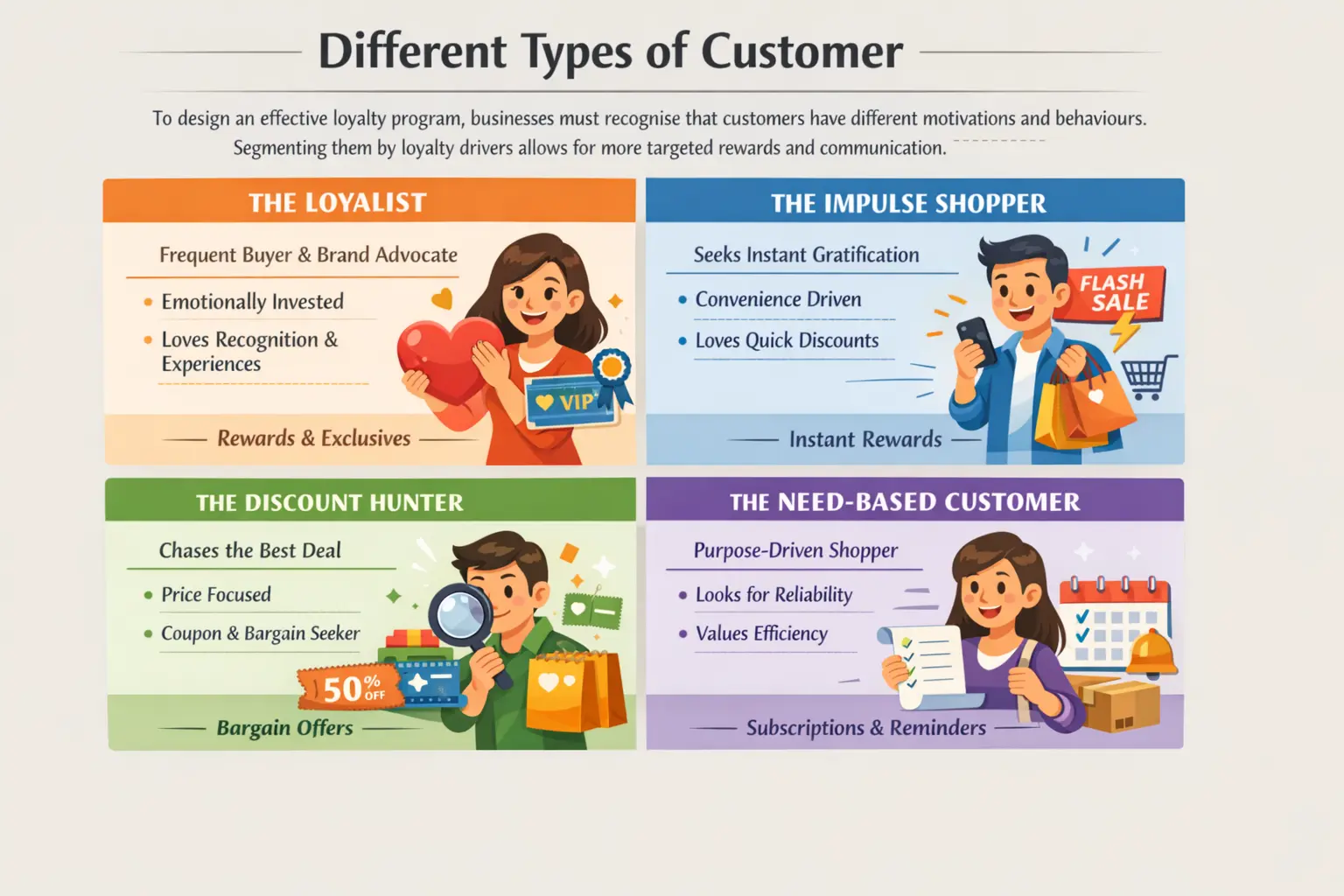
To design an effective loyalty program, businesses must recognise that customers have different motivations and behaviours. Segmenting them by loyalty drivers allows for more targeted rewards and communication. One key segment is the Loyalist. They purchase frequently, advocate for the brand, and are emotionally invested, so they respond well to recognition and experiential perks.
The Impulse Shopper is driven by convenience and instant gratification. They are not strongly attached to one brand, so loyalty strategies should focus on frictionless purchasing and immediate rewards. Simple discounts and seamless checkout experiences help secure repeat purchases.
The Discount Hunter prioritises price above all else. Their loyalty depends on the best deal available, which can reduce margins. Programs targeting this group often rely on coupons and value-based offers, but businesses must avoid over-discounting to protect brand perception.
The Need-Based Customer buys with a clear purpose and is less influenced by emotional marketing. Retention depends on reliability, stock availability, and efficiency. Subscription services or timely reminders can keep the brand top-of-mind when the need arises.
Designing a Successful Program
Designing a successful loyalty program starts with clear goals. Businesses must decide whether they want to increase order value, boost purchase frequency, or collect customer data, as the objective shapes the structure. For example, clearing inventory may suit a point-based system, while strengthening brand positioning may require a tiered experiential model.
The next step is understanding the audience through data. POS and CRM insights reveal buying patterns, visit frequency, and churn rates, helping businesses design relevant rewards. Offers must match customer behaviour. A discount on future purchases may not work for low-frequency businesses, where referral incentives could be more effective.
Budgeting is equally important. Rewards are a marketing cost, so companies must calculate when incremental revenue exceeds program expenses. Margins should be analysed carefully to ensure the program remains both attractive and profitable over time.
Technology integration is essential for smooth execution.Loyalty programs should connect directly with a reliable POS solution for retail to automate point tracking, redemption, and data synchronisation. A strong launch, staff training, and ongoing review of performance data keep the program visible, relevant, and effective.
Sector-Specific Loyalty Ecosystems
The psychology behind loyalty such as trust, reciprocity, and value stays consistent, but how a program is structured varies by industry. A model that works for high-frequency, low-value purchases in a coffee shop will not suit a B2B manufacturing business with long sales cycles and high contract values. For a loyalty program to succeed, it must align with the operational realities of the sector.
Retail: The Omnichannel Imperative
In retail, the line between physical stores and online channels has blurred. Loyalty programs must run on an omnichannel POS platform, with points, status, and rewards updated in real time across all touchpoints. If a customer shops online, they should be able to redeem those points in-store without delay.
Retailers are also shifting from simple earn-and-burn models to experiential rewards. Top members may receive early access to collections, free services, or invitations to exclusive events, turning stores into community hubs. Mobile apps play a central role, enabling features like location-based notifications that trigger offers when customers are near a store.
E-commerce: Gamification and Zero-Party Data
Pure-play e-commerce brands lack face-to-face interaction, so loyalty programs rely on digital engagement. Gamification tools such as progress bars, badges, and streaks keep users active between purchases by tapping into competitive behaviour and reward-driven habits.
Another key role of e-commerce loyalty programs is collecting zero-party data. As privacy rules tighten and third-party cookies decline, brands encourage customers to share preferences through quizzes, profiles, or interest selections. In return, users receive rewards, enabling more personalised marketing that improves conversions and reduces unsubscribe rates.
Manufacturing and B2B: The Channel Partner Paradigm
In manufacturing and B2B industries, loyalty programs often target channel partners such as distributors, wholesalers, and contractors. These Channel Loyalty Programs aim to secure mindshare among intermediaries who recommend or stock products. For example, an HVAC manufacturer may reward independent contractors for consistent volume or brand preference.
Unlike consumer programs driven by emotion, B2B loyalty is practical and results-focused. Rewards typically include rebates, marketing support, training certifications, better payment terms, priority shipping, or dedicated account management. A tiered structure works well, as higher sales volumes unlock stronger commercial benefits that directly improve the partner’s bottom line.
Wholesale Distribution: Volume and Logistics Incentives
For distributors, thin margins and intense competition make loyalty programs a tool to grow share of wallet. These programs often reward behaviours that improve efficiency, such as placing orders through an online portal or buying in bulk to streamline logistics. This approach supports both revenue growth and cost control.
Rewards typically include credit memos, freight discounts, or priority access to limited inventory. By linking incentives to operational benefits, distributors create a lock-in effect, where switching to another supplier becomes inconvenient and costly for the buyer.
Detailed Implementation Roadmap
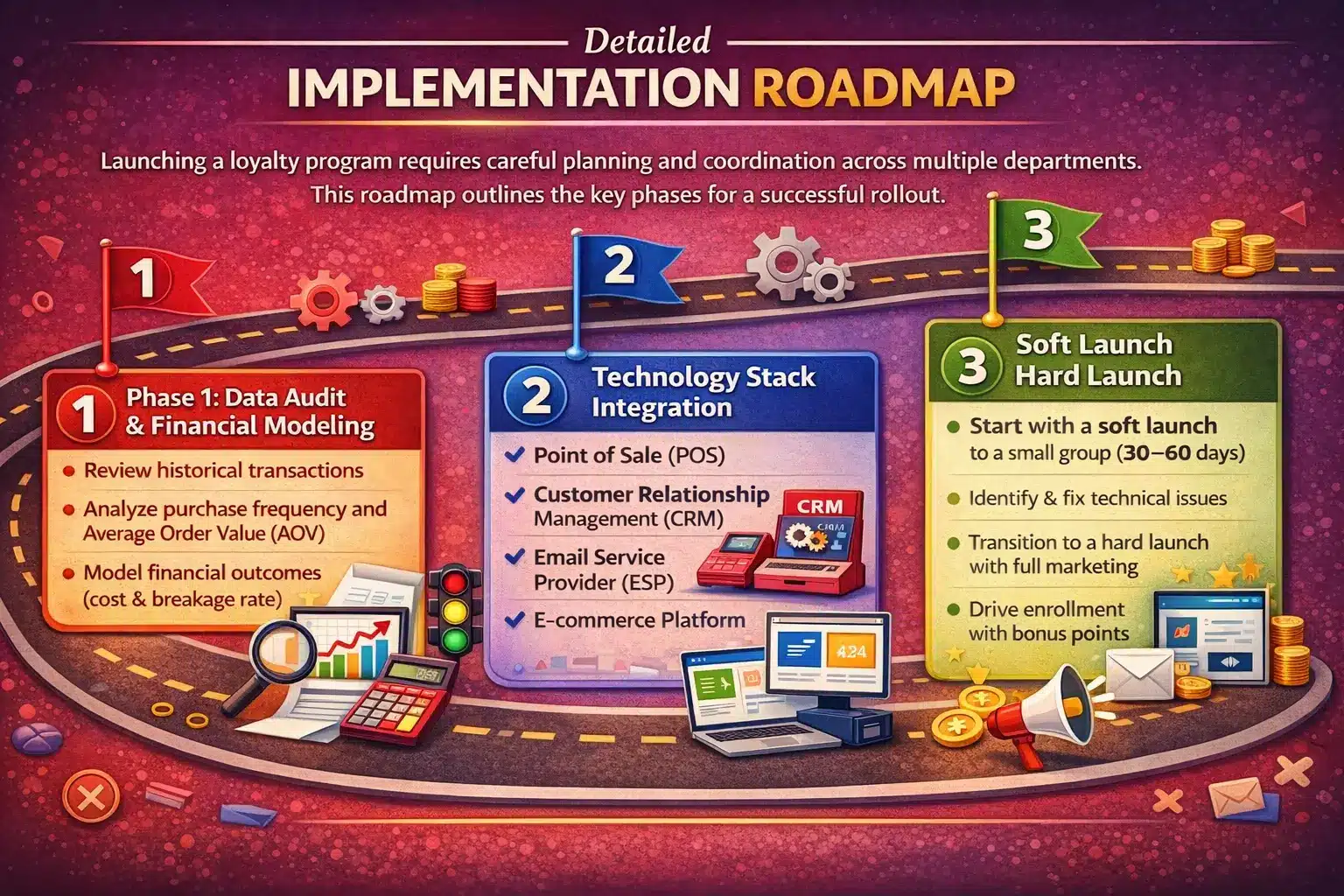
Launching a loyalty program is a strategic initiative that requires coordination across marketing, finance, IT, and operations. Without proper planning, businesses risk technical issues, financial exposure, and customer frustration. The following roadmap outlines the key phases for a successful rollout.
Phase 1: Data Audit and Financial Modeling
Before choosing a platform or branding the program, businesses must analyse existing customer data. Reviewing historical transactions helps determine Purchase Frequency and Average Order Value, which serve as the baseline for setting reward tiers.
At the same time, financial modelling is needed to calculate the cost of loyalty. If 5% is returned in points, the expected lift in sales or Customer Lifetime Value must exceed that cost. This stage also requires estimating the breakage rate, or the percentage of points that go unused. While high breakage lowers costs, it may signal weak engagement, so the goal is a balance between strong redemption and healthy margins.
Phase 2: Technology Stack Integration
The loyalty management system cannot operate in isolation. It must integrate smoothly with the existing technology stack to ensure accuracy and a seamless customer experience. Key integrations include:
- Point of Sale (POS): Staff should be able to access accounts and redeem points instantly without slowing checkout.
- Customer Relationship Management (CRM): Loyalty data must sync with the CRM so teams can view tier status and purchase history.
- Email Service Provider (ESP): Marketing tools need real-time point balances to trigger timely messages, such as reward reminders.
- E-commerce Platform: Single sign-on should allow customers to view and manage rewards directly from their account dashboard.
Phase 3: The Soft Launch vs. Hard Launch
Launching a loyalty program to the entire customer base at once is a common mistake. A more effective approach is to start with a soft launch. The program is first introduced to a small group, such as top customers or selected employees, for 30 to 60 days. This phase helps identify technical issues and validate point calculations.
Once the system performs as expected, the hard launch can begin. A coordinated marketing campaign should support the rollout, including in-store displays, website banners, and email announcements. An enrollment incentive, such as bonus points, can accelerate sign-ups and early engagement.
Critical KPIs and Performance Metrics
To measure the effectiveness of a loyalty program, businesses must look beyond vanity metrics such as total enrollments. The focus should shift to actionable KPIs that indicate real financial impact and customer engagement.
Redemption Rate (RR)
Redemption Rate is one of the most critical loyalty metrics. It is calculated by dividing total points redeemed by total points issued. A low rate may indicate that rewards lack appeal or are too difficult to attain. A healthy rate shows that customers actively participate and that the earn-and-redeem cycle is working effectively.
Breakage Rate
This metric is the inverse of the redemption rate. It measures the percentage of points that expire without being redeemed.
While finance teams may favor high breakage because it lowers outstanding liabilities, marketing should see it as a warning sign. High breakage suggests low engagement and indicates that the program is not effectively influencing customer behavior.
Incremental Sales (Lift)
This metric measures the difference in spending between program members and non-members, adjusted for the fact that members are usually higher spenders to begin with. To measure this accurately, businesses often use control groups—tracking a segment of customers who fit the loyalty profile but are not in the program—to see if the program itself is driving the extra spend.
Churn Rate Reduction
Loyalty programs are designed to improve retention. As a result, the churn rate of active members should be noticeably lower than that of non-members. Monitoring how many loyalty members stop purchasing within a defined period, such as 12 months, helps measure the program’s stickiness and long-term effectiveness.
Participation Rate
This metric tracks the percentage of the total customer base enrolled in the program. Although enrollment does not guarantee engagement, a low participation rate may indicate weak promotion or a sign-up process that creates too much friction.
Common Pitfalls and Mitigation Strategies

Even well-intentioned programs can fail if they fall into common traps. Recognizing these pitfalls early is essential for long-term viability.
Complexity and Friction
If customers need a calculator to understand how to earn rewards, the program is too complicated. A structure like “Spend $1, earn 1 point” is clear and easy to follow. In contrast, multi-layered rules with stars, badges, and percentage discounts create confusion. Complexity adds friction, and friction reduces participation.
Mitigation: Keep the core value proposition simple and easy to explain in one sentence. Use visual tools such as progress bars to clearly show status and reward progress.
The Liability of Unredeemed Points
From an accounting standpoint, unredeemed points represent a financial liability. They are obligations the company may need to fulfill in the future. If redemption remains low for years, this liability can accumulate significantly. A sudden surge in redemptions could then strain cash flow.
Mitigation: Introduce clear expiration policies, such as points expiring after 12 months of inactivity. This encourages ongoing engagement and reduces long-term financial risk. The policy must be communicated transparently to prevent customer dissatisfaction.
Lack of Differentiation
Many industries face a “sea of sameness,” where competitors offer nearly identical rewards such as 5% cash back. When a loyalty program mirrors others in the market, it loses strategic value and becomes just another operational cost.
Mitigation: Emphasize differentiated benefits that are harder to replicate. Experiential rewards, brand collaborations, exclusive access, or community-driven perks can create stronger competitive distinction than standard discounts.
Devaluation of Points
Changing the value of points (e.g., making rewards more expensive) after customers have earned them is the fastest way to destroy trust. It is viewed as a breach of the implicit contract between brand and consumer.
Mitigation: If program economics require adjustment, “grandfather” existing points at the old value or give a long runway (6+ months) before changes take effect, allowing customers to redeem their balances under the old rules.

Advanced Best Practices and Future Trends
As the loyalty landscape matures, leading companies are looking beyond transaction-based models to create holistic ecosystems.
Paid Loyalty Memberships (The Premium Tier)
After the success of models like Amazon Prime, many retailers have introduced paid loyalty tiers. Customers pay a monthly or annual fee in exchange for immediate, high-value benefits such as free shipping, enhanced discounts, or premium services.
Why it works: Paying a fee creates psychological commitment. Members are more motivated to maximize their return, which increases share of wallet. The recurring fee also generates upfront revenue that helps offset the cost of the rewards.
Eco-Loyalty and Ethical Rewards
Modern consumers, especially Gen Z and Millennials, are increasingly driven by values. Eco-loyalty programs allow customers to redeem points for charitable donations, tree planting, or carbon offsets instead of discounts. Some brands also reward sustainable actions, such as using reusable bags or recycling products.
Why it works: This approach aligns the brand with customer values and strengthens emotional connection. It also helps the brand stand out in markets where discount-based rewards are common.
Predictive AI and Hyper-Personalization
The future of loyalty is increasingly predictive. Advanced programs now use Artificial Intelligence to anticipate what a customer is likely to purchase next and offer targeted bonus points in advance. AI can also tailor the reward mix for each individual, identifying whether a customer responds better to discounts, free shipping, or product samples.
Why it works: This approach shifts the program from reacting to past purchases to actively shaping future behavior. As a result, marketing spend becomes more precise and cost-efficient.
Conclusion
In conclusion, a well-structured loyalty program is a strategic asset in competitive markets. It goes beyond transactional rewards to build stronger, more meaningful customer relationships. By understanding loyalty drivers, segmenting customer types, and selecting the right structure, businesses can improve retention and increase lifetime value.
To build a loyalty program that aligns with your business goals and drives measurable results, consult the expert for tailored guidance.
Frequently Asked Question
The main purpose of a customer loyalty program is to retain existing customers by rewarding them for their repeat business. By offering incentives such as discounts, points, or exclusive access, businesses encourage customers to choose their brand over competitors, thereby increasing customer lifetime value and stabilizing revenue.
Success can be measured using key performance indicators (KPIs) such as customer retention rate, redemption rate (the percentage of issued points that are used), average order value (AOV) of members versus non-members, and Net Promoter Score (NPS). Tracking these metrics helps businesses understand if the program is driving the desired behavior.
For many small businesses, a point-based program is often the best starting point due to its simplicity and ease of management. It is easy for customers to understand and can be implemented with minimal technology. However, digital punch cards or simple tiered systems can also be effective depending on the specific industry and customer frequency.
Technology, particularly POS and CRM integration, automates the tracking of points and rewards, reducing human error and friction at checkout. It also provides valuable data analytics, allowing businesses to personalize offers and communicate more effectively with customers, which significantly enhances the overall user experience.
Yes, loyalty programs are effective for B2B businesses as well, though they often look different from B2C models. B2B programs might focus on tiered volume discounts, referral bonuses, or access to premium support and training. The goal remains the same: to build long-term relationships and encourage recurring transactions.