A CRM is no longer just a place to store contacts. I treat it as the revenue system your team runs on, where lead capture, follow-ups, forecasting, and customer context live in a single workflow rather than being scattered across inboxes and spreadsheets.
When the structure aligns with how your team sells, daily work feels lighter. Reps stop relying on memory, everyone moves deals through the same pipeline stages, handovers become cleaner, and reporting turns into something you can trust week to week, especially when you sell across multiple states, brands, or inbound and outbound motions.
Choosing CRM software Australia also goes beyond a feature checklist. Procurement will ask where data is stored, who can access it, how actions are audited, and what happens if a breach occurs, so the right CRM supports growth without creating risk or friction for the people using it every day.
Key Takeaways
|
If you only have 10 minutes, start with a shortlist, then pressure-test each option against your workflow, integrations, and governance requirements. I group CRMs by how they tend to win in Australia: marketing-led growth, enterprise scale, sales-first execution, Microsoft environments, and ERP-connected operations.
Best Because
A user-friendly CRM built for inbound growth, combining pipeline tracking with strong marketing and automation tools.
Best Because
An enterprise CRM known for deep customisation and a massive ecosystem of integrations.


Best Because
A sales-focused CRM with a visual pipeline that helps teams move deals faster with minimal setup.
Best Because
A powerful CRM for organisations using Microsoft 365, with strong integrations and the wider Dynamics suite.
What is CRM Software and Do You Actually Need It?
At its core, Customer Relationship Management (CRM) software is the central repository for your business’s interactions with the outside world. However, in 2026, describing it merely as a database is a significant understatement.
Modern CRM systems are intelligence engines that automate workflows, predict customer behaviour, and unify fragmented data streams. If your sales team is spending more time entering data than closing deals, or if your marketing data is siloed from your sales results, you do not just need a CRM; you need a digital transformation.
Do you actually need it? Consider the cost of lost opportunities. Without a centralized system, lead leakage is inevitable, and customer churn often goes unnoticed until it is too late to rectify.
Many organisations today are investing in a comprehensive CRM solution for business to centralise customer data, improve pipeline visibility, and support more consistent sales execution.
What Should You Look for in Australian CRM Software?
Selecting software for the Australian market requires criteria beyond generic feature lists. You must weigh local compliance against global functionality.
- Pipeline design and activity capture: Your CRM should match how your team sells, with clear stages, ownership rules, and fast activity logging. If reps keep rebuilding context every time they open a deal, adoption drops, and forecasts become harder to trust, even with the best crm software Australia.
- Data governance and cross-border disclosure readiness: For CRM software buyers in Australia, governance matters as much as features, especially when personal information can flow across vendors or regions. Choose customer relationship management software that supports robust access controls, clear data handling, and cross-border disclosure readiness, so procurement can sign off with confidence.
- Security controls that match your risk profile: Treat Australian CRM software as a high-trust system because it stores customer personal information and revenue history. Prioritise role-based access, audit logs, multi-factor authentication, and single sign-on if your organisation already uses it.
- Integration quality that eliminates manual work: Do not settle for a platform that merely claims to have integrations; real value comes from reducing handoffs. Many organisations also rely on efficient sales order tracking to ensure order status, fulfilment, and billing data stay aligned without constant manual follow-up.
- Pricing clarity in AUD and support in local hours: Pricing should stay predictable in AUD so finance teams avoid currency volatility. Also, confirm support coverage that aligns with AEST and AEDT, because response speed affects pipeline momentum and customer experience.
- AI that supports execution, not noise: Useful AI speeds up the work: lead prioritisation, next-best actions, conversation summaries, and faster drafting for follow-ups. If AI does not reduce admin time or improve conversion discipline, it adds clutter rather than value, even in the best CRM software.
12 Best CRM Software in Australia 2026
We have rigorously tested and analyzed the leading platforms available to Australian businesses. Here is our comprehensive review of the top 12 contenders for 2026.
1. HubSpot
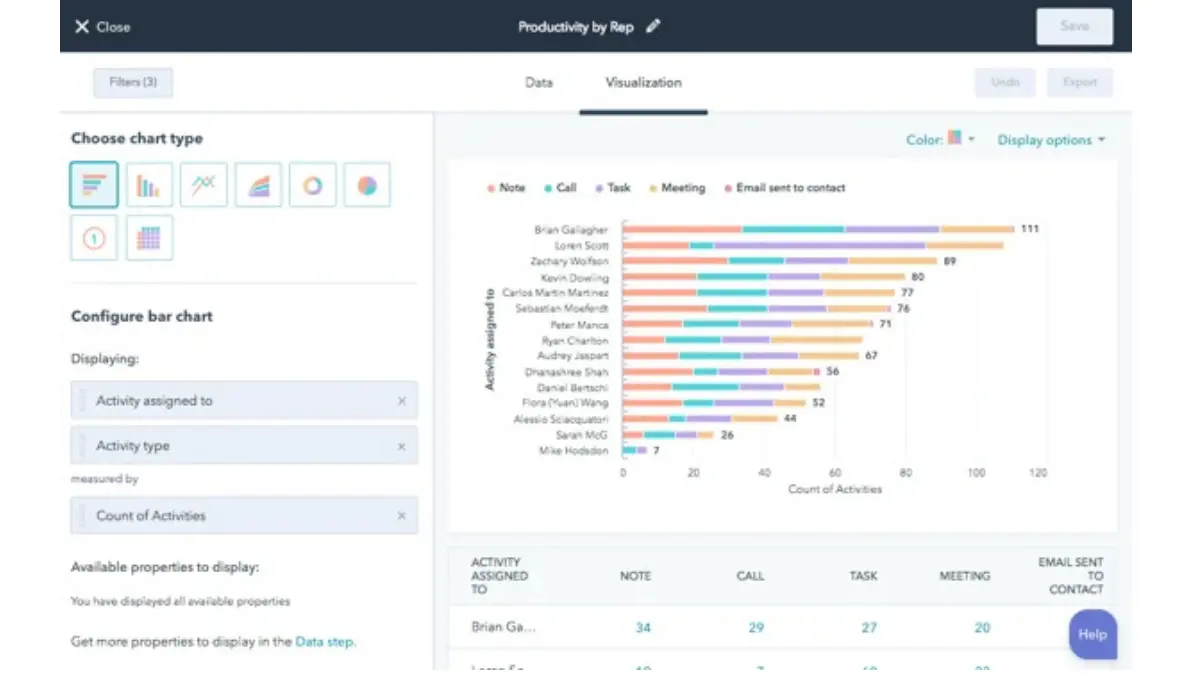
HubSpot remains a dominant force, particularly for companies that prioritize inbound marketing. Its “hubs” structure allows businesses to start with a free CRM and scale up into marketing, sales, and service modules.
The platform is renowned for its user interface, which requires minimal training. However, the ecosystem is designed to keep you within the HubSpot world, making it powerful but potentially expensive as you scale.
| Pros | Cons |
| ✓ Extremely intuitive user interface. | ×Price jumps significantly between tiers. |
| ✓ Powerful free version available. | ×Reporting can be limited in lower tiers. |
| ✓ Seamless marketing automation integration. | ×Contract terms can be inflexible. |
Pricing: Freemium model available; Professional tiers start around AUD $800/month.
2. Zoho CRM
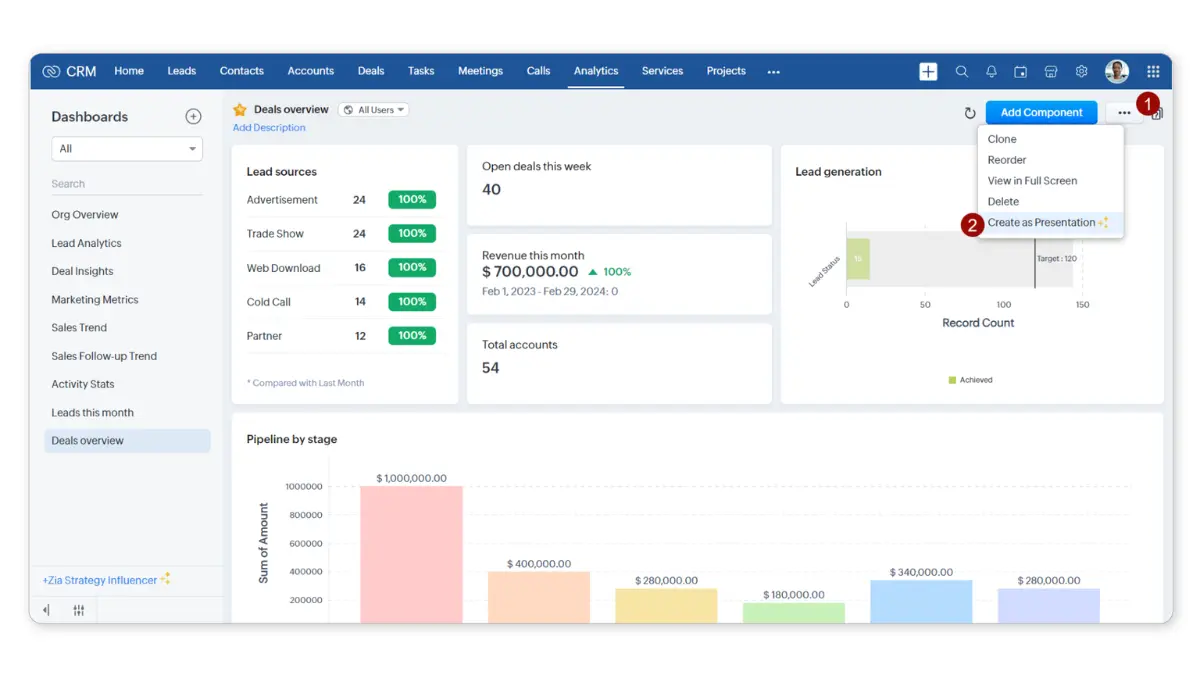
Zoho CRM is part of the massive Zoho One suite, offering incredible value for money. It is highly customizable and integrates well with the dozens of other business apps Zoho provides.
For Australian SMBs, Zoho offers a local data centre and billing in AUD. Its Canvas design studio allows for unprecedented customization of the user interface.
| Pros | Cons |
| ✓ Very affordable for the feature set. | ×Support response times can be slow. |
| ✓ High level of customisation with Canvas. | ×UI can feel cluttered compared to HubSpot. |
| ✓ Australian data centres available. | ×Steep learning curve for advanced features. |
Pricing: Starts from approx AUD $22/user/month.
3. Salesforce Sales Cloud
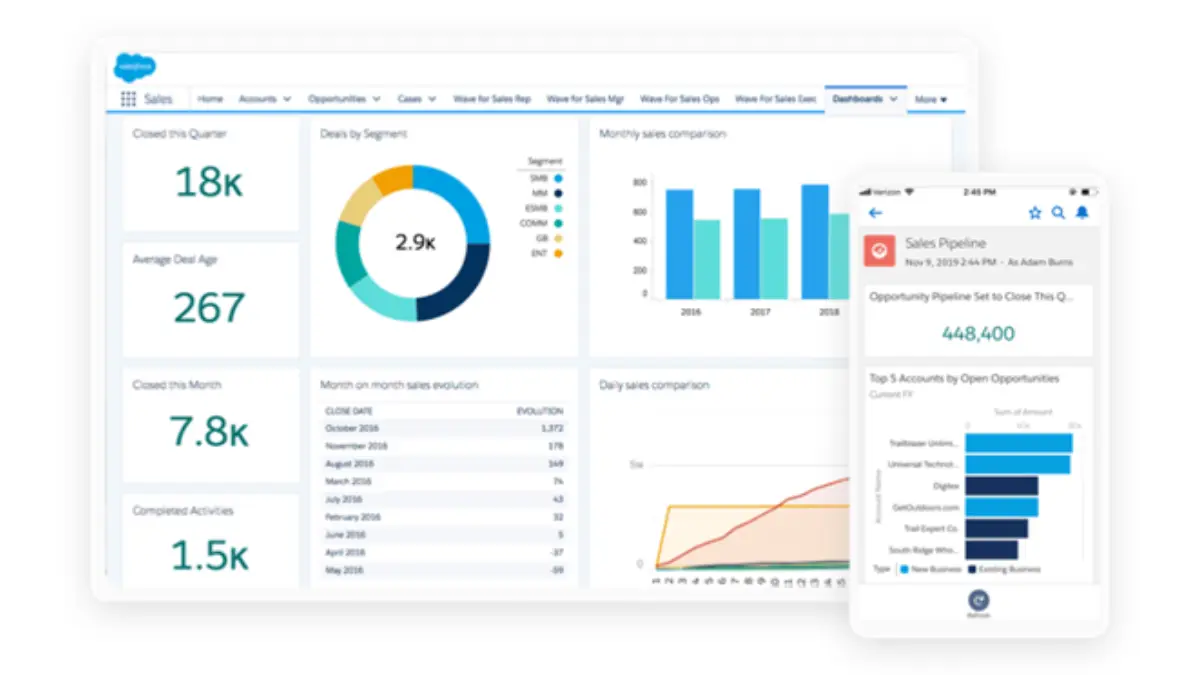
Salesforce is the industry standard for enterprise CRM. It offers limitless customization and a massive marketplace (AppExchange) of third-party integrations.
It is best suited for large organizations with complex sales cycles and the budget to hire dedicated administrators. Its Einstein AI provides deep insights into sales forecasting.
| Pros | Cons |
| ✓ Unmatched scalability and customization. | ×High Total Cost of Ownership (TCO). |
| ✓ Huge ecosystem of integrations. | ×Requires dedicated specialists to manage. |
| ✓ Advanced AI analytics with Einstein. | ×Steep learning curve for new users. |
Pricing: Enterprise tiers can exceed AUD $200/user/month.
4. Pipedrive
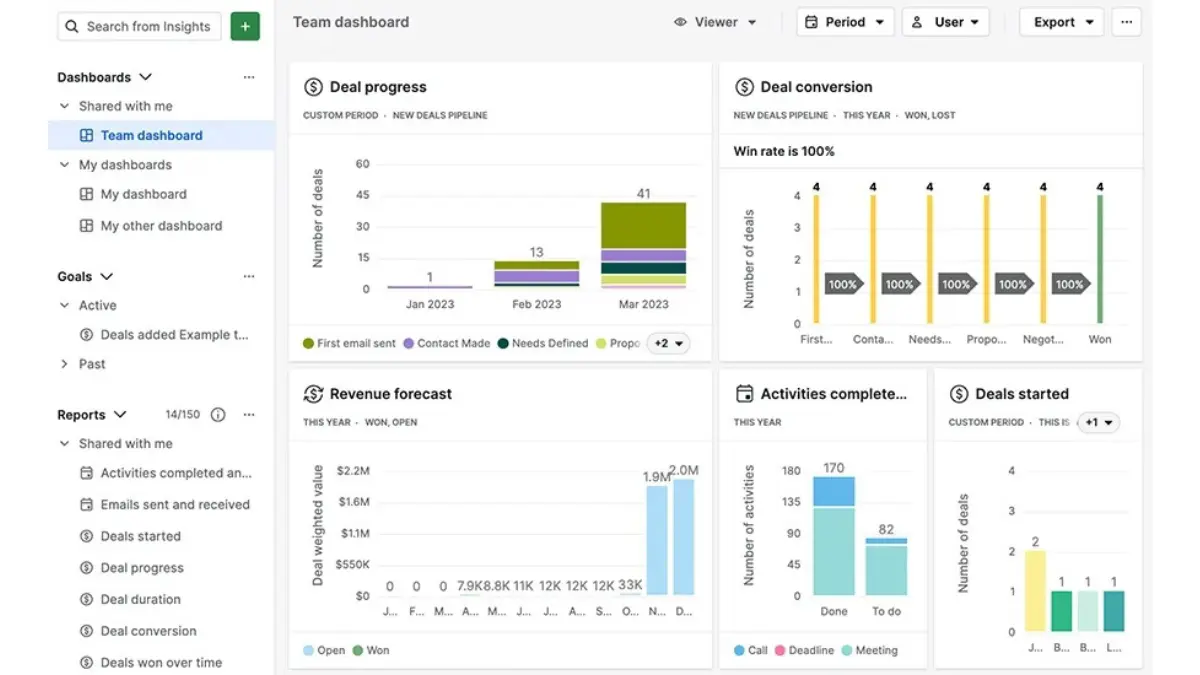
Pipedrive is built by salespeople, for salespeople. Its primary focus is on the visual sales pipeline, encouraging activity-based selling.
It is less about marketing automation and more about ensuring deals move from stage to stage. It is incredibly popular among Australian SMEs for its simplicity and focus.
| Pros | Cons |
| ✓ Excellent visual pipeline management. | ×Limited marketing automation features. |
| ✓ Quick setup and easy adoption. | ×Reporting is basic on lower tiers. |
| ✓ Strong mobile application. | ×Separate costs for add-ons such as LeadBooster. |
Pricing: Starts around AUD $25/user/month.
5. Freshsales
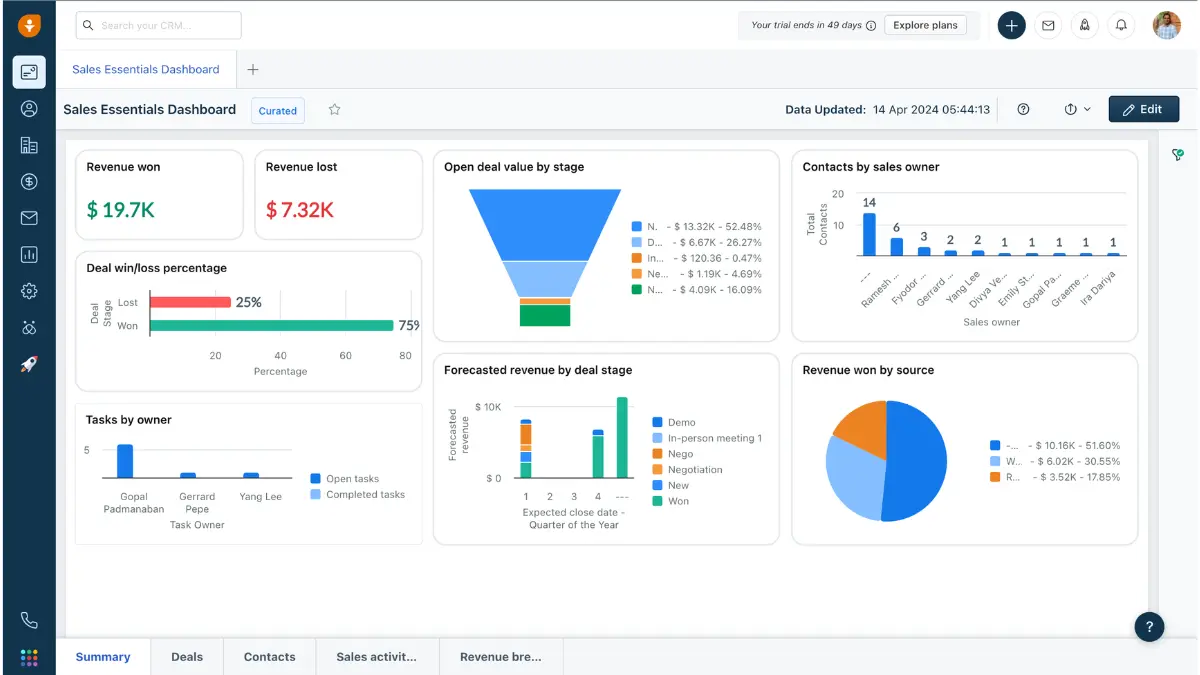
Freshsales (part of Freshworks) brings a modern, AI-first approach to CRM. It features “Freddy AI,” which helps score leads and predict revenue.
It offers a unified view of the customer by combining sales and support data (if used with Freshdesk). The interface is clean, modern, and very user-friendly.
| Pros | Cons |
| ✓ Built-in phone and email features. | ×Integration options fewer than Salesforce. |
| ✓ AI-powered deal insights. | ×Support can be inconsistent. |
| ✓ User-friendly interface. | ×Limited customization in reporting. |
Pricing: Free tier available; Growth plan starts approx AUD $18/user/month.
6. HashMicro
HashMicro stands out as a comprehensive business solution. Unlike standalone CRMs, HashMicro offers a CRM module that is fully integrated into a broader ERP ecosystem.
For Australian businesses in manufacturing, wholesale, or construction, this is a game-changer. It connects sales data directly with inventory, procurement, and finance, providing a single source of truth. The software is highly customizable to fit unique Australian business workflows.
| Pros | Cons |
| ✓ Seamless integration with ERP (Inventory and Accounting). | ×May be overkill for micro-businesses. |
| ✓ Unlimited user pricing model available. | ×Setup requires an implementation phase. |
| ✓ Highly customizable to specific industries. | ×Interface is data-dense. |
Pricing: Competitive pricing with options for unlimited users; Quote-based.

7. monday.com CRM
monday.com began as a project management tool but has successfully pivoted to offer a robust CRM product. It is highly visual and relies on “boards” to manage data.
It is perfect for teams that want flexibility and are already used to working in a project-based environment. Automations are easy to build without coding knowledge.
| Pros | Cons |
| ✓ Highly visual and flexible interface. | ×Can become expensive with many users. |
| ✓ Great for post-sales project management. | ×Not a traditional database structure. |
| ✓ Easy no-code automation builder. | ×Mobile app functionality is limited. |
Pricing: Starts around AUD $15/user/month (min 3 seats).
8. OnePageCRM
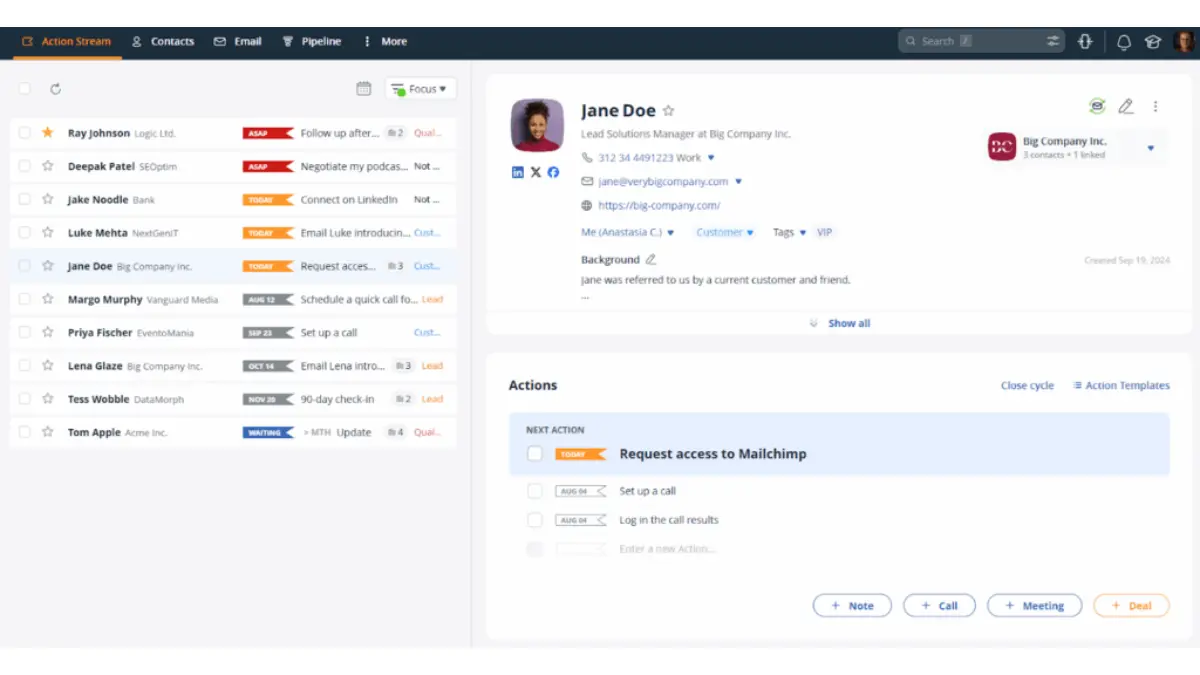
OnePageCRM is built on the “Getting Things Done” (GTD) productivity methodology. It turns the CRM into a dynamic to-do list.
Every contact in the database must have a “Next Action” assigned to it. This ensures that no lead ever goes cold due to inaction. It is niche but effective for high-velocity sales.
| Pros | Cons |
| ✓ Unique action-focused interface. | ×Lacks advanced marketing features. |
| ✓ Great for individual productivity. | ×Not suitable for complex enterprise needs. |
| ✓ Simple and uncluttered. | ×Reporting is relatively basic. |
Pricing: Approx AUD $15/user/month.
9. Microsoft Dynamics 365
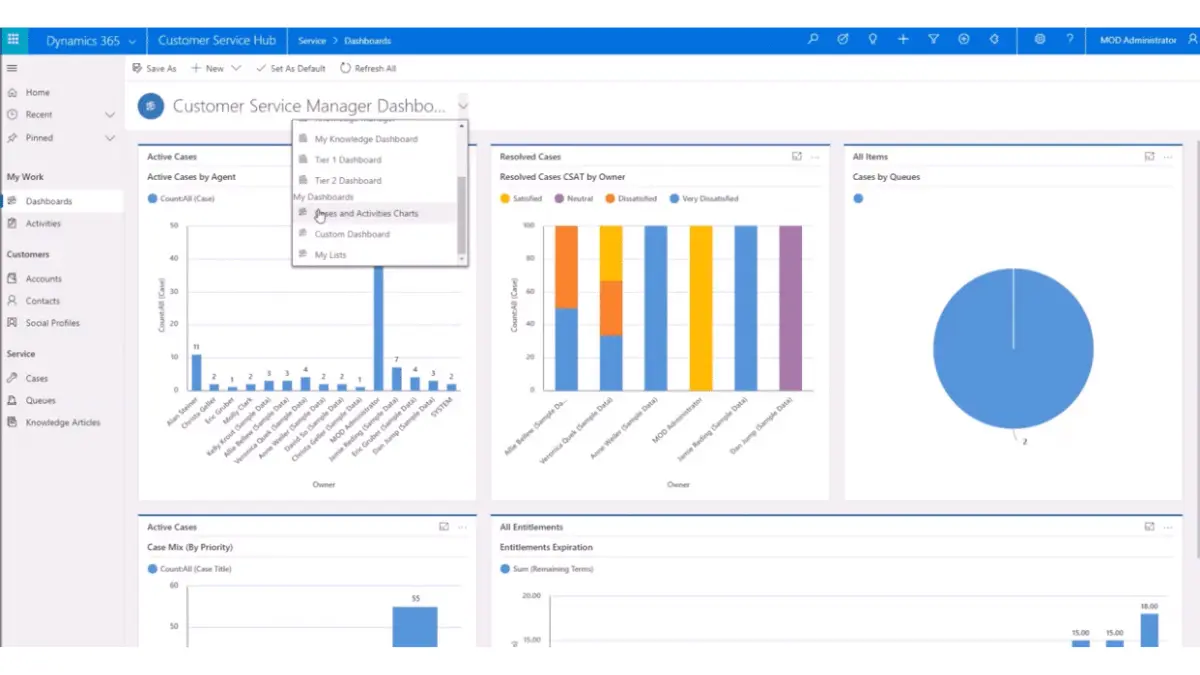
Microsoft Dynamics 365 is the logical choice for organizations heavily invested in the Microsoft ecosystem (Outlook, Teams, SharePoint).
It offers enterprise-grade power and uses LinkedIn data (via Sales Navigator) better than any other CRM. However, implementation can be complex and costly.
| Pros | Cons |
| ✓ Native integration with Office 365. | ×Complex and expensive implementation. |
| ✓ Powerful LinkedIn integration. | ×UI is often considered clunky. |
| ✓ Scalable to massive organizations. | ×Requires technical expertise to maintain. |
Pricing: Starts around AUD $95/user/month for Sales Professional.
10. Bitrix 24
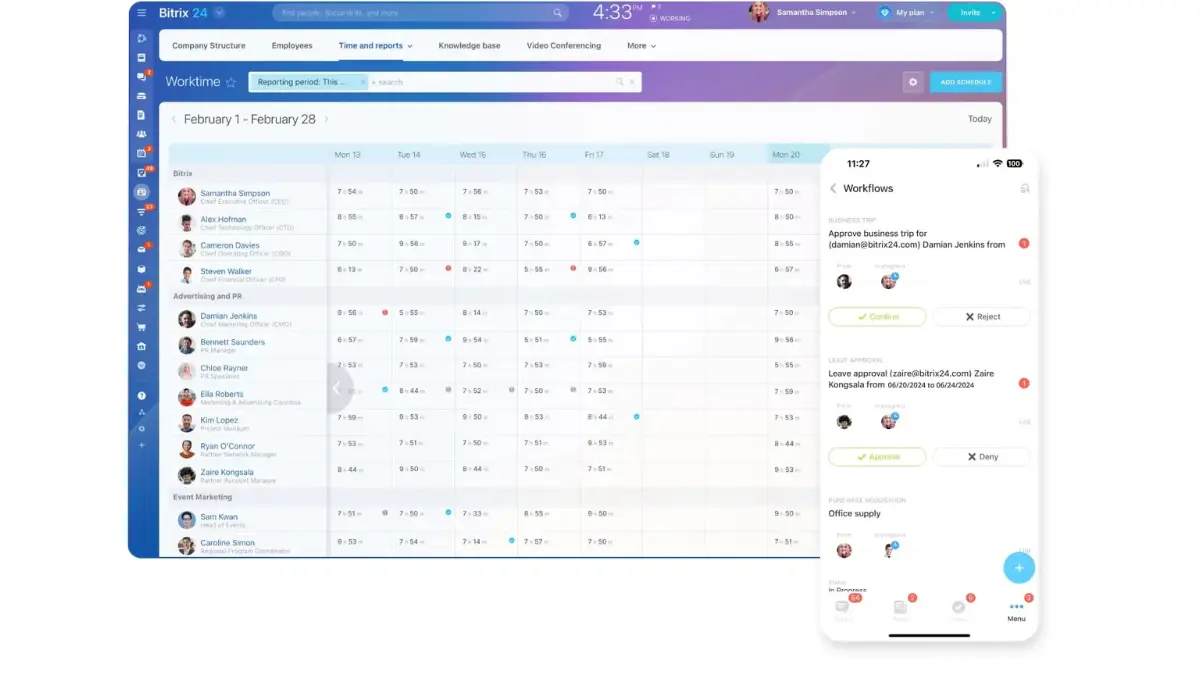
Bitrix24 is an all-in-one collaboration suite that includes CRM, project management, website builder, and internal social network.
It offers a very generous free tier and on-premise versions for those who need absolute control over their data. It is feature-rich, sometimes to a fault.
| Pros | Cons |
| ✓ Extensive feature set for the price. | ×Overwhelming interface for new users. |
| ✓ On-premise option available. | ×Support can be slow. |
| ✓ Includes website builder and HR tools. | ×Setup is complex due to feature density. |
Pricing: Free tier; Cloud plans start approx AUD $60/month for 5 users.
11. Capsule CRM
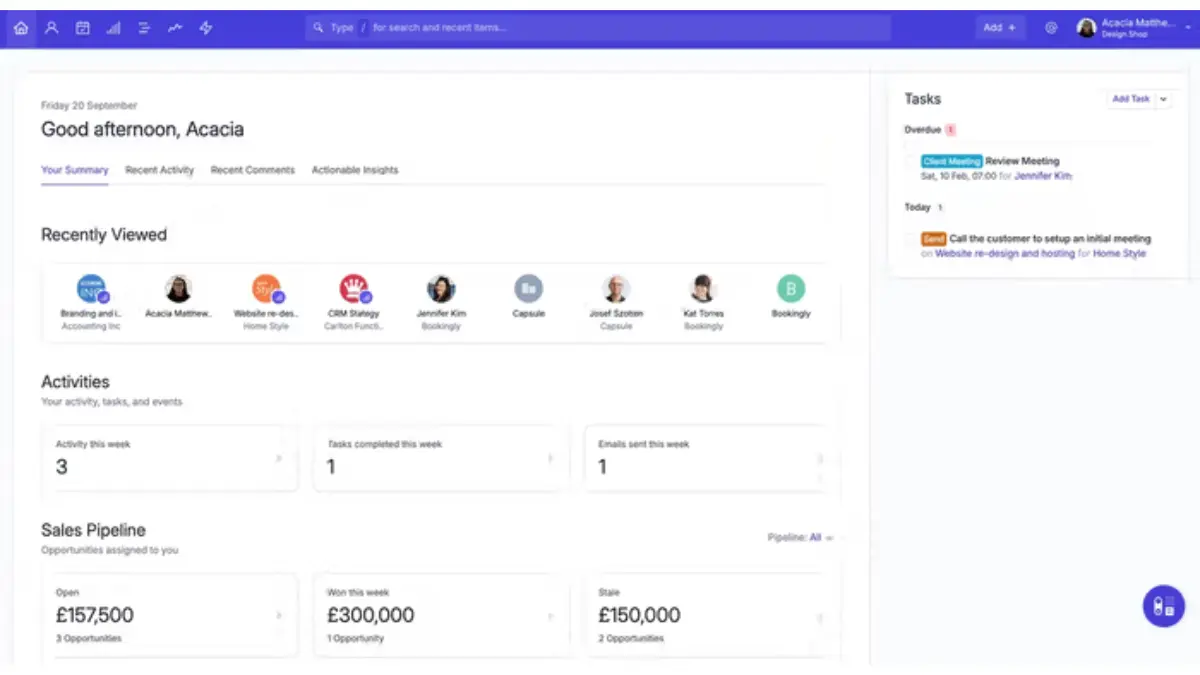
Capsule CRM focuses on simplicity and contact management. It is designed to be easy to use and easy to customize without IT support.
It integrates well with Xero, making it a favourite among Australian small businesses and accountants who need a straightforward solution.
| Pros | Cons |
| ✓ Excellent integration with Xero. | ×Lacks advanced automation features. |
| ✓ Very easy to learn and use. | ×Reporting is limited. |
| ✓ Affordable pricing. | ×Not suitable for large sales teams. |
Pricing: Free tier; Paid plans start at approx AUD $27/user/month.
12. Apptivo CRM
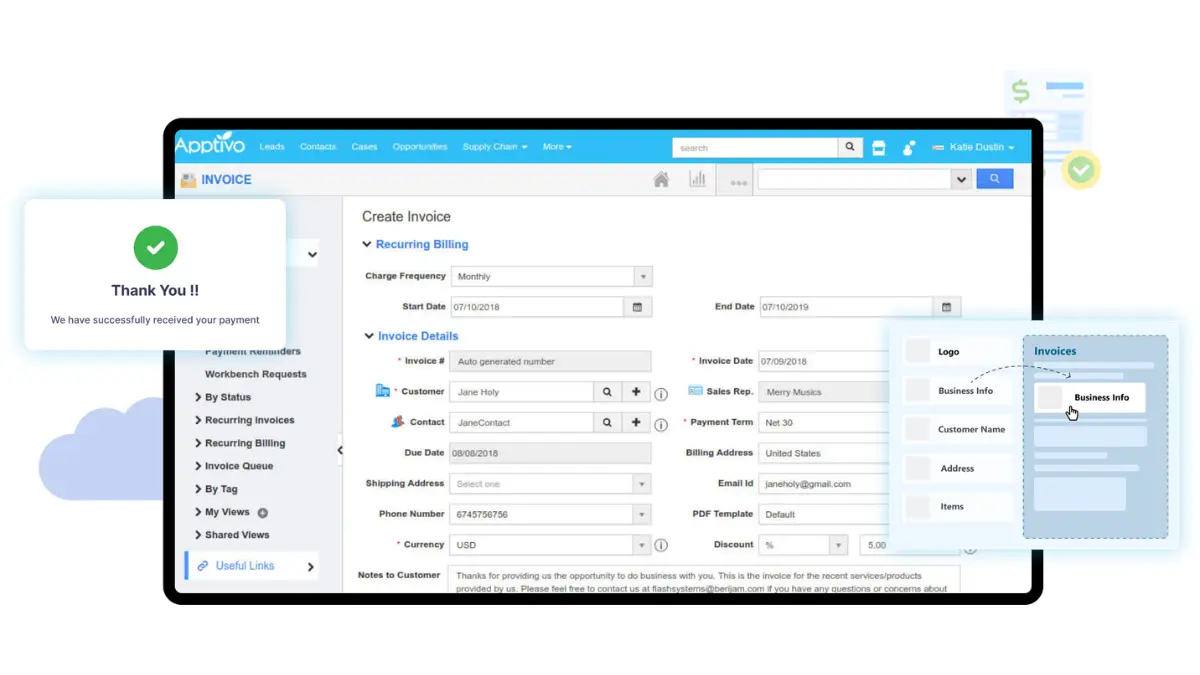
Apptivo is a modular system where you can pick and choose the “apps” you need (e.g., Contracts, Invoicing, CRM). This makes it highly flexible.
It is a cost-effective alternative to Salesforce for businesses that need customisation but have a tighter budget. The interface is functional, though slightly dated.
| Pros | Cons |
| ✓ Highly affordable and modular. | × Interface looks dated. |
| ✓ Good range of business apps included. | × Integration ecosystem is smaller. |
| ✓ Flexible customization. | × Performance can be sluggish with large datasets. |
Pricing: Starts approx AUD $15/user/month.
Australian Privacy Act & Data Residency: What CRM Buyers Must Know
For crm software australia buyers, data sovereignty is not a buzzword. The Privacy Act 1988 and the Notifiable Data Breaches (NDB) scheme push organisations to treat personal information as a compliance and reputational risk, not just a database field.
Before you shortlist customer relationship management software, confirm where data is stored and how cross-border disclosure is handled. If an Australian CRM software vendor stores data in the US or EU, procurement should check what safeguards are in place, who can access the data, and how the vendor supports your obligations if personal information moves offshore.
This matters because accountability does not stop at the server location. If a breach occurs on an overseas environment, your business can still carry the operational and legal fallout, even if you chose the best crm software australia for features.
When you can, prioritise crm software that offers Australian data residency options, clear access controls, and audit-ready security practices so the system supports growth without adding governance friction.
Industry-Specific CRM Use Cases in Australia
Generic CRM software covers the basics, but Australian industries often need tighter workflows, integrations, and data controls. Choosing the wrong customer relationship management software usually shows up as costly customisation and low adoption, even if it looks like the best crm software on paper.
1. Manufacturing & Wholesale
- CPQ and stock visibility: Deals often depend on BOMs, margins, and lead times, so Australian CRM software should support CPQ logic and real-time inventory from the ERP. This setup helps reps quote accurately and avoid promising items that are unavailable or mispricing freight-heavy orders.
- Dealer and channel sales: If you sell through distributors, best crm software Australia needs partner lead registration and shared opportunity visibility to reduce channel conflict. This also keeps end-customer data and pipeline stages consistent across territories.
- After-sales and warranty: Tracking serialized assets, warranty dates, and service cycles turns one-off sales into recurring service revenue. Automated reminders help account managers renew contracts before customers lapse.
2. Retail & Omnichannel
- Single customer profile: Customers move between online and store, so CRM software must unify identity across e-commerce and POS while supporting unified communication channels that keep customer conversations consistent across touchpoints.
- Loyalty and personalisation: Loyalty needs more than points; customer relationship management software should track tiers, redemptions, and trigger targeted offers based on behaviour. This improves repeat purchase without blanket discounting.
- Returns and support: Returns and disputes move fast, so best crm software should surface context like value tier, history, and prior issues. This helps teams decide refunds and shipping exceptions based on consistent rules rather than guesswork.
3. Professional Services
- Relationship mapping: Buying decisions involve multiple stakeholders, so Australian CRM software should map decision-makers and influencers in a single view. This protects revenue if a key contact changes roles or leaves.
- Long-cycle pipeline hygiene: Sales cycles run longer, so crm software should support nurturing without clogging the pipeline with dead deals. Clean handoff from won to delivery reduces scope loss and billing delays.
- Conflict checks: For legal and finance, customer relationship management software should flag related entities and prior engagements to reduce conflict risk. An early fast check avoids rework and reputational issues later.
4. Real Estate & Property
- Portal lead sync: Leads from portals should drop into crm software instantly with auto-response rules. Speed to lead is a major edge, and minutes matter.
- <strong>Vendor reporting:</strong> Best crm software Australia should auto-compile inspection feedback, enquiry volume, and campaign updates into vendor reports. This keeps pricing conversations grounded without heavy manual admin.
- Trust-account handoff: Contract deposit details should align with trust accounting workflows to reduce reconciliation issues. Data consistency supports audit readiness across states.
How to Choose the Right CRM for Your Australian Business
Choosing software is a strategic decision that impacts your Total Cost of Ownership (TCO) and operational efficiency. Use this decision framework to guide your choice.
1. The volume vs. complexity matrix
If you have high lead volume but low sales complexity (e.g., e-commerce), look for automation-heavy tools like HubSpot or Freshsales. If you have low volume but high complexity (e.g., construction projects), look for deep relationship management tools like HashMicro or Salesforce.
2. Ecosystem fit
Audit your current software stack and map the tools your team uses every day. If you need CRM data to flow into inventory, procurement, and finance, a standalone CRM will create gaps, so an ERP-integrated CRM like HashMicro is a better fit for connecting sales activity with fulfilment and billing.
3. Total cost of ownership
Do not just look at the subscription price. Calculate the cost of implementation, mandatory training, and potential “add-on” fees for essential features. Often, “cheap” CRMs become expensive when you add necessary plugins.
Conclusion
A strong CRM choice starts with how your team actually works day to day, not how long the feature list looks. I recommend mapping your sales workflow end to end, then selecting customer relationship management software that aligns with your process, supports your compliance needs, and fits the way your team sells across states, channels, and handoffs.
Make sure the crm software turns data into action. Segmentation should feel effortless, so your team can target accounts by State or Territory, industry, deal stage, and purchase history without manual cleanup. When the system keeps data clean and usable, forecasting improves and follow-ups stay consistent.
If you want a clearer recommendation for your situation, book a free consultation with our professional team. We will review your workflow, key integrations, and data governance requirements, then help you shortlist the best CRM software options for your team to adopt quickly and run confidently.
FAQ About CRM Software
-
What is CRM software?
CRM (customer relationship management software) helps businesses manage interactions with prospects and customers in one place. It centralises contact data, tracks activities, and supports sales workflows so teams can follow up consistently and forecast more accurately.
-
How do I match a CRM system to my business needs?
Start with your sales process: deal volume, sales cycle length, and the handoffs between marketing, sales, and operations. Then shortlist crm software based on adoption ease, required integrations, reporting needs, and data governance requirements.
-
Why is CRM data quality important?
Poor data quality leads to missed follow-ups, inaccurate forecasting, and wasted marketing spend because teams act on unreliable information. Clean, consistent records make segmentation, pipeline reviews, and customer handovers faster and more dependable.
-
Do CRMs support mobile devices?
Most modern crm software provides mobile access so field teams can update activities, check customer history, and manage tasks on the go. Look for offline access, fast search, and simplified mobile layouts to keep data updates consistent.
-
Can CRMs integrate with existing systems?
Many Australian CRM software options integrate with native connectors or APIs to email, accounting, helpdesk, and marketing tools. Prioritise integrations that remove duplicate entry and keep key data such as contacts, deals, invoices, and activity history in sync.
-
How can I secure CRM data?
Check for role-based access control, multi-factor authentication, audit logs, and clear policies for backups and incident response. For Australia, also confirm data residency options and how the vendor supports privacy and breach reporting requirements.