In today’s global business, looking beyond your company is essential for survival. Supply chains are no longer simple paths. They are complex networks exposed to disruptions from politics, weather, and unexpected events. Transparency now drives resilience.
A clear view of operations requires connecting data from procurement, production, logistics, and delivery. Companies that achieve this can prevent problems, optimize inventory, and improve customer experiences.
Understanding your supply network and using that insight strategically is the first step to stronger, more reliable operations.
Key Takeaways
Real-time tracking of goods, inventory, and disruptions enables proactive management, reducing delays and operational risks.
IoT, AI, cloud platforms, and digital twins connect data across suppliers, logistics, and production for a single source of truth.
SCV improves procurement, manufacturing, logistics, warehousing, and customer delivery, optimizing inventory, reducing costs, and boosting satisfaction.
Predictive ETAs, blockchain, emissions tracking, and autonomous actions transform visibility into a strategic tool for decision-making and sustainability.
What Is Supply Chain Visibility?
Supply chain visibility (SCV) lets stakeholders track components, sub-assemblies, and finished products from supplier to consumer. Modern visibility goes beyond that. It gives real-time access to order status, inventory levels, location of goods, and potential disruptions across all supply chain tiers.
In the past, visibility meant just milestone tracking, like when a shipment left or arrived. Today, it covers conditions such as temperature, humidity, and shocks. It also tracks documents and financial flows, turning data into a complete story of the product’s journey.
True visibility reaches past direct suppliers. Many companies see Tier 1 suppliers but remain unaware of Tier 2 or Tier 3. Disruptions at raw material or component sources can delay final products. SCV works as a digital twin, giving a single source of truth for proactive management.
Why Supply Chain Visibility Matters

The need for supply chain visibility has never been greater. Global markets are more volatile than ever. Port strikes, pandemics, canal blockages, and trade wars show that lean supply chains can be fragile without transparency. Companies with high visibility spot affected shipments quickly and act, while others scramble to locate inventory.
Consumer expectations have changed dramatically. The “Amazon effect” has set a standard for fast delivery and precise tracking. B2B buyers now expect the same transparency as any online shopper. Missing ETAs or real-time updates can cost contracts and harm reputations.
Regulations and ethical sourcing add more pressure. Governments and consumers demand proof of sustainability and fair labor. Companies must trace raw materials to their source to avoid conflict funding or forced labor. End-to-end visibility ensures ESG compliance, protects the brand, and keeps the company aligned with strict trade laws.
How Does Supply Chain Visibility Work?
Data Collection and IoT
Supply chain visibility starts with data collection. IoT devices and sensors track location, temperature, humidity, and shock, while RFID tags and barcodes monitor inventory from receipt to shipment. This links the physical supply chain to digital systems.
Integration and Connectivity
Data Aggregation and Standardization
A major challenge in SCV is inconsistent data formats. Visibility platforms use normalization to standardize inputs from different carriers. This ensures terms like “Arrived at Terminal” mean the same everywhere, giving a clear, consistent view.
Analytics and Artificial Intelligence
Once data is centralized, advanced analytics take over. AI and Machine Learning predict outcomes, like ETAs, using weather, congestion, and historical data. If delays are likely, the system alerts managers to adjust schedules or reroute inventory in advance.
Benefits of Supply Chain Visibility
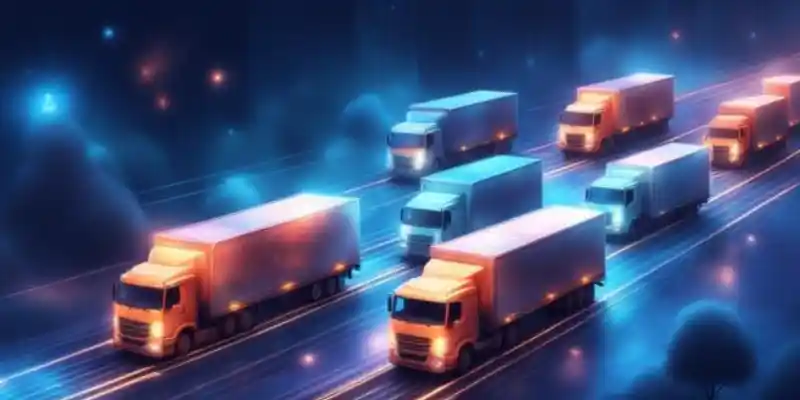
Investing in supply chain visibility boosts ROI by cutting costs, reducing risks, and improving service. Its impact reaches every level of the company, from warehouses to executives.
- Enhanced Agility and Resilience, Visibility lets managers spot disruptions early, such as a raw material shortage, and act immediately. Quick responses prevent production stoppages and keep operations running smoothly.
- Inventory Optimization, Knowing exact shipment arrivals reduces the need for safety stock. Companies can carry leaner inventory, free up working capital, and cut storage costs.
- Lower Detention and Demurrage Fees, Real-time alerts help logistics teams act before containers overstay at ports or warehouses. This reduces unnecessary fees and saves significant money.
- Improved Customer Satisfaction, Accurate, real-time order updates build trust. Notifying customers of delays proactively improves reliability and loyalty.
- Data-Driven Decision Making, Visibility platforms create historical data archives. Companies can analyze performance, spot bottlenecks, and make decisions based on facts rather than guesswork.
Supply Chain Visibility Examples by Function
Understanding SCV is easier when looking at how it applies across functions. Each area uses visibility data to achieve specific operational goals.
Sourcing & Procurement
Visibility helps monitor supplier compliance and risks. Procurement teams track sub-tier suppliers and get instant alerts if disruptions occur, like a chip manufacturer lockdown. It also supports contract management by comparing actual vs. promised lead times, helping companies renegotiate or switch vendors.
Manufacturing & Production
In factories, visibility tracks Work-in-Progress (WIP). Managers see which orders are affected if a machine breaks down and can reschedule production. Integrating inbound logistics data enables Just-in-Time manufacturing, ensuring materials arrive when needed.
Logistics & Transportation
SCV tracks freight across ocean, air, road, and rail. GPS data helps optimize routes in real time. In cold chain logistics, sensors monitor temperature and trigger alerts if conditions risk spoilage, allowing quick intervention.
Warehousing & Inventory
Visibility shows the exact location of every SKU. WMS systems use barcodes and automation to map inventory. High-velocity items can be placed near shipping docks, and inbound shipment data helps plan labor to prevent bottlenecks.
Customer Delivery & Returns
Last-mile visibility lets customers track orders, reducing support calls. Reverse logistics uses SCV to track returns, speed up refunds, and decide whether items can be resold, refurbished, or scrapped, recovering value efficiently.
Real-World Applications: Industry-Specific Use Cases

Supply chain visibility applies differently across industries. Pharmaceuticals focus on temperature control, fashion on ethical sourcing, and automotive on component timing. Understanding these differences helps leaders benchmark their strategies.
1. Pharmaceuticals and Life Sciences
For biologics and vaccines, maintaining the cold chain is critical. IoT sensors monitor temperature, humidity, light, and shock in real time. Alerts let logistics managers act immediately to prevent spoilage. Visibility also tracks serialization and chain of custody to ensure compliance and patient safety.
2. Retail and E-Commerce
Visibility drives customer satisfaction and backend efficiency. Retailers track inventory across stores and distribution centers to enable omnichannel strategies like BOPIS. They can sell goods in transit as available-to-promise, speeding up cash flow and reducing stock-outs.
3. Automotive and Manufacturing
JIT manufacturing relies on deep-tier visibility. A delay in a single part can halt assembly lines. Advanced visibility lets manufacturers monitor Tier 2 and Tier 3 suppliers, anticipate disruptions, and activate contingency plans before production is affected.
4. Food and Beverage
Shelf-life and safety are priorities. Visibility tools optimize delivery routes and enable precise recalls. If contamination occurs, blockchain-enabled tracking identifies the exact farm and harvest date, reducing waste and cost.
A Strategic Roadmap for Implementation
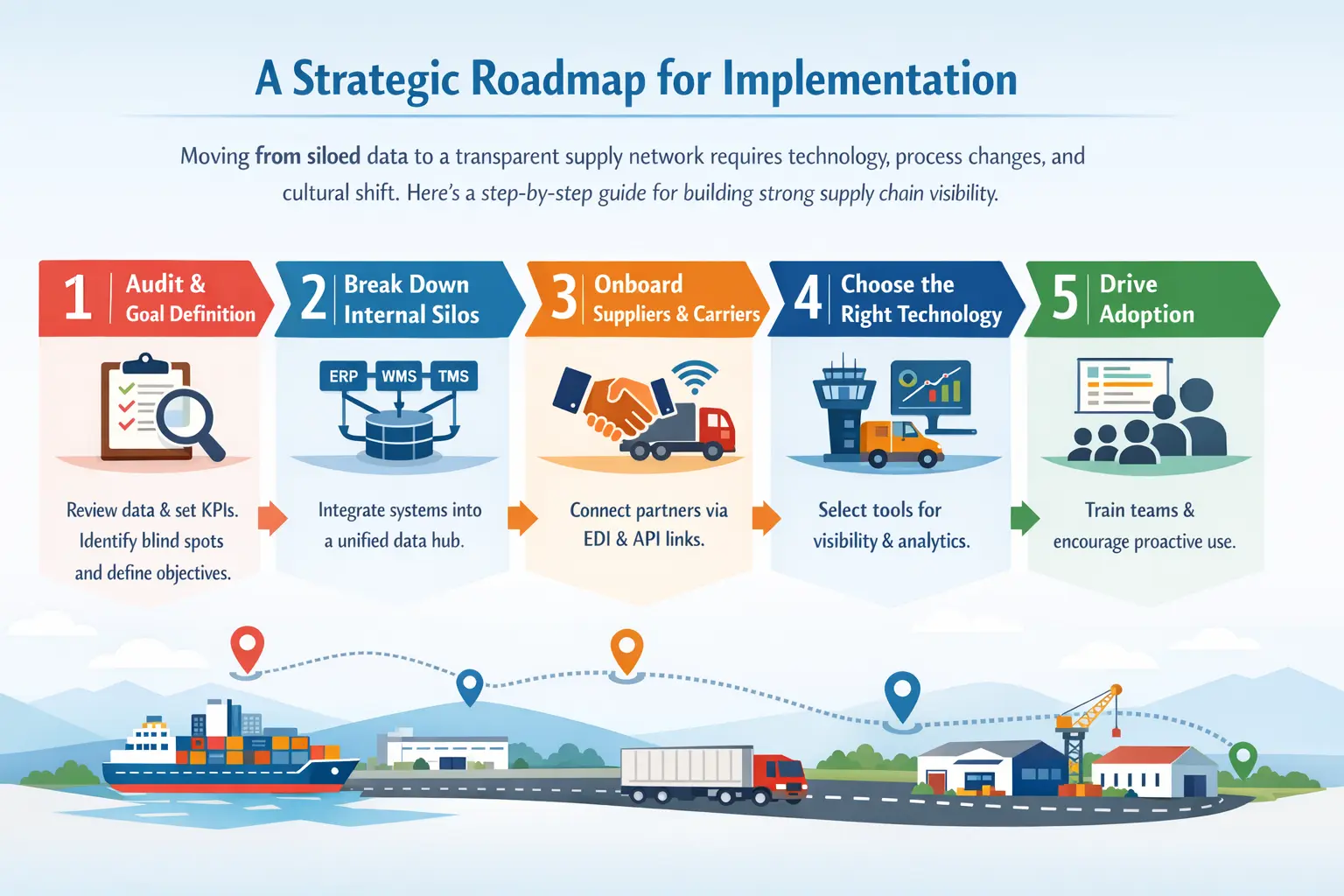
Moving from siloed data to a transparent supply network requires technology, process changes, and cultural shift. Here’s a step-by-step guide for building strong supply chain visibility.
Step 1: Audit and Goal Definition
Start by reviewing your current data. Identify blind spots, like unknown container arrivals or late deliveries causing customer churn. Define KPIs, such as cutting track-and-trace labor, improving on-time delivery, or reducing safety stock.
Step 2: Break Down Internal Silos
Integrate procurement, logistics, and sales systems. Connect ERP, WMS, and TMS into a single data hub. This creates a reliable foundation for both internal and external visibility.
Step 3: Onboard Suppliers and Carriers
Get partners to feed data via EDI or API connections. Show them the benefits, like faster payments or fewer tracking inquiries. For smaller carriers, mobile apps let drivers update status easily.
Step 4: Choose the Right Technology
Options include aggregators for carrier data, predictive analytics for ETAs and risks, and control towers for end-to-end visibility. Pick solutions that fit your existing systems and avoid platforms that trap your data.
Step 5: Drive Adoption
Technology only works if teams use it. Train staff to move from reactive problem-solving to proactive decision-making. Teach them to interpret data strategically, not just monitor issues.
Common Pitfalls and How to Avoid Them
Many visibility projects fail to deliver ROI. Knowing the common traps helps ensure a smooth rollout.
The “Data Garbage” Trap
Inaccurate carrier data creates false information, like marking a shipment as delivered when it’s only at a terminal. This erodes trust in the system.
Solution: Cleanse and normalize data. Use validation tools that cross-check updates with GPS or geofencing to flag discrepancies.
Alert Fatigue
Inaccurate carrier data creates false information, like marking a shipment as delivered when it’s only at a terminal. This erodes trust in the system.
Solution: Cleanse and normalize data. Use validation tools that cross-check updates with GPS or geofencing to flag discrepancies.
Ignoring the Last Mile
Some companies track international freight but lose sight of domestic delivery, or vice versa.
Solution: Build end-to-end visibility. Connect the first mile, middle mile, and last mile to avoid gaps that create risks.
Advanced Practices of Supply Chain Visibility
As companies mature, they move from descriptive analytics to predictive and prescriptive insights. Advanced practices define the leading edge of supply chain visibility.
Predictive ETAs and Artificial Intelligence
Standard ETAs are often unreliable. Machine Learning uses historical data, weather, congestion, and vessel speed to predict accurate arrival times. Over time, the system learns patterns, helping managers staff docks efficiently and reduce labor costs.
Scope 3 Emissions Tracking
Sustainability is central to modern supply chains. Visibility platforms now estimate carbon emissions based on cargo weight, distance, and transport mode. Companies can choose routes that balance speed, cost, and carbon reduction targets.
Blockchain for Trust
High-value or regulated goods benefit from blockchain. Each transaction is recorded in an immutable ledger, creating a digital passport. This ensures all parties see the same data, preventing disputes over custody or delivery times.
Autonomous Supply Chains
Future platforms don’t just alert, they act. If a delay occurs, the system checks inventory, triggers rush orders, or reroutes shipments automatically. Cognitive automation already recommends actions, bridging insight and execution.
Digital Twins of the Network
Digital twins replicate the physical supply chain in a virtual model. Companies can simulate disruptions, like port closures or tariffs, to plan responses. This transforms visibility into a strategic tool for risk management and decision-making.

Conclusion
Supply chain visibility is now essential for resilience, efficiency, and customer satisfaction. Connecting data across the entire network allows companies to move from reactive problem-solving to proactive management, keeping goods flowing and costs under control.
Implementing high visibility requires strategy, technology, and collaboration across departments and partners. Advanced solutions like HashMicro turn data into actionable insights. Consult with our experts to see how enhanced visibility can transform your supply chain.
Frequently Asked Question
Tracking generally refers to knowing the location of a shipment at a specific point in time. Visibility is a broader concept that includes tracking but adds context, such as the condition of goods, inventory levels across the network, and predictive insights into potential disruptions.
IoT (Internet of Things) devices like sensors and GPS trackers collect real-time physical data—such as location, temperature, and shock—and transmit it to digital platforms, bridging the gap between physical goods and digital management systems.
Disruptions often originate deep in the supply chain (e.g., a raw material shortage). Without visibility into Tier 2 (suppliers' suppliers) and beyond, companies cannot anticipate these downstream effects until it is too late to mitigate them.
The primary barriers include data silos (systems that don't talk to each other), lack of standardization in data formats, resistance to data sharing among partners, and the cost of implementing necessary technology.
Visibility reduces costs by minimizing the need for safety stock (lowering holding costs), preventing detention and demurrage fees through better timing, and allowing for proactive problem-solving that avoids expensive expedited shipping.