
Modern buildings and infrastructure don’t happen by accident. Behind every skyscraper, highway, or commercial complex is a carefully managed process that turns architectural ideas into real structures. Construction project management makes this possible by coordinating people, materials, budgets, and timelines.
Unlike other types of project management, construction projects deal with physical sites, heavy equipment, and changing conditions. Project managers must handle engineering plans, budgets, regulations, and team coordination at the same time. They also need strong leadership skills to keep workers safe and the project moving forward.
Today’s construction industry faces tighter budgets, stricter environmental rules, and frequent supply chain disruptions. Because of this, good project management is more important than ever. When projects are managed well, they finish on time, stay within budget, and meet the client’s expectations; when they are not, delays, rising costs, and safety risks quickly follow.
Key Takeaways
Understand the core definition and scope of construction project management.
Explore the daily tasks and strategic duties of a construction PM.
Learn the distinct differences between these two critical roles.
A detailed walkthrough of the construction lifecycle.
What Is Construction Project Management?

Construction project management is a professional service that oversees a building project from planning and design to final construction. Its main goal is to keep the project on schedule, within budget, and up to the required quality standards. While it follows the same basic principles as general project management, construction projects are more complex because they involve physical work, strict regulations, and large teams.
To manage these projects well, professionals need a strong understanding of the construction process. They must read blueprints, understand engineering requirements, and coordinate materials, equipment, and workers on site. They also deal with building codes, zoning laws, environmental rules, and different types of projects such as housing developments, commercial buildings, factories, and large infrastructure like roads or bridges.
Core Responsibilities of a Construction Project Manager
The Construction Project Manager (CPM) plays a key role in the success of any construction project. They oversee the entire process and take responsibility for keeping the project on track. One of their main tasks is managing the budget, which includes estimating costs, monitoring expenses, and making sure the project does not go over budget.
The CPM also manages the project schedule and keeps different tasks moving in the right order. Construction work follows a clear sequence, so the manager must plan timelines, track progress, and respond quickly to delays such as bad weather or material shortages. They also coordinate communication between clients, engineers, contractors, and regulators while making sure the work meets safety standards, quality requirements, and contract agreements.
Construction Project Manager vs Construction Manager
People often use the terms Construction Project Manager and Construction Manager interchangeably, but their roles are different. The main difference lies in what part of the project they focus on and how involved they are in the overall process. Both roles are important, but they handle different responsibilities throughout the project lifecycle.
A Construction Project Manager usually oversees the entire project from the early planning stage to final completion. They focus on the big picture, managing budgets, timelines, contracts, and communication with clients and stakeholders. A Construction Manager, on the other hand, focuses more on the day-to-day work on the construction site, coordinating subcontractors, supervising site activities, and making sure the building work follows the plans and safety standards.
The 5 Phases of a Construction Project
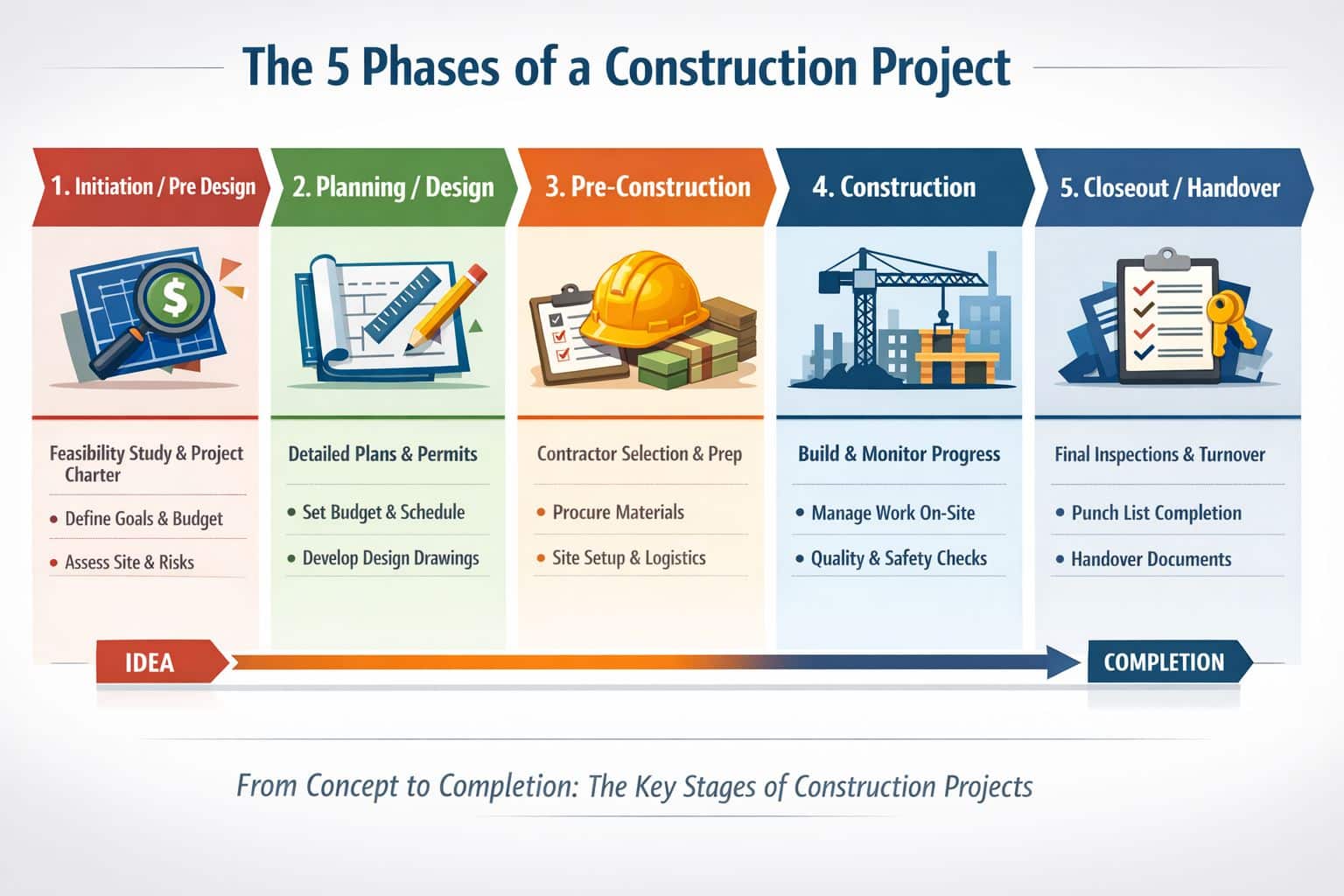
Construction projects are complex, so teams usually divide the work into clear stages. Most industry standards recognize five main phases that guide a project from idea to completion. Each phase has its own tasks, goals, and approvals before the project can move forward.
1. Initiation / Pre-design
This phase is where the project idea first takes shape. The owner decides whether the project is needed and if it makes financial sense to move forward. Teams study the site, review zoning rules, and run a feasibility study to understand costs, risks, and potential benefits.
Project managers also work with the client to define the project’s goals, scope, and early budget limits. They prepare a business case that explains why the project should move ahead. If everything looks viable, the team creates a project charter that officially starts the project and sets the direction for the next steps.
2. Planning / Design
After approval, the project moves into the planning and design phase. Architects, engineers, and the project management team work together to turn the idea into detailed plans. The choices made during this stage strongly affect the project’s cost, schedule, and final quality.
Design usually develops in stages, starting with rough concepts and moving toward detailed construction drawings. At the same time, the project manager prepares the budget, schedule, and risk plan. The team also works to secure building permits and other approvals needed before construction can begin.
3. Pre-construction
Pre-construction connects the planning stage to the start of building work. With the design finished, the team begins selecting contractors and purchasing materials. The project manager reviews bids from contractors and chooses partners based on price, experience, and reliability.
Once contracts are signed, the team prepares the site for construction. They plan where equipment, materials, and temporary offices will be placed. Long-lead materials, such as custom steel or elevators, are also ordered early to avoid delays later.
4. Construction
The construction phase is when the actual building work begins. Crews prepare the site, build the foundation, and move through structural work, systems installation, and interior finishing. This stage is usually the longest and most expensive part of the project.
During construction, the project manager focuses on monitoring progress and solving problems. They review requests from contractors, approve materials, and manage any changes to the original plan. Regular site meetings, safety checks, and schedule tracking help keep the project on course.
5. Closeout / Handover
The final phase begins when most of the building work is complete. The project team inspects the site and creates a punch list of small issues that still need fixing. Contractors must resolve these items before the project can officially close.
Once everything is completed, the team tests major building systems such as electrical, HVAC, and safety equipment. The project manager then hands over documents like warranties, manuals, and final drawings to the owner. After a final review, the project officially closes and the building moves into regular operation.
Australian-Specific Considerations in Construction Project Management
Managing a construction project in Australia comes with specific legal and regulatory requirements. The industry is highly regulated to protect workers, the environment, and fair business practices. Because of this, project managers need a strong understanding of local rules to avoid legal and financial problems.
1. Security of Payment Act (SOP)
The Security of Payment (SOP) Act helps ensure contractors and suppliers get paid on time for the work they complete. Each Australian state and territory has its own version of this law, but the main goal is the same: keep cash flowing fairly through the construction chain. It also protects subcontractors by giving them a legal right to claim progress payments.
Project managers must carefully follow the strict timelines required by the SOP Act. When a contractor submits a payment claim, the other party usually has only about 10–15 business days to respond with a payment schedule if they plan to pay less. Missing this deadline can mean they must pay the full claimed amount, so strong administrative tracking is essential.
2. National Construction Code (NCC) / BCA Compliance
The National Construction Code (NCC) sets the minimum building standards across Australia. It covers key areas such as structural safety, fire protection, accessibility, weatherproofing, and energy efficiency. All building designs and construction work must follow these requirements.
Project managers must make sure the project meets the NCC before and during construction. Teams can follow standard “Deemed-to-Satisfy” solutions or use alternative performance-based solutions if they can prove they meet the same standards. Building certifiers and surveyors review the work and approve the project before it can be occupied.
3. Work Health and Safety (WHS)
Australia has some of the strictest workplace safety laws in the world. The Work Health and Safety (WHS) framework requires businesses to protect the health and safety of workers and anyone affected by the work. This responsibility is especially important in construction because job sites can be dangerous.
Project managers help ensure strong safety practices on site. They oversee safety plans, worker inductions, and Safe Work Method Statements for high-risk activities. They also need to report serious incidents to regulators and maintain a safe environment to avoid fines, site shutdowns, or legal action.
4. Standard Construction Contracts (AS 2124 / AS 4000)
Construction projects in Australia often use standard contracts developed by Standards Australia. Two of the most common are AS 2124 and AS 4000. These contracts define how risks, payments, responsibilities, and dispute processes are handled between the owner and contractor.
Project managers must understand these contracts in detail. They deal with issues such as project delays, changes in work scope, unexpected site conditions, and final completion requirements. Misunderstanding these clauses can lead to disputes, delays, and financial losses.
5. BIM Adoption in Australia
Building Information Modeling (BIM) is becoming more common in the Australian construction industry. BIM uses digital models to help teams plan, design, and manage buildings more efficiently. Many government projects now require BIM to improve coordination and reduce long-term costs.
For project managers, BIM makes planning and communication easier. It helps teams detect design conflicts early and better visualize the construction schedule and costs. In the long run, BIM also provides a detailed digital record of the building that owners can use for future maintenance and facility management.

Common Challenges in Construction Project Management
Construction projects often face unexpected challenges, even with careful planning. One common issue is scope creep, which happens when clients request changes after construction has already started. While each change may seem small, they can quickly increase costs and delay the schedule if they are not managed properly.
Supply chain problems and material shortages can also slow down a project. Many construction materials come from different regions, so shipping delays or global disruptions can affect delivery. To reduce these risks, project managers usually order key materials early and work with multiple suppliers.
Labor shortages and unexpected site conditions add another layer of difficulty. Skilled workers may be hard to find, and issues like bad weather or hidden site problems can delay progress. To handle this, project managers coordinate teams carefully and build extra time into the schedule to deal with possible disruptions.
Key Metrics to Track in Construction Project Management
Construction project managers rely on data to keep projects running smoothly. By tracking Key Performance Indicators (KPIs), they can see how the project is performing and spot problems early. These metrics help managers make better decisions about budgets, schedules, safety, and overall efficiency.
Financial performance is one of the most important areas to monitor. For example, Cost Variance (CV) compares the budgeted cost of work with the actual cost. If the number is negative, it means the project is spending more than planned and managers need to investigate the cause.
Schedule performance is another key metric. Schedule Variance (SV) shows whether the project is ahead of or behind the planned timeline. Managers also track how much contingency budget has been used, because using it too early can signal deeper problems in cost control or planning.
Conclusion
Construction project management helps turn building plans into real structures through careful coordination and planning. Project managers oversee budgets, timelines, resources, and teams to keep projects moving smoothly. By following clear project phases and tracking key metrics, they help ensure construction projects stay on schedule, within budget, and meet quality standards.
At the same time, construction projects often face challenges such as scope changes, material shortages, labor gaps, and strict regulations. Without proper management, these issues can quickly cause delays and rising costs. Strong planning, clear communication, and the right tools help project managers reduce risks and keep projects on track.